

What does reverse osmosis remove from tap water?
Share
Part of our filters and softeners guide
Reverse osmosis has a reputation for taking out nearly everything. What does the UK regulator's own guidance say it removes, and where does it say nothing?
Short answer: The Drinking Water Inspectorate (DWI) says reverse osmosis (RO) removes most dissolved solids and softens water, with a waste stream of 20 to 30% of the incoming flow. It adds that RO water is not generally considered suitable for drinking and cooking. The DWI pages we read do not name PFAS, fluoride or microplastics.
By Andrew Tomlinson, WaterKit · Last reviewed 29 October 2026
What does reverse osmosis remove from tap water?
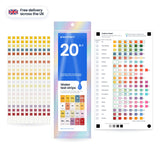
Most dissolved solids, according to the DWI's guidance on domestic water filters and softeners, which also says RO systems soften the water. If you have a unit, or are weighing one up, a 20-in-1 WaterKit test strip can show whether some pads read differently at the RO tap than at the kitchen tap. Our guide to reverse osmosis water covers how RO works. This one takes removal family by family, using only what the DWI pages we read say.
| Family | What the DWI says | What we did not find |
|---|---|---|
| Minerals and hardness | RO removes most dissolved solids and softens the water. Its treatment comparison table says RO reduces the minerals in water to unacceptable levels | A percentage for a home unit |
| Nitrate | The DWI manual on treatment for small supplies says ion exchange, biological de-nitrification and certain membrane processes can reduce nitrate, and that only ion exchange and membrane processes are likely to be practicable for small supplies. The physical removal page says RO for nitrate removal has been proposed. The UK standard is 50 mg/l as nitrate | A removal figure for a home RO unit |
| Arsenic | The manual lists RO among other potential removal techniques, alongside ion exchange and activated alumina. The standard is 10 µg/l | A removal figure |
| Aluminium | The manual says small supplies can remove it by filtration or membrane techniques. It does not name RO. The standard is 200 µg/l, which the manual says is based on avoiding aesthetic problems, not health | Any RO-specific statement |
| Lead and copper | Not named for RO. The manual says the best approach to lead in small supplies is replacing lead-containing materials. The treatment table says RO can reduce pH to a level that corrodes pipework | Any DWI statement that RO removes lead or copper |
| Pesticides | The treatment table lists activated carbon, not RO, for pesticides. The consumer page says water companies treat pesticides to below the legal standards | A figure for RO |
| Bacteria, Cryptosporidium and Giardia | The DWI's page on physical removal says membrane processes, RO included, can provide adequate removal of pathogenic bacteria, Cryptosporidium and Giardia, and potentially human viruses. It says they should not be the sole means of disinfection, because on private supplies there is no simple way to check the membrane | A removal figure for a home unit |
Does reverse osmosis remove fluoride, PFAS, microplastics or hormones?
The DWI pages we read do not say. None of the four we opened (listed under Sources) names any of them in connection with RO. The treatment table calls RO "effective" and says it is usually used for chemicals that are difficult to remove with other treatments, without listing which. We found no figure for a home unit, and a gap in four pages is not proof either way. For what UK supplies contain, see our guides to fluoride, PFAS and microplastics.
What does reverse osmosis not remove?
The DWI does not say it removes everything. Its pages describe limits, and the ones below are the DWI's own.
- Unfiltered blend. The treatment table says RO is usually used at the point of use and blended with non-filtered water, so what reaches the glass is not only membrane water.
- Disinfection. Membranes should not be the sole means of disinfection on private supplies, because there is no simple way to check the membrane for breakthrough.
- Upkeep. The consumer page says failing to follow the maker's cleaning and maintenance advice and cartridge-change intervals builds up deposits, creates a breeding ground for bacteria and lets removed material leach back into the water.
- Other taps (our point, not the DWI's). The treatment table says RO is usually used at the point of use, so in our reading the other taps in the house are not changed by it.
The DWI also lists "removal of minerals" and "removal of hardness" among common marketing claims for these products. It says RO should be considered only for specialist domestic purposes such as photographic processing or hydroponic culture, that pressure drops substantially through the unit, and that RO is expensive and generally not a feasible option for most homeowners. It says to ask your water company for its water quality report for your supply before buying, and to use a qualified plumber and a product that meets the Water Fittings Regulations.
Why might the water at your tap differ from the area figure?
Because a figure for the area does not tell you what comes out of your own tap. The DWI says water companies must by law supply wholesome water. The area figure is an average. Your tap sits at the end of pipework the building owner is responsible for. The DWI says faults in a building's own pipes and fittings can cause particles or colour at the tap, and its manual says domestic plumbing materials and arrangements may give water a noticeable taste or odour.
On lead, the manual says high concentrations are usually caused by dissolving lead from lead pipework, tank linings or old leaded alloys in fittings, and says water that has stood in lead pipes for long periods, for example overnight, should not be drunk, and that the tap should be run to clear the pipes before taking water for drinking or cooking. Our lead pipes guide shows how to check your house.
The DWI also says the taste of tap water can vary between regions because of differing hardness and the chlorine left in the water in the network (see how hard is my water). The manual says a private supply is any supply not provided by a water company, and that its owner or user is responsible for its maintenance and repair, so in our reading a water company's figures do not describe it. Our well and borehole guide covers those.
“If your house has older pipework or a private supply, I would not assume the area figure describes what comes out of your own tap. The pipes inside the building are the last stretch the water travels through, so checking at your own tap is a sensible habit.”
If you run an RO unit, there are really two taps to look at, and a strip dipped at each shows them side by side.
How can you check what your own unit changes?
Fill a clean glass from the kitchen tap and another from the RO tap, dip one strip in each, wait 30 to 60 seconds and match the pads to the chart (or enter the colours in the free results checker). The table is our reading of the chart steps, not a claim from the DWI.
The pads have limits. The chart reads in set steps, so a change between two steps will not show. The strip does not read PFAS, fluoride, microplastics or hormones. The strip cannot read lead at the UK limit, so use the lead pipes guide instead. The aluminium, nitrite, iron, mercury and chromium pads also have first colour steps above the UK limits, so a clear result is not a pass. A "zero" means none detected at the first step, not none. A strip result is not a legal sample. The optional rapid coliform test is a presence screen, not a count, read after 24 to 48 hours. We do not claim it shows a membrane is intact, but it is one check on a unit where the DWI says poor upkeep can let bacteria grow. Our bacteria testing guide has the steps.
| Pad | Chart steps (mg/L) | What before and after can indicate |
|---|---|---|
| Hardness | 0, 25, 50, 100, 250, 425 | A tap reading of 250 or 425 and an RO reading of 0 or 25 indicates hardness minerals are being taken sharply down. The unit basis of our pad is unconfirmed, so compare the two taps with each other, not with the DWI's bands |
| Nitrate | 0, 10, 25, 50, 100, 250, 500 | The UK standard is 50 mg/l as nitrate, the same number as our 50 step (our reading, as the pad's unit basis is unconfirmed). A tap reading of 10 or more and a lower step at the RO tap indicates nitrate is falling. A tap reading of 0 leaves nothing to compare |
| Copper | 0, 0.2, 0.5, 1, 2, 5 | A change between taps indicates a difference at that tap. It cannot say why, because tubing and fittings differ. The DWI says RO can reduce pH to a level that corrodes pipework, so in our view this pad is worth a repeat after a few months |
| Free and total chlorine | 0, 0.5, 1, 3, 5, 10, 20 | A tap reading of 0.5 or 1 and an RO reading of 0 indicates chlorine is below the first step at the RO tap. The DWI pages we read say nothing on RO and chlorine, so we are only describing what the pad shows |
The area figure is an average, and the DWI says faults in a building's own pipes and fittings can cause particles or colour at the tap, so your kitchen tap and your RO tap may differ from it and from each other. The hardness and nitrate pads are the ones to compare, because a lower step at the RO tap indicates the unit is taking those down, while a copper or chlorine change between the two taps indicates a difference at that tap. Best pack: 20 strips, enough to test the kitchen tap and the RO tap side by side now and again after a filter or membrane change, £5.99 (or £10.99 with a bacteria test), with free 2nd Class delivery on every order. See the kit
Your reverse osmosis questions
What does reverse osmosis remove?
Most dissolved solids, says the DWI, and it softens the water. The table above sets out each family.
What reverse osmosis does not remove
The DWI does not say it removes everything. It notes a point-of-use unit is usually blended with unfiltered water, and that membranes should not be the only disinfection on a private supply.
Does reverse osmosis remove minerals?
Yes, going by the DWI. It says RO changes the natural properties of tap water, and that the World Health Organization recommends adding minerals back when RO water is used for drinking.
Does reverse osmosis remove limescale?
It removes the dissolved hardness minerals behind scale, going by the DWI's statement that RO softens water. We found no figure for how much scale a home unit prevents. See what is limescale and whether a filter removes it.
Does reverse osmosis remove fluoride?
The DWI pages we read do not name fluoride, and we found no figure for a home unit.
Can reverse osmosis remove fluoride from water?
See the answer above. The pages we read neither confirm nor rule it out.
Does reverse osmosis remove PFAS?
The DWI pages we read do not mention PFAS in connection with RO.
Does reverse osmosis remove microplastics?
The pages we read do not mention microplastics. RO membrane pores are described as under 0.002 µm, but the pages give no microplastics figure.
Does reverse osmosis remove bacteria?
The DWI says membranes can provide adequate removal of pathogenic bacteria, but not as the sole means of disinfection on private supplies.
Does reverse osmosis remove aluminium?
The manual says membrane techniques can remove aluminium in small supplies, without naming RO. The standard is 200 µg/l.
Does reverse osmosis remove hormones?
The DWI pages we read say nothing on hormones.
What does reverse osmosis do?
It forces water through a membrane under pressure, with typical operating pressures of 15 to 50 bar depending on the application, according to the DWI, making a treated stream and a concentrated waste stream.
What does reverse osmosis do to water?
The DWI says it changes the natural properties of tap water and removes most dissolved solids. It says RO can lower pH enough to corrode pipework. It adds that the waste stream is 20 to 30% of the incoming flow, that a metered water bill can rise by up to one third, and that by law you must tell your water company before installing one.
Sources
- Drinking Water Inspectorate, Domestic water filters and softeners (undated page; RO removes most dissolved solids and softens, waste stream, bills, notice to water company, not generally suitable for drinking and cooking, marketing claims, maintenance, taste variation; read 29 October 2026).
- Drinking Water Inspectorate, Manual on treatment for small water supply systems (undated page, adapted from a 2001 report; section 2.4 on aluminium, arsenic, lead, nitrate and pesticides, and 2.5 on taste; read 29 October 2026).
- Drinking Water Inspectorate Treatment Guide, Comparison of treatment capabilities and verification of treatment solutions (undated page; RO row, activated carbon and ion exchange rows; read 29 October 2026).
- Drinking Water Inspectorate Treatment Guide, Physical removal of contaminants (undated page; membranes, pathogens, pressures and pore sizes; read 29 October 2026).
- WaterKit, Water Test Kit (20-in-1 strip, 30 to 60 second read, optional rapid coliform test read after 24 to 48 hours, 20 strips £5.99, free 2nd Class delivery on every order) and results portal. The chart-step table is WaterKit's own reading of the colour chart.
Contains public sector information licensed under the Open Government Licence v3.0.