

Why does my tap water taste bad?
Share
Part of our tap water guide
A glass that tastes of pool, pennies or plastic is hard to ignore. Is it the supply, or something closer to home?
Short answer: The Drinking Water Inspectorate (DWI) says traces picked up from plumbing, fittings or appliances are the most common cause of unusual tastes. In England in 2025, 65 of 57,502 compliance taste tests did not meet the standard, while companies logged 5,618 contacts about a chlorine taste or smell. Check other taps and your neighbours first.
By Andrew Tomlinson, WaterKit · Last reviewed 29 October 2026
Why does my tap water taste bad?
Most often because the water has picked something up on its way to your glass, and you can check part of that at your own tap with a 20-in-1 test strip. The DWI says most drinking water has no noticeable taste or odour, and that traces from plumbing, fittings and appliances are the most common cause of unusual ones.
| Tastes like | What the DWI says causes it |
|---|---|
| Chlorine, swimming pool | Disinfectant, which some people notice slightly (see our chlorine guide) |
| Metallic or bitter | Long contact with copper, iron or galvanised pipes, tanks or fittings, more noticeable when warmed |
| Plastic or rubbery | Unapproved fittings and plumbing materials leaching compounds |
| TCP or medicinal | Chlorine reacting with kettles, rubber or plastic parts |
| Salty or chemical | Softeners, filters or treatment devices that are badly installed or faulty, letting salted water flow back |
| Woody or pencil | Water standing in black alkathene plastic pipes installed in the 1960s and 1970s |
| Earthy or musty | Stale water in little-used plumbing, or summer algae in reservoirs |
| Rotten, stagnant or sewage | Likely the sink or drains. If a glass still smells away from the sink, contact your water company immediately |
| Petrol or fuel | Fuel spilt into the ground around plastic pipes. Contact your water company and local authority immediately |
The DWI's 2025 report for England counts 65 of 57,502 compliance taste tests and 43 of 57,660 odour tests as not meeting the standard, which is "acceptable to consumers and no abnormal change".
Why might my tap differ from the area figure?
The area figure is an average. The DWI says the building owner is responsible for the plumbing, including the supply pipe from the boundary to the inside stopcock, so your tap sits at the end of pipework the area figure cannot see. The DWI gives these reasons for a difference.
- New fittings. In 2025, 72 of 14,081 nickel tests in England did not meet the standard, 19% of all chemical failures. The DWI says most were in consumers' own plumbing and commonly linked to new taps or fittings. At one Wessex Water property, a sample taken before flushing had 2.1 mg/l of copper against a 2 mg/L standard, and 0.04 mg/l once flushed. New copper pipework from a kitchen refurbishment was found.
- Tanks. Old galvanised iron tanks rust and can give a metallic taste, and tank water deteriorates if it warms or turns over slowly. Our loft tank guide explains which taps they feed.
- Standing time. Water left in little-used plumbing can taste musty. The DWI says to draw off a washing-up bowlful after several hours without use.
- Distance and season. Chlorine can be a little higher near a treatment works than several miles away, and companies may switch sources at different times of year.
- Softeners. A tap fed by a domestic softener in Northumbrian, Essex and Suffolk Water's area gave 290 mg/L of sodium against a 200 mg/L standard.
“If a taste only shows up at one tap, I would look at that tap and the plumbing behind it before blaming the supply, because the area figure cannot see your fittings, tanks or how long the water has stood. Comparing a few taps in the house is a sensible first step.”
How do I tell whether it is my plumbing or the supply?
By ruling things out in the DWI's order. Check the other taps in the house, ask your neighbours, then contact your water company if it persists. The DWI says it helps to describe the taste, say which taps are affected and when you first noticed it.
The DWI says to drink from the kitchen cold tap, and that hot tap water can contain elevated copper that tastes astringent. If you want readings to go with your description, dip a strip in water from each tap and note the chlorine, copper and manganese pads. Our guide to making tap water taste better covers what to try at home.
Why does my tap water taste of TCP or chemicals?
Often chlorine reacting with something in your plumbing, according to the DWI. It says the reactions create compounds with an antiseptic or medicinal taste, which can be stronger if the water has been boiled or left in a glass.
- Kettle. If the taste is only in hot drinks, boil water in a saucepan instead. No taste points to the kettle, more often a new plastic one.
- Appliances. A washing machine or dishwasher without a non-return valve can give a rubber, plastic or TCP taste. Turn off its service valve and run the tap to see.
- Tap parts. The DWI also names anti-splash devices, tap washers and stop tap fittings, especially after new taps.
The DWI says to contact your water company immediately if the taste is strong enough to stop you drinking the water, or is new and does not go away in a short time.
Why does my tap water taste metallic?
Usually metal picked up from pipes, tanks or fittings the water has stood in. The DWI says flushing the tap before use draws fresh water through. England's standards are 2 mg/L for copper, 200 µg/L (0.2 mg/l) for iron and 50 µg/L (0.05 mg/l) for manganese, according to the DWI's 2025 report.
Why does my tap water taste earthy, salty or sweet?
Earthy usually means stale water or summer algae, salty can point to a softener, and the DWI pages we read do not explain a sweet taste.
- Earthy. About half of drinking water comes from rivers and reservoirs, the DWI says, and in summer these can taste earthy, often from algae. Running the taps for a few minutes clears stale water.
- Salty. The DWI links it to faulty or badly installed softeners, filters and treatment devices.
What can a test strip show about a taste, and what should I do next?
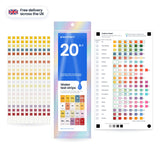
It shows chlorine around its usual level and copper and manganese at their England standards, with iron only when high. Dip a strip in a clean glass of water, wait 30 to 60 seconds and match the pads to the chart, or enter the colours in our results portal. The right-hand column is our own reading of the chart. The free checker needs no app or account, and the QR code on your chart opens it.
| Check | Official figure | Pad steps (mg/l) | What our chart can show |
|---|---|---|---|
| Free and total chlorine | Typically 0.5 or less, most companies aim below 1 (DWI) | 0, 0.5, 1, 3, 5, 10, 20 | No colour or 0.5 fits the usual level, and 3 or more is above the aim |
| Copper | 2 in England | 0, 0.2, 0.5, 1, 2, 5 | The 2 step sits at the standard |
| Manganese | 0.05 in England | 0, 0.05, 0.1, 0.5, 1, 2, 5 | The 0.05 step sits at the standard |
| Iron | 0.2 in England | 0, 1, 5, 10, 25, 50, 100 | Only high levels show. A clear pad is not a pass, because the first step is above the 0.2 standard |
The sodium chloride pad indicates salt, but England's 200 mg/L sodium standard is a different measure, so we do not compare them.
- No pad reads plastic, rubber, TCP, earthy, musty, petrol or sewage tastes.
- The strip cannot read lead at the UK limit. Our lead pipes guide explains how to check your pipes instead.
- A strip result is not a legal sample, so for a persistent taste your water company is still the one to call.
The area figure is an average, and the DWI says your own plumbing, tanks, standing time and distance from the works can all change what reaches your glass, so your tap may differ. In our reading, the pads that matter are chlorine, copper and manganese, and a step that changes between the kitchen cold tap after flushing, the first water after a night standing and a bathroom tap may point towards your own pipework, as in the Wessex Water case above. Best pack: 20 strips, enough to compare taps and test again after a plumbing change, £5.99 (or £10.99 with a bacteria test), with free 2nd Class delivery on every order. See the kit
Your tap water taste questions
Why does tap water taste bad? Why does UK tap water taste bad?
Most often traces from plumbing, fittings or appliances, the DWI says.
Why does my tap water taste funny? Why does my tap water taste funny UK? Why does my tap water taste weird? Why does tap water taste weird?
Describe the taste, check other taps and your neighbours, then match it to the table.
Why does my tap water taste metallic? Why does my tap water taste like metal? Why does tap water taste metallic?
Long contact with copper, iron or galvanised pipes, tanks or fittings, the DWI says.
Why does my tap water taste sweet? Why does tap water taste sweet?
The DWI pages we read do not explain it. Contact your water company if it persists.
Why does my tap water taste like TCP?
Often chlorine reacting with appliance hoses, plastic kettles or anti-splash tap devices, the DWI says.
Why does my tap water suddenly taste bad?
The DWI says a slight chlorine taste is probably maintenance work nearby, and that source changes or hot summers can also alter taste. Report a strong or new taste that does not go away to your water company.
Why does my tap water taste like chemicals?
Chlorine reacting with kettles or rubber and plastic parts, or a faulty softener or filter, the DWI says.
Why does my tap water taste salty? Why does tap water taste salty?
The DWI points to faulty or badly installed softeners, filters or treatment devices.
Why does my tap water taste like dirt?
The DWI describes earthy tastes as stale water in little-used plumbing or summer algae in reservoirs.
What does tap water taste like?
Often of nothing, since the DWI says most drinking water has no noticeable taste or odour. It adds that taste varies by area with the local geology. Our hardness guide shows how to find yours.
Sources
- Drinking Water Inspectorate, Taste and Odour in Drinking Water (the list of tastes and causes, the steps to follow, hot tap advice, seasonal and geological changes; undated page; read 29 October 2026).
- Drinking Water Inspectorate, TCP or medicinal taste and odour (kettles, appliances, tap parts; undated page; read 29 October 2026).
- Drinking Water Inspectorate, Chlorine (typically 0.5 mg/l or less, most companies aiming below 1 mg/l, maintenance work, distance from the works, hoses, plastic kettles and anti-splash devices; undated page; read 29 October 2026).
- Drinking Water Inspectorate, Water Storage Tanks and Cisterns (galvanised iron tanks and metallic taste, owner's responsibility for plumbing; undated page; read 29 October 2026).
- Drinking Water Inspectorate, Drinking Water 2025, England, consumer contacts (Table 12 and the taste and odour contact rates; read 29 October 2026) and Learning from chemical, taste and odour failures (Table 9 standards, taste and odour tests by company, nickel, copper and sodium cases; read 29 October 2026).
- WaterKit, Water Test Kit (20-in-1 strip, 30 to 60 second read, optional rapid coliform test read after 24 to 48 hours, free 2nd Class delivery on every order) and results portal. The strip-chart column and the comparisons with official figures are WaterKit's own reading of the colour chart steps.
Contains public sector information licensed under the Open Government Licence v3.0.