

Why does my tap water smell of eggs or drains?
Share
Part of our tap water guide
A whiff of boiled eggs or drains when the tap runs is hard to ignore. Is it the water, or something closer to the sink? You can check chlorine at your own tap with a 20-in-1 test strip.
Short answer: The Drinking Water Inspectorate (DWI) says a rotten, stagnant or sewage smell that is gone in another room is likely the sink or drains. If it is still there, contact your water company immediately, it says. The DWI gives typical chlorine as 0.5 mg/l or less, a separate smell.
By Andrew Tomlinson, WaterKit · Last reviewed 29 October 2026
Why does my tap water smell of eggs or drains?
Often because the smell comes from the sink or drain rather than the water, according to the Drinking Water Inspectorate. It says that if you take a glass of water into another room and the stagnant or rotten smell is no longer there, the issue is likely the sink or the drains, which should be cleaned or unblocked. If the smell is still there away from the sink, the DWI says this could indicate an issue with your plumbing and you should contact your water company immediately.
How do I tell whether it is the sink or the water?
Fill a glass at the cold kitchen tap, carry it to another room and smell it there. The DWI then says to check other taps in the house and ask your neighbours, to find out whether the problem is confined to the plumbing inside your home. If it persists, contact your water company and say what the smell is like, which taps and neighbouring properties it affects, and when you first noticed it.
| What you notice | What the DWI says it can point to | Who the DWI suggests asking |
|---|---|---|
| Smell gone in another room | The sink or the drains | Clean or unblock the drain |
| Smell still there away from the sink | Could indicate an issue with your plumbing | Your water company, immediately |
| Only some taps, or only your home | A problem confined to the plumbing inside your home | Your water company can inspect and take some tests, or a WaterSafe approved plumber can advise |
| Cold bathroom or tank-fed tap | Tank water deteriorates if the lid is missing, the water warms or turnover is low. See our loft tank guide | A WaterSafe approved plumber can check the tank |
The DWI's plumber advice says to choose a WaterSafe member. This guide covers water only. If you think the smell is gas, treat it as a gas matter and follow your gas network's emergency guidance.
Why might my tap smell different from my neighbour's?
Your tap sits at the end of your own pipes. On chlorine, the DWI's chlorine page says companies typically keep residual disinfectant at 0.5 mg/l or less and most aim below 1 mg/l. It adds that a property near the treatment works may get a little more than one several miles away. The DWI's taste and odour page lists these house-level causes.
- Standing water. A musty or earthy smell can come from water left in little-used sections of plumbing, which the DWI attributes to harmless naturally occurring bacteria or fungi. Running the taps for a few minutes should clear stale water.
- Old pipes. Black plastic alkathene pipes installed in the 1960s and 1970s can give a pencil-like taste, and flushing the tap brings fresh water through.
- Season. About half of drinking water comes from rivers and reservoirs, and in summer these can develop a musty or earthy smell, often from algae.
For bathroom taps see our bathroom tap guide.
“Area figures are averages, and your tap sits at the end of your own pipes, tank and sink. If you want to know what your own tap is doing, compare the kitchen cold tap with a second tap rather than relying on what is said about the area.”
To compare taps, dip a 20-in-1 strip at the kitchen cold tap and at a second tap. Each gives its own chlorine reading.
What one reader found
In a 2012 forum thread, one poster described a smell that began in the shower and then appeared at the hot tap downstairs. In her words, "Every time I turn the hot water on, it smells of sewage." The cold water did not smell, only the hot. She had put a branded drain cleaner down the drain with no effect, and her husband thought it was a drain problem. Which taps, and since when, are the details the DWI asks you to give your water company. Shared on Mumsnet.
Is there a legal limit for hydrogen sulphide in tap water?
Not by name in England. We found no hydrogen sulphide parameter in Schedule 1 of the Water Supply (Water Quality) Regulations 2016, which apply to water companies in England. The Schedule does require odour at consumers' taps to be acceptable to consumers with no abnormal change. Wales has its own 2018 Regulations, Scotland its 2014 Regulations and Northern Ireland its 2017 Regulations, which we have not set out here. The WHO's acceptability chapter says appearance, taste and odour should be acceptable to the consumer.
For well or borehole water see our well and borehole water guide. For other smells and tastes see our chlorine guide and taste guide.
What can a test strip show at my tap?
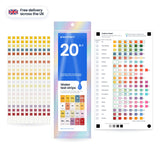
It can show chlorine, but not the cause of an egg or drain smell. No pad on the strip reads hydrogen sulphide, sewage gases or gas. The free chlorine and total chlorine pads both have steps at 0, 0.5, 1, 3, 5, 10 and 20 mg/l, read 30 to 60 seconds after dipping. Because the DWI gives the usual level as 0.5 mg/l or less, in our reading of the chart no colour or the first step fits that usual level. The DWI says a metallic taste can come from copper pipes. The copper pad has steps at 0.2, 0.5, 1, 2 and 5 mg/l against an England limit of 2.0 mg/l, so in our reading a 2 sits at the limit.
- The separate bacteria test is a presence screen for coliforms, not a count, read after 24 to 48 hours. We do not claim it for the causes of smells.
- A strip result is not a legal sample. For a smell that stays away from the sink, the DWI says to contact your water company.
Scan the QR code on the colour chart, or use our free results checker, to see your readings in the browser with no app or account. Our home testing guide covers the steps. Note any reading alongside which tap and when, if you call your water company.
The area figure is an average, and the DWI says a property near the treatment works may get a little more chlorine than one several miles away, so your own tap may differ. The free chlorine, total chlorine and copper pads are the ones that matter here. A chlorine step above the usual 0.5 mg/l or less indicates more chlorine than that, and a copper step of 2 or above would sit at or past the England limit of 2.0 mg/l. Best pack: 20 strips, enough to check chlorine at the kitchen cold tap and a second tap, and again if the smell changes, £5.99 (or £10.99 with a bacteria test), with free 2nd Class delivery on every order. See the kit
Your tap water smell questions
Why does my tap water smell like rotten eggs? Why does my tap water smell like eggs? Why does the tap water smell like eggs? Why does tap water smell like eggs?
The DWI lists "rotten, stagnant, sewage" smells and says the sink or drains are likely if the smell is gone in another room. Do that glass test first.
Why does my tap water smell? Why does tap water smell? Why does my tap water smell bad?
The DWI says most drinking water has no noticeable taste or odour. Where there is one, it lists chlorine, plumbing, standing water and summer reservoir algae among the causes.
Why does my tap water smell like sulfur?
In the sources we read, the DWI does not name sulphur. Its closest entry is "rotten, stagnant, sewage".
Why does my tap water smell like sewage?
The DWI says the sink or drains are likely if the smell goes in another room. If it stays, it says to contact your water company immediately.
Sources
- Drinking Water Inspectorate, Taste and Odour in Drinking Water (rotten, stagnant, sewage row, causes, seasonal changes, steps to follow, hot tap advice; undated page; read 29 October 2026).
- Drinking Water Inspectorate, Chlorine (typical 0.5 mg/l or less, most companies below 1 mg/l, standing water advice; undated page; read 29 October 2026).
- Drinking Water Inspectorate, Water Storage Tanks and Cisterns (250 litres, when tank water deteriorates; undated page; read 29 October 2026).
- Drinking Water Inspectorate, Advice for Finding a Plumber (WaterSafe scheme, Water Fittings Regulations 1999; undated page; read 29 October 2026).
- The Water Supply (Water Quality) Regulations 2016, Schedule 1 (odour acceptable to consumers with no abnormal change at consumers' taps; copper 2.0 mg/l; we found no hydrogen sulphide parameter; these Regulations apply to water companies in England; read 29 October 2026).
- The Water Supply (Water Quality) Regulations 2018 (Wales), the Public Water Supplies (Scotland) Regulations 2014 and the Water Supply (Water Quality) Regulations (Northern Ireland) 2017 (contents pages only, cited to name the instruments; read 29 October 2026).
- World Health Organization, Guidelines for drinking-water quality, fourth edition with addenda, chapter 10, Acceptability aspects (appearance, taste and odour should be acceptable to the consumer; undated PDF; read 29 October 2026).
- Mumsnet, smelly hot tap water (forum post dated 1 June 2012, paraphrased; read 29 October 2026).
- WaterKit, Water Test Kit (20-in-1 strip from £3.99, 30 to 60 second read, optional rapid coliform test read after 24 to 48 hours, free 2nd Class delivery on every order, 30-day money-back guarantee) and results portal (chlorine and copper pad steps). The comments on which steps fit the usual chlorine level and the copper limit are WaterKit's own reading of the chart.
Contains public sector information licensed under the Open Government Licence v3.0.