

How to test your water at home
Share
Part of our water testing guide
An area figure tells you about the network. Only a sample from your own tap tells you about your tap.
Short answer: Take a sample from your cold kitchen tap in a clean container and test it, which takes 30 to 60 seconds with a home colour test. The Drinking Water Inspectorate reports 99.97% overall compliance for England's public supplies in 2025, but that is an area figure, and a home test is not a legal sample.
By Andrew Tomlinson, WaterKit · Last reviewed 29 October 2026
How do you test water at home?
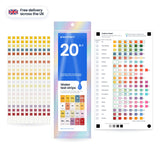
With a colour test strip and, if you want a bacteria screen, a rapid coliform test. Our 20-in-1 strip reads about 20 things in 30 to 60 seconds, and the bacteria test is read after a day or two. The Drinking Water Inspectorate (DWI) says 99.97% of tests on England's public supplies met the legal standards overall in 2025. That describes the network as a whole. The rest of this guide is about your own tap.
Why might your tap not match the area figure?
The area figure is an average. Your tap sits at the end of pipework that the water company does not own, and a figure for the area does not tell you what comes out of your own tap. The DWI's lead page says all the plumbing inside your home, up to the kitchen tap, is the property owner's responsibility. These are the reasons the sources give.
- Pipes and the age of the building. The DWI says lead pipework was commonly used before 1970 to connect properties to the mains, and that many older properties that have not been modernised are likely to have lead pipework underground or inside. It says the amount depends on how long water has stood in the pipe, the pipe's condition, the temperature and the water's hardness. Our lead pipes guide shows the stop tap check.
- Which tap you use. In our view the cold kitchen tap is the one to sample, because it is the tap most people drink from. Our bathroom tap guide covers the difference.
- Chlorine. The DWI says companies typically keep it to 0.5 mg/l or less, that higher levels are sometimes needed during pipe maintenance, and that some people are very sensitive to its taste and smell. Our chlorine guide explains why it differs from house to house.
- Hardness. The DWI says there is no UK standard for hardness and that areas vary locally, so ask your water company for an accurate figure. Our postcode guide shows where to look.
- Private supplies. A well or borehole is outside the water company's figures. The DWI says a sample is a snapshot, because quality can vary over time, for example with the seasons.
“The area figure tells you how the network is doing, but your tap sits at the end of pipework the water company doesn't own, so I'd always sample your own cold kitchen tap rather than assume it matches. If you're also on an older property or a private supply, that's even more reason to check what's actually coming out.”
When is a home strip enough, and when is it not?
It is enough when the question is about your own tap and how it changes, such as hardness, chlorine, copper, nitrate, manganese and pH, or a before-and-after check around a filter, softener or plumbing job. It is not enough when the answer has to count as an official result. That split is our view, and the official statements below are attributed.
- A legal result. The DWI says privately taken samples should be collected, transported and analysed by an accredited method and a trained individual, and it points to the UKAS website for approved laboratories. A strip result is not a legal sample.
- Lead. The strip cannot read lead at the UK limit, because its lead pad first changes at 20 mg/L against a limit of 0.01 mg/L (10 µg/l). The DWI recommends a qualified plumber for replacing pipework, such as one accredited through the WaterSafe scheme.
- Your public supply. The DWI says to approach your supplier first. Companies will normally take a sample after a complaint, depending on its nature, and they give results from their daily testing free of charge on request.
- A private supply. The DWI says your local authority is the first point of contact. For a single home it says testing is not mandatory unless the owner or occupier asks, and the council can recover its costs (DWI, single dwelling supplies).
How do you take a good water sample?
From the right tap, in a clean container, after deciding between first-draw and flushed water.
- Use the cold kitchen tap. For the reason, see the DWI's point on mains-fed taps above.
- Choose first-draw or flushed. First-draw is the first water out after it has stood in the pipes. The DWI's sampling manual guidance for councils takes lead, copper and nickel as the first litre before flushing, and other chemistry after at least two minutes of running. Our routine is a flushed sample for a general reading, plus a first-draw sample if you are checking copper.
- Keep the container clean. Fill a clean glass or cup without touching the tap or the inside of the container. The DWI notes that a kitchen tap or collection vessel may not be fully sterile, which is why water company samplers are trained to avoid contamination.
- Pick a time and keep to it. Testing at the same time of day makes your own results easier to compare.
- Dip and read. Dip one strip, wait 30 to 60 seconds and match the pads to the chart, or enter the colours in the free results checker, which opens in your browser with no app or account. You can also scan the QR code on the chart in the pack.
How do you read a test strip honestly?
As a band, not an exact figure, read inside the time window. A colour between two steps means a reading between them. Our habits, which are not official rules, are to read in daylight against a white background and to re-test with a fresh strip and sample before acting on a surprising reading.
On seven pads the first step above zero is already above the UK limit in the 2016 Regulations for England. A zero on them means none detected at that first step, not that the water is under the limit.
| Pad | UK limit | First colour step |
|---|---|---|
| Lead | 0.01 mg/L (10 µg/l) | 20 mg/L |
| Mercury | 0.001 mg/L (1.0 µg/l) | 0.5 mg/L |
| Chromium | 0.05 mg/L (50 µg/l) | 2 mg/L |
| Aluminium | 0.2 mg/L (200 µg/l) | 5 mg/L |
| Iron | 0.2 mg/L (200 µg/l) | 1 mg/L |
| Nitrite | 0.5 mg/L | 1 mg/L |
| Fluoride | 1.5 mg/L | 4 mg/L |
So the strip cannot read lead, mercury, chromium, aluminium, iron, nitrite or fluoride at the UK limit, and a zero on those pads is not a pass. For lead, use the lead pipes guide and the DWI's advice on plumbers. For anything that must count officially, use an accredited laboratory.
What can the strip show against the legal limits?
For six common checks it can indicate which side of the limit or official figure you are on. The last column is our reading of the colour chart steps, not a claim from the regulator.
| Check | Limit or official figure | Strip colour steps | What the chart can show |
|---|---|---|---|
| pH | 6.5 to 9.5 | 6.2, 6.8, 7.2, 7.6, 7.8, 8.4 | The 6.2 and 6.8 steps sit either side of the 6.5 minimum, and the top step is 8.4, below the 9.5 maximum |
| Hardness | No UK limit. DWI classes (mg/l as CaCO3) are soft up to 100, hard 200 to 300, very hard over 300 | 0, 25, 50, 100, 250, 425 mg/L | If the pad's mg/L is calcium carbonate (unconfirmed), 100 or below fits the soft class, 250 the hard class and 425 the very hard class |
| Free and total chlorine | We found no limit in the 2016 Regulations. The DWI says companies typically keep it at 0.5 mg/l or less. WHO guideline value 5 mg/l | 0, 0.5, 1, 3, 5, 10, 20 mg/L | The 0.5 and 1 steps cover the DWI's usual range, and the 5 step is the WHO guideline value |
| Nitrate | 50 mg/l | 0, 10, 25, 50, 100, 250, 500 mg/L | 25 or below is under the limit, 50 is at or near it, 100 or more is above it |
| Copper | 2.0 mg/l | 0, 0.2, 0.5, 1, 2, 5 mg/L | 1 or below is under the limit, 2 is at it, 5 is above it |
| Manganese | 50 µg/l (0.05 mg/l) | 0, 0.05, 0.1, 0.5, 1, 2, 5 mg/L | The first colour step, 0.05, is at the limit, and 0.1 is above it |
What does the rapid bacteria test show?
Whether coliform bacteria are likely present in a small sample, and nothing more. Add 2 ml of your sample to the pouch, seal it, lay it flat and read it after 48 hours at room temperature, or 24 hours at 37°C. Purple means no coliforms grew and yellow means they are likely present. It is a presence screen, not a count, and not a legal sample. Our bacteria testing guide has more.
The legal standard is no E. coli or enterococci in 100 ml at the tap, and the 2016 Regulations list coliform bacteria at 0 per 100 ml as an indicator. Our pouch screens 2 ml, so a purple result is not the same as meeting those standards. That is our reading, not the regulator's. We do not claim the test for pool or pond water. After a yellow result, re-test with a fresh sample, since a tap or container may not be fully sterile. If it turns yellow again, contact your water company, or your council on a private supply.
What should you do with a result?
Take it to whoever is responsible for that part of the system.
| What you see | Who to contact | What the official sources say |
|---|---|---|
| An unexpected taste, smell or colour, or a chlorine reading that worries you, on a public supply | Your water company | gov.uk says tap water should be clear and should not smell. The DWI says companies give a free water quality report on request |
| A yellow bacteria test or a high nitrate reading on a private supply | Your council's environmental health team | gov.uk says to report private supply problems there. Our well and borehole guide has the detail |
| A TCP-like taste, or a problem that may sit in your own plumbing | Your water company, and a WaterSafe-approved plumber for any pipework | The DWI says a TCP-like taste that makes water unpalatable may point to home plumbing, and to contact your water company |
| A reply you are unhappy with | The DWI | gov.uk says to contact the DWI if you are not happy with your water company's response |
What should you test first at your own tap?
Start with the pads that can actually separate your tap from the area picture. Hardness, chlorine, copper, nitrate, manganese and pH have colour steps that sit at or around the official figures, so a reading indicates which side you are on. Run one flushed sample and one first-draw sample from the cold kitchen tap, note the colours, and repeat after any filter, softener or plumbing change. For a private supply, add the bacteria screen.
The 99.97% figure is an average for England's public supplies, and the DWI says the plumbing from the stop tap to your kitchen tap is the owner's responsibility, so your own tap may differ from it. Hardness, chlorine, copper, nitrate, manganese and pH are the pads that matter most here. A step change on any of them after a filter, softener or plumbing job indicates something has changed at your tap, and a yellow bacteria pouch on a private supply is a reason to re-test and then contact your council. Best pack: 20 strips, enough to test flushed and first-draw water now and again after any change, £5.99 (or £10.99 with a bacteria test), with free 2nd Class delivery on every order. See the kit
Your water testing questions
How to test water quality at home?
Take a sample from your cold kitchen tap, dip a strip and match the pads to the chart in 30 to 60 seconds. Add the bacteria test for a coliform screen.
How to test tap water?
Use the cold kitchen tap, and choose first-draw or flushed water as above. The DWI says many water companies publish their test results online, and our tap water guide sets out what the DWI reports.
How to test water hardness?
Read the hardness pad and compare it with the DWI classes in the table. Our hardness testing guide goes step by step.
How to test chlorine in water?
Read the free and total chlorine pads. The DWI says companies typically keep chlorine at 0.5 mg/l or less, and the WHO guideline value is 5 mg/l.
How to test well water?
A strip and the bacteria screen can give clues between official tests. The DWI says the council is the first point of contact for a private supply, and it can sample a single home on request.
How to test fish tank water?
The RSPCA says clear water does not always mean healthy water, that ammonia and nitrite kits are essential, and it gives 0 mg/L for both. Our strip has no ammonia pad, and its nitrite pad first changes at 1 mg/L, so it cannot check that figure. It does have pH, hardness, nitrate and chlorine pads. Our aquarium testing guide has more.
Sources
- Drinking Water Inspectorate, Water Testing (approach your supplier first; samples on complaint; daily testing and results free of charge on request; sterility of taps and containers; private supplies and the local authority; private testing by an accredited method and trained individual, UKAS website; undated page; read 29 October 2026).
- Drinking Water Inspectorate, Guidance for Local Authorities in developing Private Water Supplies Sampling Manuals (page read 29 October 2026) and the Sampling Procedures Manual, version 4.0, March 2026 (first-litre metals sample before flushing and a minimum two-minute flush; manual details read 25 October 2026).
- Drinking Water Inspectorate, Lead in Drinking Water (lead pipework before 1970, what affects the amount, owner's responsibility for pipework inside the home, a qualified plumber such as one accredited through WaterSafe; undated page; read 29 October 2026).
- Drinking Water Inspectorate, Chlorine (typically 0.5 mg/l or less, higher during maintenance, sensitivity to taste and smell, TCP-like taste; undated page; read 29 October 2026). The cold mains tap, loft tank, WHO 5 mg/l and free water quality report points were read on 25 October 2026.
- Drinking Water Inspectorate, Water Hardness / Hard Water (no UK standard for hardness; classes in mg/l CaCO3; ask your water company for an accurate figure; read 25 October 2026).
- Drinking Water Inspectorate, Single dwelling supplies (no mandatory monitoring of a single home unless requested; costs recoverable) and Defining the relevant person (a sample is a snapshot, seasonal change; read 25 October 2026).
- Drinking Water Inspectorate, Drinking Water 2025, England, compliance with water quality standards (99.97% overall; read 25 October 2026).
- The Water Supply (Water Quality) Regulations 2016 (England), Schedule 1 (E. coli and enterococci 0 per 100 ml; copper 2.0 mg/l; lead 10 µg/l; mercury 1.0 µg/l; chromium 50 µg/l; fluoride 1.5 mg/l; nitrate 50 mg/l; nitrite 0.50 mg/l; aluminium 200 µg/l; iron 200 µg/l; manganese 50 µg/l) and Schedule 2 (pH 6.5 to 9.5; coliform bacteria 0 per 100 ml; read 25 October 2026). The micrograms-to-milligrams conversions are our arithmetic.
- gov.uk, Check the quality of your drinking water (contact your water company, or your council for a private supply; contact the DWI if unhappy with the response; read 25 October 2026).
- World Health Organization, Guidelines for drinking-water quality, chemical fact sheet on chlorine (guideline value 5 mg/l; read 25 October 2026).
- RSPCA, Choosing an Aquarium for Pet Fish (clear water is not always healthy water; ammonia and nitrite kits essential; 0 mg/L figures; read 25 October 2026).
- WaterSafe Register, watersafe.org.uk (approved plumber directory) and UKAS, ukas.com (accredited laboratories; read 25 October 2026).
- WaterKit, Water Test Kit (20-in-1 strip, 30 to 60 second read, optional rapid coliform test, 30-day money-back guarantee) and results portal (colour steps, the 2 ml bacteria pouch and its read times). The chart column in the tables, the sampling routine and the reading habits are WaterKit's own.
Contains public sector information licensed under the Open Government Licence v3.0.