

How to tell if your house has lead pipes (and what help is available)
Share
Part of our tap water guide
The DWI says lead is not present in the wider public supply network, but the pipes between the main and your tap are another matter.
Short answer: The DWI says a home built before 1970 may have lead pipes and one built after 1970 is unlikely to. You can check at your internal stop tap, where unpainted lead is dull grey and shows shiny silver when scraped with a coin. The legal limit at the tap in England is 10 micrograms per litre.
By Andrew Tomlinson, WaterKit · Last reviewed 29 October 2026
A home test strip cannot read lead at the UK limit, so the pipe itself is the first thing to look at. The stop-tap check below needs only a coin and disposable gloves. A 20-in-1 strip can then show copper and hardness at your own tap, which are the readings that bear on how pipework behaves.
How do you tell if your house has lead pipes?
Start with the build date, then look at the pipe where it enters the house. The Drinking Water Inspectorate (DWI) says lead pipes were commonly used before 1970 to connect properties to the mains, that they have since been banned, and that many older properties not yet modernised are likely to have lead pipework underground, inside the building or both. You need a coin and disposable gloves.
- Find your internal stop tap. It is where the water first enters the property, often in or behind a kitchen cupboard or in a downstairs toilet.
- Look at the pipe. The DWI says unpainted lead is dull grey and often has a swollen joint next to the tap.
- Tap it. United Utilities says lead gives a dull thud where other metals ring clearly.
- Scrape it gently with a coin. Lead is soft, and the DWI says shiny silver metal shows beneath. Wear gloves and be careful not to breathe in any dust.
For comparison, the DWI describes copper as bright, hard and dull brown, iron as dark, very hard and possibly rusty, and plastic as typically blue, or grey or black if older. If you are still unsure, United Utilities suggests asking a plumber for a second opinion.
The DWI names two less common sources that a pipe check will not answer. Lead solder is still permitted in closed central heating systems and occasionally gets used on drinking water pipes by mistake, and older brass fittings can also be a source.
Why might the water at your tap differ from the water leaving the treatment works?
The area figure is an average. Your tap sits at the end of a supply pipe and plumbing that the DWI says are the property owner's responsibility. The DWI says lead is not present in the water in the wider public supply network, and United Utilities says the water leaving its works contains virtually no lead. Both say it can be picked up on the way. For United Utilities that means the pipe connecting your property to the main, or any lead pipes in your home. A figure for the area does not tell you what comes out of your own tap.
The DWI says lead from pipework can dissolve into water standing in the pipe, so if you have lead pipework the chances are there will be some in your drinking water. It lists what changes the amount.
- How long the water has been standing in the pipe.
- The condition of the lead pipework.
- Temperature, with more lead dissolving in summer and autumn.
- Water hardness. The DWI says harder water tends to form a protective scale over the pipe surface that can reduce the concentration of lead.
The DWI adds that water companies treat the water with orthophosphate where a lead risk exists, which reduces the problem significantly, but particles can build up in old pipes and intermittently appear in tap water. It says working on a lead pipe can temporarily raise the concentration and advises flushing the tap for at least 10 minutes afterwards. The DWI says lead can build up in the body, that exposure should be minimised as far as possible, and that infants and children are at particular risk.
“The area figure tells you about the network, but your own tap sits at the end of pipework that is mostly the owner's responsibility, so I'd always look at what's actually in your house before leaning on it. A quick check at the stop tap, plus a look at your hardness, tells you far more about your home than a regional average can.”
Hardness varies with local geology, according to the DWI's hardness page, which says soft water of 100 mg/l (as calcium carbonate) or less is more corrosive to pipework. Our how hard is my water guide shows how to find yours, and the hardness pad on our 20-in-1 strip gives a rough reading at your own tap. The 2016 Regulations set the limit for lead at consumers' taps in England at 10 micrograms per litre.
What can you do while the lead pipe is still there?
The DWI and United Utilities give the same short-term advice, and most of it costs nothing.
- Flush before drinking. Run the cold kitchen tap to clear water that has stood overnight. The DWI says a washing-up bowl full is normally enough, and a long service pipe may need longer. It suggests running the tap over your fingers until the temperature drops as fresh mains water arrives. United Utilities adds that flushing the toilet also clears standing water.
- Use the kitchen cold tap for food and drink. A United Utilities fact sheet says water from the hot tap is likely to contain higher levels of lead and other metals.
- Avoid knocking the pipes. United Utilities says disturbing lead pipes can increase lead in the water.
- Boiling does not remove lead, says United Utilities. Our boiling guide covers what it does do.
- Bottled water for infant formula, if you choose it, should, says United Utilities, contain less than 200 mg per litre of sodium on the label, and United Utilities says to follow the formula's boiling instructions.
United Utilities says this advice may not work if the underground pipe to your home is over 30 metres long. The DWI describes flushing as short-term and says lead pipes should be replaced as soon as possible.
Who is responsible for lead pipes, and can you get them replaced for free?
Partly. The DWI says the water company owns the communication pipe from the main to the stop valve outside your property. The owner is responsible for the supply pipe from that valve into the home and for all plumbing inside to the kitchen tap. The DWI says to use a qualified plumber, for example one accredited through WaterSafe, and to tell your water company, which is legally required to replace its communication pipe if it is lead and at risk of adding to the lead in the supply. It also says anyone buying a property should ask the surveyor to check the pipes and mention lead.
The only scheme we read in full is United Utilities' Lead Pipe Replacement Scheme, as shown on its page on 29 October 2026.
- You can apply if you own the property, have a lead supply pipe, use the water domestically and hold an active United Utilities account. The property must be an existing supply, not a new build, and not too far from a main.
- United Utilities says you must be accepted before any work is done, and it aims to process applications within 10 working days.
- You replace the pipework within your boundary up to the first cold tap, to its specification (for example 750 mm deep, with at least 2 metres of pipe coiled at the boundary).
- United Utilities offers a free 25 mm connection from your boundary to the main, and aims to finish within 6 weeks. You may be eligible for a £550 grant towards a private plumber.
Its fact sheet (undated, reference code ending 11/22) says it will replace any remaining lead on its side of the street. We did not read the schemes of other water companies, so check your own company's website.
What can a test strip show at your own tap?
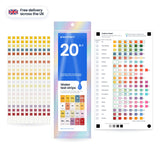
It can indicate copper and hardness readings, but it cannot read lead at the UK limit. The lead pad's first colour step is 20 mg per litre, against a limit of 0.01 mg per litre (10 micrograms). That is 2,000 times the limit by our arithmetic, so a zero on that pad does not mean none, or under the limit. For lead, work from the stop-tap check and, if you are unsure, ask a plumber for a second opinion, as United Utilities suggests. This table is our reading of the colour chart.
| Pad | Official figure | What our chart can show |
|---|---|---|
| Lead | 10 µg/l (0.01 mg/l) at the tap | Steps at 0, 20, 50, 100, 200 and 500 mg/l, so the first colour sits far above the limit |
| Copper | 2.0 mg/l at the tap | Steps at 0.2, 0.5, 1, 2 and 5 mg/l, so 2 sits at the limit. The DWI says that on rare occasions blue water can come from corroding copper plumbing, and our blue-green stains guide covers it |
| Hardness | The DWI calls 100 mg/l or less soft | Steps at 0, 25, 50, 100, 250 and 425, with the unit basis unconfirmed, so a rough comparison only |
A strip result is not a legal sample and has no legal effect. The results portal reads the colours you enter, with no app or account. Our home water testing guide has the steps. Fill a clean glass, dip a strip, wait 30 to 60 seconds and match the pads to the chart.
The area figure is an average, and the DWI says the pipes from the main to your tap belong to the property owner and can add metal to water as it stands, so your own tap may read differently. The pads that matter here are copper and hardness. A copper reading that is higher on the first draw than after flushing would suggest your plumbing is adding metal, and the DWI links blue water to corroding copper plumbing. A hardness reading at the soft end of the chart would point towards the DWI's soft band (100 mg/l or less), which it says is more corrosive to pipework. Best pack: 20 strips, enough to compare copper and hardness at the kitchen cold tap first thing and after flushing, and again in another season, £5.99 (or £10.99 with a bacteria test), with free 2nd Class delivery on every order. See the kit
Lead pipes: the questions people ask
Are lead pipes still common in the UK?
The DWI says many older properties that have not been modernised are likely to have lead pipework, and a United Utilities fact sheet calls it not uncommon in pre-1970 homes. We found no national count in the sources we read.
How do I know if my house has lead pipes?
Check the pipe at the internal stop tap, as above. Dull grey, a swollen joint, a dull thud and silver metal under a coin scrape all point to lead.
Can I get my lead pipes replaced for free?
Partly, and it depends on your company. United Utilities offers a free connection from the boundary to the main and a possible £550 grant towards your own side. The pipework inside your boundary is yours to replace.
Does a water filter remove lead?
In the sources we read, the DWI's lead page and United Utilities' lead pages do not mention filters. Their advice is flushing in the short term and replacing the pipe. Our filter guide covers filters more widely.
Does hard water help?
The DWI says harder water tends to form a protective scale on the inside of the pipe, which can reduce the concentration of lead. It also says artificially softened water may be aggressive to plumbing, causing leaching of copper and lead, and advises keeping an unsoftened tap for drinking.
Sources
- Drinking Water Inspectorate, Lead in drinking water (undated; pre-1970 rule, stop-tap and coin check, pipe materials, factors affecting lead, orthophosphate, solder and brass, flushing, 10-minute flush after work, pipe ownership, WaterSafe, buying a property; read 29 October 2026).
- United Utilities, Information about lead pipes (undated; virtually no lead leaving the works, dull thud, flushing, boiling, 30 m, 200 mg/l sodium, second opinion; read 29 October 2026).
- United Utilities, Lead and Common Supply Pipe Scheme (undated; eligibility, apply first, 10 working days, free 25 mm connection, 6 weeks, £550 grant, 750 mm depth, 2 m coil; read 29 October 2026).
- United Utilities, Lead in drinking water fact sheet (undated, reference code ending 11/22; hot tap, remaining lead on its side of the street, not uncommon in pre-1970 homes; read 29 October 2026).
- Drinking Water Inspectorate, Water hardness / hard water (undated; soft water 100 mg/l or less more corrosive, softened water and lead leaching, hardness varies with geology; read 29 October 2026).
- Drinking Water Inspectorate, Blue or brightly coloured water (undated; blue colour from corroding copper plumbing; read 29 October 2026).
- The Water Supply (Water Quality) Regulations 2016, Schedule 1 (lead 10 µg/l and copper 2.0 mg/l at consumers' taps; read 29 October 2026).
- WaterKit, Water Test Kit (20-in-1 strip, 30 to 60 second read, bacteria test optional, free 2nd Class delivery on every order) and results portal. The pad steps in the table, the comparisons and the 2,000 times figure (20 divided by 0.01) are WaterKit's own reading and arithmetic.
Contains public sector information licensed under the Open Government Licence v3.0.