

Should I filter my tap water in the UK?
Share
Part of our tap water guide
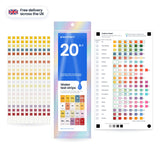
The jug on the shelf promises less chlorine, less limescale and fewer "impurities". Which of those apply to your tap, and which does a filter actually touch? You can check your own tap with a 20-in-1 test strip.
Short answer: Not for health reasons, according to the Drinking Water Inspectorate (DWI), which says tap water in England and Wales needs no extra home treatment as a health protection measure. England's overall compliance in 2025 was 99.97%. A filter is a taste or limescale choice, and whether it helps depends on your own tap, pipes and hardness.
By Andrew Tomlinson, WaterKit · Last reviewed 29 October 2026
Should I filter my tap water in the UK?
Only if there is something you want to change, such as taste or limescale. The DWI says water companies must supply wholesome water suitable for drinking, cooking and washing, and that there is no need to install extra treatment at home as a health protection measure. Its 2025 report puts overall compliance for England at 99.97%, and 24 water companies supply 59.74 million consumers in England.
That is an area-wide figure, so before buying anything it helps to see your own tap. WaterKit does not sell filters or softeners, and our filter or softener guide covers whether you need one. The DWI also advises asking your water company for its free water quality report before you buy.
Why might my tap not match the area figure?
The area figure is an average. Your tap sits at the end of a particular set of pipes, and the DWI describes several things that differ from house to house.
- Pipes inside the property. The DWI says all the plumbing inside your home up to the kitchen tap is the owner's responsibility. Its 2025 report counts 447 compliance failures related to consumer distribution systems, without saying how many came from pipes inside homes. Its lead page says a home built before 1970 may have lead pipes, and that lead can dissolve into water standing in the pipe.
- Standing water and the loft tank. The DWI says hot water and bathroom taps usually come from a loft storage tank, so it advises drinking water from the cold kitchen tap, and drawing off a washing-up bowlful if the water has not run for several hours. Our loft tank guide explains the tank.
- Chlorine. The DWI says levels vary by distance, with a home near the treatment works possibly getting a little more than one several miles away. It says a TCP-like taste can point to home plumbing such as appliance hoses or some plastic kettles. See our chlorine guide.
- Hardness. The DWI says hard water scales kettles, irons and appliances, shortening the life of heating elements. It classes 200 to 300 mg/l as hard and over 300 as very hard, and says to ask your water company for an accurate figure. Our guide to how hard your water is shows how to find yours.
“If you're weighing up a filter, I'd look at your own tap first, because the area figure is an average and your pipes, your distance from the treatment works and your hardness can all change what comes out of it. A quick check at home tells you whether you're solving a real problem or just buying a jug on the strength of the packaging.”
Are water filter jugs worth it?
That depends on what you want from them, and Which? frames its tests around taste and softening. It says the best jugs improve the taste of tap water by softening hard water, and it tested 10 jugs, finding significant variation in softening performance, taste and design. Upkeep matters too. The DWI says an out-of-date cartridge stops working and may leach other chemicals or bacteria. Our guide on how often to change a water filter covers the schedule.
For chlorine taste alone, the DWI says a covered jug of tap water in the fridge reduces the smell and taste, and that unused water should be thrown away after 24 hours.
What do the different kinds of filter do?
| Type | What the DWI says it is for | Watch out for |
|---|---|---|
| Activated carbon | Taste and odour such as chlorine | Spent cartridges stop working. Black specks are likely carbon from the filter itself |
| Carbon plus ion-exchange resin, as in some jugs | Alters "temporary" hardness | Does not alter permanent hardness |
| Reverse osmosis | Removes most dissolved solids | Wastes 20 to 30% of the incoming flow, is not generally considered suitable for drinking and cooking, and needs notice to your water company |
Does a water filter remove limescale?
Partly, if it is a jug with ion-exchange resin, and only the "temporary" kind. The DWI says some carbon jug filters also hold ion-exchange resin beads that alter temporary hardness, the calcium and magnesium carbonates and bicarbonates that form scale when water is boiled. Tea gets less scum and kettles may scale less, but these devices do not alter permanent hardness.
Results vary by jug. Which? compared tap water with each jug's output using colour-changing hardness strips, and says the best jugs removed nearly all the hardness-causing minerals while the worst showed little improvement. A hardness reading from a strip at your own tap gives you the starting point before you compare jugs.
What one reader found
A 2013 post on the MoneySavingExpert forum shows why people reach for a jug. The poster wrote "Our water is very hard and tastes awful", said it had to be filtered before use even in the kettle, and said it had ruined their last kettle because they could not descale it quickly enough. A filter jug made the water usable, but the poster found the filters expensive and said they lasted only 2 to 3 weeks, and asked for a cheaper way. It is one person's experience, and the post does not say how hard the water was or which supply it came from. Shared on MoneySavingExpert Forum.
Can a water filter remove fluoride?
In the sources we read, the evidence is thin. The DWI's list of common filter marketing claims covers pesticides, minerals, taste, particles, hardness and nitrates, and does not mention fluoride. Which? lists one jug whose maker claims it filters fluoride, but Which? explains that it does not test jugs for filtering contaminants, so that claim is untested by Which?. We found no UK official guidance on which home filters reduce fluoride.
Know your starting point first, which our guide is there fluoride in UK tap water? covers. The DWI says fluoridation means dosing supplies to bring the level to 1 mg/l, the maximum permitted is 1.5 mg/l, and fluoride is naturally present at low levels in most water. The limit is the same in Schedule 1 of the 2016 Regulations, which apply to water companies in England.
What about lead?
In the DWI pages we read, we found no official guidance that points households to a jug for lead. The DWI's lead page does not mention filters. It advises running the tap to clear water that has stood in the pipes, and says lead pipes should be replaced. Which? lists several jugs whose makers claim to reduce lead, and those claims are untested by Which? for the same reason as above. Our lead pipes guide covers the pipe check.
What should I check before buying one?
Check that the claim names the thing you want removed, and that the product meets the rules. The DWI says any product must comply with regulation 4 of the Water Supply (Water Fittings) Regulations 1999, and suppliers must be able to show compliance, such as through UK certification. It also says never to buy a device from a door-to-door seller, particularly one offering to test your water as a sales demonstration. We found no UK official guidance in these sources on which performance mark to look for.
How can I see what a filter changes at my own tap?
Test the same tap water before and after. Fill a clean glass from the cold kitchen tap, dip one strip, wait 30 to 60 seconds and match the pads to the chart, or enter the colours in the free results checker. Pour the same water through the filter and test it with a fresh strip straight away. Repeat later in the cartridge's life. The table is our reading of the chart steps, not a claim from the DWI or Which?.
| Pad | Chart steps | What before and after can show |
|---|---|---|
| Free and total chlorine | 0, 0.5, 1, 3, 5, 10, 20 mg/L | The DWI says residual chlorine is typically 0.5 mg/l or less. A tap reading of 0.5 or 1, then 0 after filtering, indicates the filter takes it below the chart's first step. If the tap reads 0, there is nothing on the chart to change |
| Hardness | 0, 25, 50, 100, 250, 425 (unit basis unconfirmed) | A jug that lowers temporary hardness may move the reading down a step if the drop is big enough. The upper steps are wide, so a small drop can fall between them, and the pad does not separate temporary from permanent hardness |
| Fluoride | First colour step 4 mg/L | Far above the 1.5 mg/l UK limit, so a clear pad says nothing about a filter |
| Lead | First colour step 20 | Above the UK limit of 10 micrograms per litre. The strip cannot read lead at the UK limit |
So the strip can show a filter's effect on chlorine and hardness, and nothing for fluoride or lead. For lead, use the lead pipes guide, and for any contaminant claim ask the maker for evidence that names it. A strip result is not a legal sample. The optional rapid coliform test is a presence screen, read after 24 to 48 hours, and it does not replace changing cartridges on time.
The area figure is an average, and the DWI says chlorine levels vary with distance from the treatment works while the plumbing inside your home is the owner's responsibility, so your own tap may differ. The pads that matter here are chlorine and hardness. A drop from the unfiltered to the filtered reading on either pad indicates the filter is changing that, while an unchanged reading indicates it is not at that step. Best pack: 20 strips, enough to test the tap and the filtered water side by side now and again as the cartridge ages, £5.99 (or £10.99 with a bacteria test), with free 2nd Class delivery on every order. See the kit
Your tap water filter questions
Should I filter my tap water UK?
Not for health, according to the DWI. It is a choice about taste or limescale.
Are water filter jugs worth it?
Which? found large differences between the 10 jugs it tested, so it depends on what you want.
Does a water filter remove limescale?
Jugs with ion-exchange resin reduce temporary hardness, says the DWI, but not permanent hardness.
Can a water filter remove fluoride?
We found no official guidance on which home filters do.
Sources
- Drinking Water Inspectorate, Domestic water filters and softeners (undated page; no need for home treatment as a health measure; activated carbon; cartridges; reverse osmosis; particulate filters; free water quality report; door-to-door sellers; Water Fittings Regulations; read 29 October 2026).
- Drinking Water Inspectorate, Chlorine (undated; fridge jug, 24 hours, typical residual 0.5 mg/l or less, variation by distance, home plumbing causes of TCP-like tastes, standing water and loft tanks; read 29 October 2026).
- Drinking Water Inspectorate, Water hardness (undated; hardness bands, scaling, jug filters with ion-exchange resin, temporary and permanent hardness; read 29 October 2026).
- Drinking Water Inspectorate, Fluoridation of drinking water (undated; 1 mg/l dosing, 1.5 mg/l maximum, five companies; read 29 October 2026) and Lead in drinking water (undated; homes built before 1970, standing water, running the tap, owner's pipework; no mention of filters; read 29 October 2026).
- Drinking Water Inspectorate, Drinking Water 2025, compliance with water quality standards (99.97% overall; 447 failures related to consumer distribution systems; read 29 October 2026) and Water supplies and testing (24 companies, 59.74 million consumers; read 29 October 2026).
- The Water Supply (Water Quality) Regulations 2016, Schedule 1 (fluoride 1.5 mg/l and lead 10 micrograms per litre at consumers' taps, in England; read 29 October 2026).
- Which?, Best water filter jugs, tried and tested (page dated 20 August 2026, tested April 2025; 10 jugs, hardness-strip method, softening variation, manufacturers' fluoride and lead claims, no contaminant testing; read 29 October 2026). We paraphrase only, and most of its results table is for members.
- MoneySavingExpert Forum, Water filtering? (post dated 27 May 2013; one forum member's account; read 29 October 2026).
- WaterKit, Water Test Kit (20-in-1 strip, 30 to 60 second read, optional rapid coliform test read after 24 to 48 hours, 20 strips £5.99 or £10.99 with a bacteria test, free 2nd Class delivery on every order) and results portal. The chart-step table is WaterKit's own reading of the colour chart.
Contains public sector information licensed under the Open Government Licence v3.0.