

Is there fluoride in UK tap water?
Share
Part of our tap water guide
You have heard fluoride is added to some UK water and not to others. Is it in yours, and where would you find the real number?
Short answer: Yes. The Drinking Water Inspectorate (DWI) says fluoride is naturally present at low levels in most English and Welsh drinking water, and some English supplies have it added to reach 1 mg/l. UKHSA says about one in 10 people in England get fluoridated water. The legal limit at the tap is 1.5 mg/l.
By Andrew Tomlinson, WaterKit · Last reviewed 29 October 2026
This guide reports what UK official bodies say and takes no side in the debate about adding fluoride to water. The official figures are for areas, so it also covers how to find your own supply's number and what a 20-in-1 test strip can and cannot show at your tap.
Is there fluoride in UK tap water?
Yes, because it occurs naturally in most water. The Drinking Water Inspectorate says fluoride is naturally present at low levels in most drinking water in England and Wales. UKHSA's 2026 health monitoring report found local area concentrations in England between 2017 and 2024 ranging from 0.01 to 1.3 mg/l, with about 85% of the population living in areas averaging below 0.40 mg/l.
| Measure | Figure | Who says so |
|---|---|---|
| Level fluoridation schemes aim for | 1 mg/l | DWI |
| Highest local area figure in England, 2017 to 2024 | 1.3 mg/l | UKHSA |
| Legal maximum at the tap | 1.5 mg/l | Water Supply (Water Quality) Regulations 2016 (England) and 2018 (Wales) |
| First colour step on our fluoride pad | 4 mg/l | WaterKit's colour chart |
What is the legal limit for fluoride in tap water?
It is 1.5 mg/l. Schedule 1 of the Water Supply (Water Quality) Regulations 2016 sets a maximum of 1.5 mg of fluoride per litre at consumers' taps in England, and Wales has its own 2018 Regulations with the same value. The DWI says it checks the limit for every supply, fluoridated or not, and can take enforcement action, including where the fluoride is natural. In its Drinking Water 2025 report, it recorded 10,334 fluoride tests in England and none failed the standard.
Which parts of England have fluoride added?
Several regions, covering about one in 10 people in England. The DWI lists United Utilities, Northumbrian Water, Anglian Water, Severn Trent Water and South Staffordshire Water as the companies the Secretary of State requires to fluoridate some or all of their supplies. A 21 March 2022 government press release said schemes cover much of the North East and Midlands and the North West, East of England and Yorkshire and the Humber.
In England the DWI says the Secretary of State decides whether to fluoridate, after a consultation, and in Wales the Welsh Government takes the health decisions. These are companies and regions, and we found no postcode list in the sources we read.
Is the policy changing?
Yes, in the North East. The Department of Health and Social Care (DHSC) says over 1 million people there already live in fluoridated areas, including Newcastle upon Tyne and Gateshead, with schemes since the early 1970s. After a consultation that ran from 25 March to 31 July 2024, its published response says the Secretary of State decided to expand fluoridation in the north east as proposed, working with Northumbrian Water.
Opinion was split. Of 3,336 individual responses, 56% strongly disagreed and 36% strongly agreed. Among individuals living in the proposal area, 54% agreed or strongly agreed and 44% disagreed or strongly disagreed. Of the 140 organisations that responded, 82% strongly agreed. These are the views of people who chose to respond, not a poll.
Why might the fluoride at my tap differ from the figure for my area?
The area figure is an average. Your tap is one point in a supply area, and a figure for the area does not tell you what comes out of your own tap. The sources give three reasons for caution.
- Company lists are broad. The DWI says the five companies must fluoridate "some or all" of their supplies, so a company name alone does not say whether your zone is included.
- Natural and added fluoride are counted together. The DWI says fluoride occurs naturally in some sources, and UKHSA's range of 0.01 to 1.3 mg/l covers both. A single figure does not say which kind you have.
- The DWI map shows typical levels. It describes its map as showing typical concentrations across England and Wales, not a reading at one tap.
“If you want to know whether fluoride is added to your supply, ask your water company for the quality report for your address and look at the fluoride line. Then use a strip for the things it can read at your own tap.”
Other things also vary from area to area. The DWI says the taste of tap water can vary between regions because of hardness and residual chlorine, and a 20-in-1 strip reads both at your own tap in under a minute. See how hard is my water and why tap water can smell of chlorine.
How do I find out whether my water is fluoridated?
Ask your water company, which is the route the DWI points to. It says you can get a free copy of the water quality test results for your home or workplace supply from your local water company, and that the DWI website has a map of typical fluoride concentrations across England and Wales. If the report gives a fluoride figure but not its origin, ask the company whether it is added or natural. Bottled water is a separate question, covered in our bottled water fluoride guide.
What do UK health bodies say about fluoride in water?
UKHSA and DHSC's 2026 report concluded that fluoridation within the 1.5 mg/l limit is beneficial for reducing tooth decay in children, with no convincing evidence of harm to non-dental health, and that the dental benefits were largest in more deprived areas. About 23% of 5 year olds had experienced tooth decay, and those in areas with schemes were less likely to. The report found no evidence of an effect on cognitive ability in children aged 5 and 7, and no convincing evidence of an effect on hip fracture risk. The 2022 report found children and young people in areas with higher fluoride concentrations were up to 63% less likely to be admitted to hospital for tooth extractions due to decay.
The DWI says companies may use only specified fluoridation chemicals made to European purity standards, and must follow its 2021 Code of Practice, with independent audits of dosing facilities.
Can a water filter remove fluoride?
We found no UK official figure for this in the sources we read, which include the DWI's fluoridation and filter pages and UKHSA's 2026 report. The DWI's consumer page on domestic filters lists common claims such as removing pesticides, minerals and nitrates, and does not mention fluoride. It says reverse osmosis removes most dissolved solids but that RO water is not generally considered suitable for drinking and cooking, and it advises getting your free water quality report before buying any filter. Our guide to what reverse osmosis removes goes through the sources. For a particular product, ask the manufacturer whether it was tested for fluoride.
How can I check my own tap, and what can a strip show?
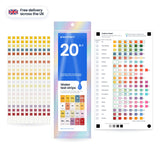
Get the fluoride figure from your water company's report, and use a strip for what it reads at your own tap. It cannot show fluoride at UK levels. Our fluoride pad's first colour step is 4 mg/l, more than two and a half times the 1.5 mg/l legal maximum (our reading of the chart and our arithmetic). A fluoridated supply and a naturally low one would both read as zero, which means below the first 4 mg/l step, not that there is no fluoride. It cannot tell added from natural fluoride either.
What the strip does at the tap you drink from is read other things. Fill a clean glass, dip one strip, wait 30 to 60 seconds and match the pads to the chart, or scan the QR code on the chart to open the free results checker. The hardness and chlorine pads indicate the two things the DWI links to regional taste differences, and the optional rapid coliform bacteria test is read after 24 to 48 hours. Our home testing guide shows the steps, and a strip result is not a legal sample.
The area figure is an average, and the DWI describes its map as showing typical concentrations, so what comes out of your own tap may differ from it. The pads that matter here are hardness and chlorine, the two things the DWI links to regional taste differences, and a change in either from one test to the next would indicate that the hardness or residual chlorine at your tap has shifted. Best pack: 20 strips, enough to read hardness and chlorine at the tap you drink from and repeat it later, £5.99 (or £10.99 with a bacteria test), with free 2nd Class delivery on every order. See the kit
Your fluoride in water questions
Is there fluoride in UK water?
Yes. The DWI says it occurs naturally at low levels in most English and Welsh drinking water, and UKHSA says about one in 10 people in England live in areas where it has been added.
Is fluoride in water bad for you?
We take no side. UKHSA and DHSC's 2026 report concluded that fluoridation within the 1.5 mg/l limit is beneficial for children's teeth, with no convincing evidence of harm to non-dental health, and found no evidence of an effect on children's cognitive ability. In the north east consultation, 93% of individuals who disagreed and used the fixed answers selected concerns about negative health impacts.
Is there fluoride in tap water in the UK?
In England and Wales, yes, according to the DWI, which says it is natural in most supplies and added in some English ones. The DWI pages we read cover England and Wales only, so we found no figures there for Scotland or Northern Ireland.
Can a water filter remove fluoride?
We found no UK official figure in the sources we read. The DWI's filter page does not mention fluoride, so check the manufacturer's test evidence. See what reverse osmosis removes.
Sources
- Drinking Water Inspectorate, Fluoridation of Drinking Water (undated; 1 mg/l target, 1.5 mg/l maximum, natural fluoride, who decides, the five companies, free water quality results, map, chemicals and Code of Practice; read 29 October 2026).
- The Water Supply (Water Quality) Regulations 2016, Schedule 1 (Table B, Part I, item 14, fluoride 1.5 mgF/l at consumers' taps; read 29 October 2026).
- The Water Supply (Water Quality) Regulations 2018 (Wales), Schedule 1 (fluoride 1.5 mgF/l; read 29 October 2026).
- UK Health Security Agency and Department of Health and Social Care, Water fluoridation: health monitoring report for England 2026 (published 20 March 2026) and its short summary (one in 10 people, 0.01 to 1.3 mg/l, 85% below 0.40 mg/l, tooth decay, cognitive ability and hip fracture findings; read 29 October 2026).
- Drinking Water Inspectorate, Drinking Water 2025, Annex B, compliance with standards (Table 26, fluoride 1.5 mg/l, 10,334 tests, 0 failures; read 29 October 2026).
- Drinking Water Inspectorate, Domestic water filters and softeners (undated; no mention of fluoride, reverse osmosis, taste differences from hardness and chlorine; read 29 October 2026).
- Office for Health Improvement and Disparities, UKHSA and DHSC, New report confirms fluoridation can reduce tooth decay among children (21 March 2022; regions with schemes, up to 63% fewer extraction admissions; read 29 October 2026).
- Department of Health and Social Care, Consultation on community water fluoridation expansion in the north east of England: government response (undated page, Crown copyright 2025; decision, over 1 million in fluoridated areas, response figures; read 29 October 2026).
- WaterKit, Water Test Kit (20-in-1 strip, 30 to 60 second read, optional rapid coliform test read after 24 to 48 hours, 20 strips £5.99, free 2nd Class delivery on every order) and results portal. The fluoride pad step and the comparison table are WaterKit's own reading of the colour chart.
Contains public sector information licensed under the Open Government Licence v3.0.