

Can you drink tap water in Scotland?
Share
Part of our tap water guide
You have moved to Edinburgh, or you are visiting, and every figure in the news seems to be about England. What does Scotland's own regulator say about the tap, and how can you check yours with a 20-in-1 test strip?
Short answer: Scotland's regulator, the DWQR, reports that 99.88% of 137,947 tests on samples from consumers' taps met the legal standards in 2025, meaning 168 failed. That is a Scotland-wide figure under Scottish rules, not the DWI's English one, and it does not describe any single tap. Edinburgh's supply is Scottish Water's.
By Andrew Tomlinson, WaterKit · Last reviewed 29 October 2026
Who checks tap water in Scotland?
The Drinking Water Quality Regulator for Scotland (DWQR), not the Drinking Water Inspectorate (DWI). Scottish Water supplies the public water, and the DWQR regulates it against The Public Water Supplies (Scotland) Regulations 2014, as amended. Scottish Water takes and analyses its own samples, and the DWQR says it independently assesses the programme and the results. Schedule 1 of the Scottish Regulations sets no E. coli in 100 ml at the consumer's tap.
How good is Scotland's tap water, going by the official figures?
The DWQR's 2025 report gives these numbers for Scottish Water's regulatory tests.
| Where the sample was taken | Tests | Failed | Compliance |
|---|---|---|---|
| Water treatment works | 62,134 | 22 | 99.96% |
| Service reservoirs | 96,854 | 65 | 99.93% |
| Consumers' taps | 137,947 | 168 | 99.88% |
| All three | 296,935 | 255 | 99.91% |
The tap figure fell from 99.92% in 2024, largely because of 45 chlorate failures. At taps, 39 of 14,961 coliform tests failed and one of 14,961 E. coli tests did.
The DWQR also says compliance figures do not tell the whole story. It investigated 36 incidents, up from 34, and Scottish Water logged 17,558 contacts about water quality, mostly about discoloured water. England's DWI reports 99.97% overall for 2025, but the two regulators report tests separately, so we do not rank them.
Can you drink tap water in Edinburgh?
Edinburgh's public supply is Scottish Water's, and its 2025 results for the zones we checked show no E. coli failures. On 25 October 2026 we entered 17 city postcodes into Scottish Water's water quality search. Fifteen fell in the Glencorse zones, A to E, and two (EH13 and EH14) in Marchbank B. Each result is for a zone, not a property. Hardness is from Scottish Water's 2024 table.
| Zone (postcode we tried) | E. coli tests, failures | Hardness, mg/l calcium carbonate |
|---|---|---|
| Glencorse A (EH16 4SB) | 240, 0 | 30.44 |
| Glencorse B (EH8 8DX) | 216, 0 | 31.44 |
| Glencorse C (EH1 1RE) | 192, 0 | 30.60 |
| Glencorse D (EH4 2DJ) | 240, 0 | 30.90 |
| Glencorse E (EH6 6QW) | 144, 0 | 30.61 |
| Marchbank B (EH14 4AS) | 229, 0 | 14.75 |
By our count, that is 1,261 E. coli tests with no failures. The same summaries show two iron failures against a standard of 200 micrograms per litre. The DWQR's report also records two Cryptosporidium detections at Marchbank works, which serves Edinburgh, in 2025.
Is there chlorine in Scottish tap water?
Yes, and some areas use chloramine instead. The DWQR says chlorine is added to disinfect the water, and that chloramination, which adds ammonia to chlorine, has been used for many years in parts of Scotland such as Edinburgh, Aberdeen and Inverness. Scottish Water's May 2020 factsheets say it typically doses at under 1 mg/l at its works, and that around a third of its customers get chloraminated water. Schedule 1 lists no standard for chlorine. Our chlorine smell guide has more, and the strip has free and total chlorine pads if you want a reading from your own tap.
What one reader found
A poster in a Tripadvisor Scotland forum thread on drinking water said they had noticed "a very distinct taste of chlorine" in their Glasgow tap water that was not there before. They said they had also lived in Giffnock and Newton Mearns, and that their husband cannot taste chlorine from the tap at all. They wondered whether an EU directive or some other organisation had required a change. Another poster suggested people living closer to the treatment works may taste more chlorine. That is forum opinion, not an official explanation, but it shows two people at one tap can describe it differently. Shared on Tripadvisor Scotland forum.
Is there fluoride in Scottish tap water?
No fluoride is added to any public supply in Scotland, according to the DWQR. Scottish Water says no public supply is currently fluoridated and that natural fluoride is in general below 0.1 mg/l. The standard is 1.5 mg/l, and none of 596 tests in 2025 failed it. England is different, as our UK fluoride guide explains.
Is Scottish tap water soft?
Mostly, yes. The DWQR says most drinking water in Scotland is classified as soft, because chalk and limestone are not common there. Scottish Water's factsheet says there are no regulatory limits for hardness, and its own table calls under 50 mg/l soft and 50 to 100 mg/l moderately soft. Scottish Water's yearly hardness table lists every zone, and our Scottish water hardness guide goes further.
Why might your own tap not match the area figure?
Because the area figure is an average. Your tap is the end of a long route, and the DWQR's 2025 report shows where the failures that do occur turn up.
- The last metres of pipe. The DWQR says lead arises where water is in contact with lead pipes, tanks or solder, particularly when it stands for long periods such as overnight, and that most lead pipework is privately owned. In 2025, 16 of 4,148 lead tests were over the 10 micrograms per litre standard, in 15 zones.
- Iron and manganese. 24 of 4,703 iron tests failed the 200 micrograms per litre standard, in 18 zones. 11 of 4,702 manganese tests failed the 50 micrograms per litre standard, in 9 zones.
- Taste and odour. Tap tests recorded 8 odour and 4 taste failures.
“Averages for a zone can't tell you what happens in the last stretch of pipe before your tap, and that stretch is often private and out of the water company's hands. So if you want to know what your own tap is doing, I'd check it rather than lean on the area figure.”
What if your water is not from Scottish Water?
Then it is a private supply, and its owners and users are responsible, so the Scottish Water figures above do not cover it. The DWQR reports 23,111 in Scotland in 2025, serving about 3.5% of the population. Our well and borehole guide covers the basics.
How can you check your own tap in Scotland?
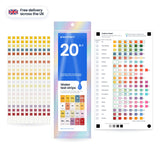
Start with Scottish Water's postcode search, which gives zone results, then test your own tap. The WaterKit Water Test Kit has a 20-in-1 strip. Fill a clean glass or cup, dip one strip, wait 30 to 60 seconds and match the pads to the chart, or enter the colours in the results portal. The optional bacteria test is a separate pouch, read after 24 to 48 hours. A strip result is not a legal sample, and the strip does not read fluoride at 1.5 mg/l, as its first step is 4 mg/l. For lead, our lead pipes guide covers how to check the pipes themselves. The free checker needs no app or account, and the QR code on your chart opens it.
| Check | Scottish figure | What our chart can show |
|---|---|---|
| Hardness | No regulatory limit. Scottish Water calls under 50 mg/l soft | Steps at 0, 25, 50 and 100 mg/l. The pad's unit basis is unconfirmed |
| Free and total chlorine | No standard. Typically under 1 mg/l dosed at works | Steps at 0.5, 1 and 3 mg/l. Total chlorine on our chart means free and combined chlorine together. We have not tested a chloraminated supply |
| Copper | 2.0 mg/l | Steps at 0.2, 0.5, 1, 2 and 5 mg/l, so it can indicate a reading under, at or over the standard |
| Lead | 10 micrograms per litre (0.01 mg/l) | The first colour step is 20 mg/l, so the strip does not read lead at the standard |
| Coliform bacteria | None per 100 ml | A yellow result indicates coliforms are present in that sample. It is a presence screen, not a count |
The area figure is an average, and the last stretch of pipe before your tap is often private, so your own tap can differ from it. The pads that matter most here are copper, free and total chlorine and, with the optional bacteria test, coliforms. A copper reading at or over the 2 mg/l step would indicate copper at or above the standard, a change in the chlorine pads would indicate a different level at your tap from the typical works dose, and a yellow coliform result would indicate coliforms in that sample. Best pack: 20 strips, enough to compare the kitchen and a bathroom tap, first thing and after running the water, for £5.99 (or £10.99 with a bacteria test), with free 2nd Class delivery on every order. See the kit
Your Scottish tap water questions
Can you drink tap water in Edinburgh?
The official figures are high. Scottish Water's 2025 results for the six zones our 17 city postcodes fell in show, by our count, 1,261 E. coli tests and no failures.
Is Edinburgh tap water safe to drink?
The DWQR said when it published its 2025 report that consumers can remain confident in Scotland's drinking water, though it wants fewer avoidable incidents.
Is Scottish tap water safe to drink?
The DWQR reports 99.88% compliance at consumers' taps in 2025, and also criticises avoidable incidents and discoloured water.
Is there chlorine in Scottish tap water?
Yes. The DWQR says chlorine is added to disinfect the water.
Does Scottish tap water have chlorine in it?
Yes, and in some areas, including Edinburgh according to the DWQR, it is combined with ammonia as chloramine.
Is there chlorine in tap water in Scotland?
Yes. Scottish Water says it typically doses at under 1 mg/l at its works.
Is there fluoride in Scottish tap water?
The DWQR says fluoride is not added to any drinking water supply in Scotland.
Is there fluoride in Scottish water?
No public supply is currently fluoridated, according to Scottish Water.
Sources
- Drinking Water Quality Regulator for Scotland (DWQR), Annual Report and Drinking Water Quality in Scotland 2025, Public Supplies Annual Report (99.88%, 137,947 tests, Table 1, Table 2, chlorate, coliform and E. coli at taps, lead, iron, manganese, taste, odour, fluoride, service reservoirs, Marchbank Cryptosporidium, incidents, contacts, foreword, executive summary; read 29 October 2026). The report page lists the file as created 27 August 2026 and the foreword is dated September 2026.
- Scottish Government, Drinking Water in Scotland 2025 (undated news release issued on behalf of the DWQR, including the DWQR's comment that consumers can remain confident; read 29 October 2026).
- The Public Water Supplies (Scotland) Regulations 2014, Schedule 1 (E. coli, lead 10 micrograms per litre, fluoride 1.5 mgF/l, copper 2.0 mgCu/l, iron 200 micrograms per litre; no chlorine or hardness entry; read 29 October 2026).
- DWQR, Chlorine, Chloramination, Water hardness, Fluoride and the FAQs page (chlorine and chloramination, Edinburgh, Aberdeen and Inverness, soft and acidic water, lead and private pipework, no fluoride added, contact Scottish Water first; these pages are undated; read 25 October 2026). The DWQR's home page describes its role, including helping where Scottish Water has failed to resolve a complaint.
- Scottish Water, Water Quality Search (postcode search; zone results for 17 Edinburgh postcodes, sample period 1 January to 31 December 2025, namely EH1 1RE, EH3 9DR, EH4 2DJ, EH5 3AB, EH6 6QW, EH7 5AA, EH8 8DX, EH9 1PL, EH10 4AX, EH11 2BX, EH12 5HD, EH12 7AA, EH13 0PJ, EH14 4AS, EH15 1AA, EH16 4SB and EH17 8AA; read 25 October 2026) and Fluoridation in Scotland (no public supply fluoridated, natural fluoride generally under 0.1 mg/l; read 25 October 2026).
- Scottish Water, Water Hardness Data 2024 (hardness as mg/l calcium carbonate from 2024 average results for each regulatory supply zone; Glencorse A to E and Marchbank B values; some zones in the table are labelled slightly hard to hard; the document hub listing describes this file as 2023 results, but the PDF itself says 2024; read 25 October 2026), listed on the water quality publications page.
- Scottish Water customer factsheets, Factsheet 5, Chlorine explained (typically under 1 mg/l at works), Factsheet 6, Chloramination explained (around a third of customers) and Factsheet 12, Hardness in drinking water explained (no regulatory limits; hardness bands). These factsheets carry a May 2020 reference code and may be out of date. Read 25 October 2026.
- DWQR, Drinking Water Quality in Scotland, Private Supplies Annual Report 2025 (23,111 supplies, about 3.5% of the population; read 25 October 2026) and mygov.scot, Owning or using a private water supply (read 25 October 2026).
- Drinking Water Inspectorate, Drinking Water 2025, England, compliance with water quality standards (99.97% overall, England only; read 25 October 2026).
- Tripadvisor Scotland forum, Drinking water, Scotland (a poster's account of a chlorine taste in Glasgow tap water, paraphrased, with one reply; a personal forum post, not an official source; seen 29 October 2026).
- WaterKit, Water Test Kit (20-in-1 strip, 30 to 60 second read, optional rapid coliform test read after 24 to 48 hours, from £3.99, free 2nd Class delivery on every order, 30-day money-back guarantee) and results portal. The chart column is WaterKit's own reading of the colour chart steps.
Contains public sector information licensed under the Open Government Licence v3.0.