

How do you test water for bacteria at home?
Share
Part of our water testing guide
A pouch that turns purple or yellow is quick to read. What the colour means depends on how much water went in, how it was taken and what you compare it with.
Short answer: At home you can screen a small sample (2 ml) for coliform bacteria and read it after 24 to 48 hours. That indicates presence only. The legal standards in England are 0 E. coli and 0 enterococci per 100 ml, tested by accredited laboratories, so a home screen is not a legal result.
By Andrew Tomlinson, WaterKit · Last reviewed 29 October 2026
How do you test water for bacteria at home?
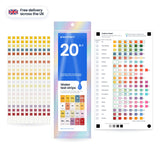
Test strips do not detect bacteria, our results portal says plainly, so the WaterKit kit pairs the 20-in-1 strip with a separate rapid coliform test, sold as an add-on. The portal's instructions are to add 2 ml of your sample to the pouch, seal it, lay it flat and read it after 48 hours at room temperature, or 24 hours at 37°C. Purple, or no colour change, is negative. Yellow is positive, and means coliform bacteria are likely present in that sample.
These steps are our own routine, not an official method.
- Use the cold kitchen tap. The Drinking Water Inspectorate (DWI) says to take drinking and cooking water from a cold tap supplied directly off the mains, nearly always the kitchen cold tap.
- Keep it clean. Wash and dry your hands, collect the water in a clean glass or cup, and do not touch the inside of the pouch.
- Run the tap first. We run it for about two minutes, which matches the minimum flush in the DWI's sampling manual.
- Add 2 ml, seal and lay the pouch flat. Note the time, then read the colour at 24 or 48 hours.
How does a home screen compare with a legal sample?
They are different kinds of test. This table is our comparison, built from the portal wording and the DWI's sampling manual (version 4.0, March 2026).
| WaterKit rapid coliform test | Legal sample | |
|---|---|---|
| Amount tested | 2 ml | The standards are per 100 ml. A council sampler fills a 500 ml sterilised bottle |
| Who takes and analyses it | You | A trained sampler, with analysis to EN ISO/IEC 17025 or an equivalent standard, as regulation 16 requires |
In our reading, a purple result does not show that 100 ml of the same water would meet the legal standard, and a yellow result does not tell you which bacteria are present, because the test does not identify E. coli or enterococci. We do not claim the test for pool, pond, aquarium, rain or bottled water.
What do coliforms, E. coli and enterococci mean?
Coliform bacteria indicate a route for contamination to get into a supply, while E. coli and enterococci indicate faecal contamination, according to the DWI. The limit for each is none in 100 ml under Schedule 1 of the 2016 Regulations. E. coli and enterococci apply at consumers' taps, and coliform bacteria is a standard at treatment works and service reservoirs and an indicator parameter at consumers' taps.
Why might your tap differ from the area figure?
The area figure is an average, and your tap is one point on a network. The DWI reports 99.98% compliance for microbiological parameters in England in 2025, yet its microbiological failures report counts 33 E. coli detections that year, 26 in 156,949 tests at consumer properties.
Private supplies sit outside company figures. The DWI reports E. coli in 3.67% and coliform bacteria in 7.42% of private supply tests in England in 2025, and warns of significant under-reporting. Our bathroom tap guide covers taps that are not the mains-fed kitchen tap.
“The area figure tells you how the network performs overall, not what comes out of your own kitchen tap. I would always want to check my own tap before leaning on the average, especially if the water has to travel a long way through pipes to reach you.”
What one reader found
In a thread on a UK boating forum about how to test tank water for drinking, one member said they bought test kits and ran them on that water, with their domestic supply tested at the same time as a control. They reported that "The yeast and mould came back clean while the total bacteria count was negligible" after 48 hours at 30 degrees. These were not WaterKit tests, and a forum post is one person's account. Testing a second tap alongside is an idea you can borrow. Shared on YBW Forums
What should you do with a yellow result, and what else can the strip show?
Treat it as a reason to re-test and to ask whoever is responsible for your supply, not as a diagnosis. The DWI notes that a kitchen tap or collection vessel may not be fully sterile, so repeat with a fresh sample. If it turns yellow again, the next step depends on your supply.
- Mains supply. The DWI says to approach your water supplier first. It says companies will normally take a sample in response to a complaint, depending on its nature, and give results from their daily testing free of charge on request.
- Private supply. Contact your council's environmental health team, as gov.uk advises. For a single home not used for a business, regulation 10(3) of the Private Water Supplies (England) Regulations 2016 says the council must monitor if the owner or occupier asks. Our well and borehole guide has the detail.
The 20-in-1 strip cannot show bacteria, E. coli or enterococci, or a count per 100 ml, so it sits beside the coliform test rather than replacing it. Its chlorine pads say nothing about bacteria, and its nitrate pad indicates a level to set against the 50 mg/l limit in the 2016 Regulations. Dip a strip in a clean glass of water, wait 30 to 60 seconds, then match the pads to the chart or enter the colours in our free results portal. A strip result is not a legal sample.
The area figure is an average, and your own tap can differ. At Scar House the DWI cites long residence times in a sparsely populated rural network, low and inconsistently maintained disinfectant residuals and biofilm, and private supplies sit outside company figures altogether. Two pads are worth watching. A chlorine reading that moves away from your usual would indicate that the chlorine reaching your tap has changed, and a higher nitrate step would indicate more nitrate to set against the 50 mg/l limit, with nitrate behind 33 of the 232 notices the DWI reports for private supplies in 2025. Best pack: 20 strips, enough to check your kitchen tap and a second tap on separate days and match them to the chart, £5.99 (or £10.99 with a bacteria test), with free 2nd Class delivery on every order. See the kit
Your bacteria testing questions
Is there bacteria in tap water?
Rarely on a public supply, going by the DWI's 99.98% microbiological compliance in England in 2025. Private supplies show more, as above.
What is coliform bacteria in water?
A group of bacteria used as an indicator, with a legal limit of 0 per 100 ml, as above.
What is the most common bacteria found in water?
We found no official UK ranking. For private supplies in England in 2025 the DWI lists coliform bacteria failing in 7.42% of tests, enterococci 4.56% and E. coli 3.67%.
How to detect bacteria in water?
Only by testing a sample. One DWI case study describes a private supply with visually clear water, no taste or odour, yet E. coli above 78 per 100 ml.
How to test for bacteria in water?
At home, a coliform screen indicates within one to two days whether coliforms are likely present in a small sample. For a legal result, the DWI says private testing should use an accredited method and a trained individual.
Sources
- WaterKit, results portal (coliform test of 2 ml, read after 48 hours at room temperature or 24 hours at 37°C, with purple negative and yellow positive; the statement that test strips do not detect bacteria) and Water Test Kit (20 strips £5.99, or £10.99 with a bacteria test; free 2nd Class delivery on every order). The comparison table, the sampling routine and the readings of the results and pads are WaterKit's own. Read 29 October 2026.
- Drinking Water Inspectorate, Drinking Water 2025: private water supplies in England, data return findings (E. coli 3.67%, enterococci 4.56%, coliform bacteria 7.42%, Clostridium perfringens 3.06%; 232 notices, nitrate 33; coliforms not always a direct indicator of faecal contamination; testing not uniform, significant under-reporting; read 29 October 2026).
- Drinking Water Inspectorate, Drinking Water 2025, England, compliance with water quality standards (microbiological parameters 99.98%) and Learning from microbiological failures (33 E. coli detections, 26 in 156,949 tests at consumer properties; treatment works Shipton Moyne, Coldfair Green and Lullingstone; reservoirs Scar House, Cuckfields and Gunters Hill failing the 95% test; Scar House contributing factors; treatment works 80 total coliform failures in 171,598 tests and 3 E. coli in 171,591; read 29 October 2026). The 0.017% is our arithmetic.
- The Water Supply (Water Quality) Regulations 2016, Schedule 1 (E. coli and enterococci 0 per 100 ml at consumers' taps; coliform bacteria and E. coli 0 per 100 ml at treatment works and service reservoirs; nitrate 50 mg/l), regulation 16 (analysis to EN ISO/IEC 17025 or equivalent; both read 29 October 2026) and Schedule 2 (indicator parameter coliform bacteria 0 per 100 ml at consumers' taps; read 25 October 2026).
- The Private Water Supplies (England) Regulations 2016, Schedule 1 (E. coli and enterococci 0 per 100 ml; indicator parameter coliform bacteria 0 per 100 ml) and regulation 10 (single dwelling, monitoring on request) and Schedule 3 (analysis to EN ISO/IEC 17025 or equivalent; read 25 October 2026).
- Drinking Water Inspectorate, Water Testing (approach your supplier first; samples on complaint; daily results free on request; taps and vessels may not be fully sterile; private testing by an accredited method and a trained individual; read 25 October 2026).
- Drinking Water Inspectorate, Single dwelling supplies (default test list on request; seasonal variation; read 25 October 2026).
- Drinking Water Inspectorate, Guidance for local authorities on private water supplies sampling manuals and the Private Water Supplies Sampling Procedures Manual, version 4.0, March 2026 (tap disinfection with 10,000 mg/l chlorine, two minute flush, 500 ml sterilised bottle; read 25 October 2026).
- Drinking Water Inspectorate, Chlorine (cold tap supplied directly off the mains; companies must disinfect their water; read 25 October 2026) and Receiving a boil water notice (for a private supply the notice comes from the local authority; read 25 October 2026).
- Drinking Water Inspectorate, A private water supply with restriction of use advice in place for three years (visually clear water with faecal indicators, E. coli above 78 per 100 ml; read 25 October 2026).
- gov.uk, Check the quality of your drinking water (private supply problems go to the council's environmental health department; read 25 October 2026).
- YBW Forums, Testing drinking water (a member's account of test kits on tank water with a domestic supply as control; a forum post, not an official source; seen 29 October 2026).
Contains public sector information licensed under the Open Government Licence v3.0.