

Is my tap water safe to drink?
Tap water guide · Everything in this guide
Two litres from the tap cost under a penny, from a bottle about 80p. So is the bottle really the safer bet?
Short answer: almost certainly, if it comes from the mains. In 2025, 99.97% of nearly 3.7 million tests in England met the legal standards, and Wales matched it. When something does go wrong, it's often inside the home, such as old pipes or a loft tank. Drink from the kitchen tap, and test if anything looks or tastes off.
By Andrew Tomlinson, WaterKit · Last reviewed 24 October 2026
Who checks UK tap water?
In England and Wales it's the Drinking Water Inspectorate (DWI). In England alone it oversees 24 water companies supplying nearly 60 million people. Scotland and Northern Ireland have their own regulators. Water companies test from source to tap, and the DWI checks their results against legal standards for bacteria, metals, nitrate, pesticides and more.
The latest figures, for 2025, look like this:
| Type of test (England, 2025) | Met the standard |
|---|---|
| Bacteria (microbiological) | 99.98% |
| Chemicals, including metals and nitrate | 99.95% |
| Indicators, such as taste, colour and smell | 99.97% |
| Pesticides | 100.00% |
| All tests (nearly 3.7 million) | 99.97% |
Wales also came in at 99.97% across more than 260,000 tests, and Scotland at 99.88% of nearly 138,000 tests from customers' taps. Even so, the Chief Inspector's own view is that numbers this good should build confidence, not complacency.
So why do people say not to drink it?
Mostly marketing. Most of the "don't drink it" advice online comes from companies selling filters. We couldn't find any NHS page that tells people in the UK to avoid tap water, and the NHS even recommends tap water for baby formula (see below).
The worries that are real tend to be about taste (chlorine), limescale (hard water) and older homes (lead pipes). We cover each below. There's also a pattern worth knowing: WaterSafe, the UK's register of approved plumbers, says around a third of water quality failures are linked to problems inside the home rather than the public supply.
Where does my water company's job end?
At your property boundary. The water company owns the main under the street and the pipe up to the outside stop tap, usually under the pavement. From there, the supply pipe into your home and all the plumbing inside are your responsibility (or shared, if several homes use one pipe). That's why two houses on the same street can share the same mains water and still see different results at the tap.
Can I drink bathroom tap water?
It depends where the tap is fed from. The DWI's advice is to drink, cook and brush your teeth with water from a tap connected straight to the mains, which is usually the kitchen tap. In some homes, especially older ones, bathroom taps are fed from a cold water tank in the loft. Tank water is fine if the tank is properly designed, installed and kept in good condition with a tight-fitting lid, but it isn't always.
The DWI has a simple check. Turn the tap fully on and put your thumb over the outlet. If you can hold the water back completely, it's probably tank-fed. If in doubt, ask a plumber.
Is London tap water safe to drink?
Yes. London's water meets the same legal standards as everywhere else in England. Thames Water says it runs more than 500,000 tests a year, and that since 2010 more than 99.95% of tests from customers' taps have met the standard.
What Londoners notice is hardness. Most of the water in the South East is hard, which means limescale in kettles and a chalky taste some people pick up, but hard water isn't a health concern and there's no UK health standard for it. Our guide to how hard your water is explains the numbers.
Is bottled water safer than tap water?
There's no evidence it is. Bottled water in England is covered by its own regulations and checked by local councils, while tap water is checked by the water companies and the DWI millions of times a year. The real difference is price. According to DiscoverWater, a site run with the water industry and its regulators, two litres costs about 0.7p from the tap, 80p for a supermarket own brand and £1.45 for a premium brand, using January 2026 prices. That makes own-brand bottled water roughly 114 times the price of tap (our sum, from their figures).
Why does my tap water taste of chlorine?
Because a small amount is added on purpose. Water companies are required to disinfect the water and keep a trace of chlorine in it so it stays clean on the long journey through the pipes. The DWI says companies typically keep it to 0.5 mg/l or less at the tap, and most aim for under 1 mg/l. There's no UK legal limit for chlorine; the World Health Organization's guideline is 5 mg/l, a level at which most people can already taste it.
If the taste bothers you, put a covered jug of tap water in the fridge and drink it within 24 hours. Thames Water suggests this to reduce the taste.
What about lead pipes?
This is the one to know about in older homes. The DWI says a home built before 1970 may have lead pipes. Unpainted lead pipe is dull grey, often with a swollen joint near the tap, and shows shiny silver metal if you scratch it gently with a coin. The UK limit for lead at the tap is 10 micrograms per litre.
If you think you have lead pipes, run the cold tap until you've filled a washing-up bowl to clear water that's been standing in them (overnight, for example), and plan to replace them. Water companies have to replace their own lead pipe where it's adding lead to the supply, and some run replacement schemes alongside homeowners. Our guide on how to tell if your house has lead pipes goes into detail. One honest note: lead at the UK limit is far below what any test strip can show, so for a home with old pipework, a laboratory test is the way to be sure.
Do I need to boil tap water?
No. The DWI says UK tap water is safe to drink without boiling, unless your water company or local authority has issued a boil water notice for your area. The NHS's one exception is baby formula, which should be made with freshly boiled tap water, used within 30 minutes so it's still at least 70°C.
How can I check my own tap?
Test it. The national figures come from samples across the network, including random homes, so they can't tell you about your own pipes.

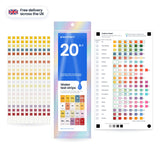
One WaterKit strip gives 20 readings in 60 seconds, including chlorine, hardness, pH, copper, iron and nitrate, and the results checker sets each one against the UK standard where there is one. The separate bacteria test checks for coliforms, which the UK standard says should be zero in every 100 ml, with a result in 24 to 48 hours.
Three tests worth doing:
- Kitchen against bathroom. If the bathroom tap reads differently, it may be tank-fed.
- First thing in the morning against after a run. Metals that build up while water stands in your pipes show up in the first sample.
- Before and after a filter or softener. See whether it's doing anything.
If a reading is outside the normal range, re-test with a fresh sample, and contact your water supplier if it persists.
Best pack: 50 strips, enough to compare taps and re-test, £8.99 (or £13.99 with a bacteria test), with free 2nd Class delivery on every order. See the kit
Your tap water questions
Is UK tap water safe to drink?
Yes, if it's from the mains. In 2025, 99.97% of tests in England and Wales met the legal standards.
Can you drink bathroom tap water in the UK?
Ideally drink from a mains-fed tap, usually the kitchen. Tank-fed bathroom taps are fine only if the tank is well designed and maintained with a tight lid.
Why does my tap water taste of chlorine?
Water companies keep a trace of chlorine in the water to protect it in the pipes, typically 0.5 mg/l or less. A covered jug in the fridge helps with the taste.
Is tap water better than bottled water?
Tap water is tested millions of times a year and costs a fraction of the price of bottled.
Do I need to boil my tap water?
No, unless there's a boil water notice for your area. Formula for babies is the exception: use freshly boiled tap water.
Everything in our tap water guide
- Why your tap water smells of chlorine
- How to tell if your house has lead pipes
- Why are there blue-green stains in my bath?
- Can you drink bathroom tap water in the UK?
- Why is my water brown or cloudy?
- Can you drink tap water in London?
- Is tap water bad for you, and is bottled water better?
- Should I filter my tap water in the UK?
- How often should you change a water filter?
- Is there fluoride in UK tap water?
- Does boiling tap water make it cleaner?
- Where does tap water come from?
- Can you drink tap water in Scotland?
Sources
- Drinking Water Inspectorate, Drinking Water 2025, England: foreword, compliance (nearly 3.7 million tests), number of tests and water supplies.
- Drinking Water Inspectorate, Chief Inspector's annual report 2025, Wales.
- Scottish Government, Drinking water in Scotland 2025.
- Consumer Council for Water, Who is responsible for my water pipes?
- Drinking Water Inspectorate, Water storage tanks and cisterns.
- Drinking Water Inspectorate, Chlorine; World Health Organization, Chlorine fact sheet.
- Drinking Water Inspectorate, Lead in drinking water.
- Drinking Water Inspectorate, Receiving a boil water notice.
- The Water Supply (Water Quality) Regulations 2016, Schedule 1 (lead 10 µg/l) and Schedule 2 (coliform bacteria 0 per 100 ml).
- The Natural Mineral Water, Spring Water and Bottled Drinking Water (England) Regulations 2007, contents.
- DiscoverWater, Price comparison (January 2026 prices).
- WaterSafe, Tap is still top.
- NHS, How to make up baby formula.
- Thames Water, thameswater.co.uk (testing, hardness and taste pages).
- WaterKit Water Test Kit and results checker.
Contains public sector information licensed under the Open Government Licence v3.0.