

Is tap water bad for you, and is bottled water better?
Share
Part of our tap water guide
Some websites tell you to skip the tap and buy a bottle. What do the NHS, the DWI and the law actually say, and what do they not tell you about your own kitchen tap, which you can check with a 20-in-1 test strip?
Short answer: In the NHS pages and UK laws we read, nothing tells UK residents to avoid tap water or says bottled water is better. The DWI reports 99.97% overall compliance for England's water companies in 2025, from more than 3.6 million tests. That is an area-wide figure, not a reading from your own tap.
By Andrew Tomlinson, WaterKit · Last reviewed 29 October 2026
Does the NHS say not to drink tap water?
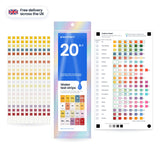
Not for people living in the UK, in what we read. A search of nhs.uk for "tap water" on 29 October 2026 returned 79 results, and the 10 on the first page included nothing advising UK residents to avoid it. The NHS page on water, drinks and hydration calls water a healthy and cheap choice for staying hydrated and does not separate tap from bottled. If you want a reading from your own tap rather than an area figure, a 20-in-1 strip from the WaterKit Water Test Kit gives one in under a minute.
The NHS pages that do say to avoid tap water are travel advice. Its cholera, dysentery and cyclospora pages tell travellers to use bottled or boiled water where there is no clean water supply or where those infections are found. The cyclospora page adds "do not drink tap water" for those areas, and says the infection is not found in the UK.
The one UK-facing NHS comparison we found is for baby formula. The NHS says to use freshly boiled tap water, and that bottled water is not usually recommended because it is not sterile and may contain too much sodium or sulphate. It makes rare exceptions, such as when drinking water is unavailable.
Who tests tap water, and who tests bottled water?
Different bodies, under different laws. In England the Water Supply (Water Quality) Regulations 2016 set the tap water limits, and the Drinking Water Inspectorate (DWI) reports 99.97% overall compliance for 2025, covering 24 water companies and 59.74 million consumers. Its Annex A counts 3,608,411 tests, which we round to 3.6 million. Bottled water is covered by the 2007 bottled water Regulations, which food authorities enforce.
| Question | Tap water (England) | Bottled water (England) |
|---|---|---|
| Which law | Water Supply (Water Quality) Regulations 2016 | Natural Mineral Water, Spring Water and Bottled Drinking Water (England) Regulations 2007 |
| Who enforces | Water companies sample, and the DWI reports on compliance | The council of a district or London Borough, as the relevant or food authority |
| Where it is sampled | Sampling points chosen at random (regulation 7) | The Regulations require regular monitoring of bottled drinking water and spring water quality |
| Limits at a glance | E. coli 0 per 100 ml, lead 10 µg/l, nitrate 50 mg/l, copper 2.0 mg/l, all at consumers' taps | Its own limits in Schedule 2 of the 2007 Regulations, which we have not compared line by line |
Bottled water splits into types. The 2007 Regulations define natural mineral water as coming from an underground source and being recognised by the authority. They define "drinking water" as water sold for drinking that is neither natural mineral water nor labelled spring water. Our guide to whether bottled water is just tap water goes further into that.
Is bottled water better than tap water?
We found no UK official source in the pages we read that says so, and none that ranks one above the other on quality. The NHS does not separate them for general hydration. For infant formula it points the other way, towards freshly boiled tap water. Both are checked against legal limits, by different bodies at different points. Whether bottled water carries fewer microplastics is a separate question, covered in our microplastics guide.
Why might my own tap not match the area figure?
The area figure is an average. Your tap is one point among very many, and a figure for the area does not tell you what comes out of your own tap. Three things in the 2016 Regulations show why.
- Random sampling. Regulation 7 says sampling points must be selected at random. A compliant result for your area does not mean someone sampled your kitchen tap.
- Where each check is made. In Schedule 1, E. coli and enterococci are checked at consumers' taps, but coliform bacteria are checked at service reservoirs and treatment works.
- No number for some things. Schedule 1 gives no hardness value. Taste and odour are listed only as "acceptable to consumers and no abnormal change", which is a judgement rather than a measurement. Our hardness guide shows how to find yours.
“An area figure is a useful starting point, but it is an average, and your kitchen tap is only a single point on the network. I would always treat a quick check at your own tap as a sensible way to”
The age of the building and its pipework, and any tank the water passes through, sit beyond those averages. Our lead pipes guide and loft tank guide cover those. If your water comes from a well or borehole, a water company's figures do not describe your supply at all, and our well and borehole guide explains what applies.
How can I check my own tap?
Dip a strip in a glass of water from the tap and read it in 30 to 60 seconds. Fill a clean glass, dip one strip, wait, then match the pads to the chart or type the colours into the free results checker (the QR code on the chart opens it, with no app or account). The right-hand column below is our own reading of the chart steps.
| Check | Official figure | What our chart can show |
|---|---|---|
| Free and total chlorine (see our chlorine guide) | Schedule 1 lists no chlorine value | Steps at 0, 0.5 and 1 mg/l, so a reading shows how much your tap carries compared with another tap |
| Copper | 2.0 mg/l at the tap | Steps at 0.2, 0.5, 1, 2 and 5 mg/l, so 2 sits at the limit |
| Nitrate | 50 mg/l at the tap | A reading of 25 or below indicates under the limit, 50 at or near it, and 100 or more above it |
| Hardness | No value in Schedule 1 | Steps at 0, 25, 50, 100, 250 and 425, with the unit basis unconfirmed, so it suits comparing taps rather than a pass or fail |
Several things are outside what the kit can do.
- The strip cannot read lead at the UK limit. Lead, mercury, chromium, aluminium, iron, nitrite and fluoride only change colour well above their limits, so a clear result on those pads is not a pass. For lead, use the lead pipes guide.
- The optional bacteria test is read after 24 to 48 hours and is a presence screen for coliforms, not a count. We do not claim the test for bottled water or for pool, pond or aquarium water. The legal limits are laboratory counts of E. coli per 100 ml.
- A strip result has no legal effect and is not a legal sample. Our home testing guide shows how to take a fair sample.
The area figure is an average, and regulation 7 says sampling points are chosen at random, so your kitchen tap may not be one that was sampled. The pads that matter here are chlorine, copper, nitrate and hardness. A chlorine reading that differs from another tap shows a difference between the two, a copper reading at 2 mg/l or above sits at or past the limit, a nitrate reading of 50 or more is at or near the limit, and a hardness reading is best used to compare taps. Best pack: 20 strips, enough to test the kitchen and bathroom taps, a first-draw and a run-through sample, and again after any plumbing work, £5.99 (or £10.99 with a bacteria test), with free 2nd Class delivery on every order. See the kit
Your tap water and bottled water questions
Is tap water bad for you?
We found no UK official source in the pages we read that says it is. The DWI reports 99.97% overall compliance for England's public supplies in 2025. That is an area-wide figure, and it cannot tell you about your own tap.
Why not to drink tap water in the UK, and what does the NHS say?
We found no NHS page that says not to. The pages that do are travel advice for areas where cholera, dysentery or cyclospora are found, and for baby formula in the UK the NHS advises freshly boiled tap water.
Is bottled water better than tap water?
We found no UK official source that says so. Councils enforce the bottled water rules, and the NHS does not usually recommend bottled water for baby formula.
Is tap water better than bottled water?
We found no official source that ranks them on quality. The NHS advises tap water for baby formula and calls water a healthy, cheap choice without separating the two, and both meet legal standards enforced by different bodies.
Sources
- NHS, search results for "tap water" (79 results, first page of 10 read; read 29 October 2026) and Water, drinks and hydration (page review date of 17 May 2026 has passed; read 29 October 2026).
- NHS, Cholera, Dysentery and Cyclospora (travel advice on bottled or boiled water; the Cyclospora page says not to drink tap water in affected areas; read 29 October 2026).
- NHS, How to make up baby formula (freshly boiled tap water; bottled water not usually recommended; page review date of 31 August 2026 has passed; read 29 October 2026).
- The Water Supply (Water Quality) Regulations 2016, regulation 7 (random sampling points) and Schedule 1 (E. coli 0 per 100 ml, lead 10 µg/l, nitrate 50 mg/l, copper 2.0 mg/l at consumers' taps; coliform bacteria at service reservoirs and treatment works; taste and odour "acceptable to consumers"; no hardness or chlorine value; read 29 October 2026).
- The Natural Mineral Water, Spring Water and Bottled Drinking Water (England) Regulations 2007, regulation 2 (definitions of natural mineral water, drinking water and relevant authority) and regulation 16 (food authorities enforce and monitor; read 29 October 2026).
- Drinking Water Inspectorate, Drinking Water 2025, compliance with water quality standards (99.97% overall; 24 companies; 59.74 million consumers) and Annex A, number of tests (Table 21 totals 3,608,411; figures as given in WaterKit's research notes of 25 October 2026, not reopened on 29 October).
- WaterKit, Water Test Kit (20-in-1 strip, 30 to 60 second read, optional bacteria test read after 24 to 48 hours, from £5.99 for 20 strips, free 2nd Class delivery on every order, 30-day money-back guarantee) and results portal. The strip-chart column is WaterKit's own reading of the colour chart steps.
Contains public sector information licensed under the Open Government Licence v3.0.