

What is reverse osmosis water?
Share
Part of our filters and softeners guide
Reverse osmosis is a different kind of treatment from a carbon jug. What is it, and what does the UK regulator say about drinking the result? You can see what any treatment changes at your own tap with a 20-in-1 test strip.
Short answer: Reverse osmosis (RO) pushes water through a membrane with pores below 0.002 micrometres, and the Drinking Water Inspectorate (DWI) says it removes most dissolved solids and produces a waste stream equal to 20 to 30% of the incoming flow. The DWI says RO water is not generally considered suitable for drinking and cooking.
By Andrew Tomlinson, WaterKit · Last reviewed 29 October 2026
What is reverse osmosis?
Reverse osmosis is a membrane treatment that uses pressure to push water through pores smaller than 0.002 micrometres, so most dissolved substances stay behind. The DWI's treatment guide explains the name. Left alone, water passes through a semi-permeable membrane from the weaker solution to the stronger one, which is osmosis. Extra pressure on the stronger side forces it the other way, which is reverse osmosis, and leaves treated water and a relatively concentrated waste stream. The DWI gives typical operating pressures of 15 to 50 bar depending on the application, and says the most common use is desalinating sea water.
For homes, the DWI's consumer page on filters and softeners says RO should be considered only for specialist domestic purposes such as photographic processing or hydroponic culture. If you already have a unit, you can see what it changes at your own tap by testing the tap water and the RO water with a 20-in-1 WaterKit strip.
What is reverse osmosis water?
It is water that has been through an RO membrane, which the DWI says removes most dissolved solids and softens it. The DWI also says RO changes the natural properties of tap water. Distilled water is made differently, and our distilled water guide covers it. For substance-by-substance detail, see what reverse osmosis removes.
How does a home reverse osmosis system work?
It is a point-of-use unit that pushes water against the membrane and produces a concentrated waste stream alongside the treated water. The DWI's comparison of treatment capabilities describes RO units as physical filters, usually used at the point of use and blended with non-filtered water. It lists lots of waste water as a disadvantage. The consumer page adds that there is a substantial reduction in pressure through the RO unit.
What does a reverse osmosis system remove, and what can't it be relied on for?
It removes most dissolved solids, and the DWI is more cautious about germs, minerals and pipework.
| Topic | What the DWI says |
|---|---|
| Dissolved solids and hardness | RO systems remove most dissolved solids and soften the water |
| Named substances | In its manual on treatment for small supplies, reverse osmosis is listed among potential removal techniques for arsenic, and certain membrane processes can reduce nitrate. The comparison table says RO is usually used for chemicals that are difficult to remove with other treatments |
| Bacteria and parasites | Membranes can provide adequate removals of bacteria, Cryptosporidium and Giardia, and potentially viruses, but should not be relied on as the sole means of disinfection on private supplies, because there is no simple way to check membrane integrity |
| Minerals, pH and pipework | RO reduces minerals to what it calls unacceptable levels and can reduce pH to a level that corrodes pipework |
Our guide to filtering tap water at home compares RO with the other options.
Can you drink reverse osmosis water, and is it good for you?
The DWI says RO water is not generally considered suitable for drinking and cooking, because RO changes the natural properties of tap water. It adds that when RO water is used for drinking, the World Health Organization recommends adding minerals back. On whether it is good or bad for you, we found no direct answer in the four DWI pages we read, so we make no claim either way.
The same DWI page says all public supplies in England and Wales are regularly tested, the results are published, and there is no need to install extra treatment at home as a health protection measure. That describes public supplies in general, not what an RO unit or your own pipes do to the water at your tap. Our guide on filtering tap water covers the wider question.
Does reverse osmosis soften water, and do you need a softener too?
RO softens water, going by the DWI. A softener works differently, swapping calcium and magnesium for sodium, and the DWI advises keeping an unsoftened kitchen tap for drinking and cooking. Our guide on how a water softener works explains that. In the DWI pages we read, we found no guidance on running a softener and an RO unit together, so whether to use both is a question for the installer.
How much water does reverse osmosis waste, and what else does it cost?
The DWI says an RO system's waste stream is equivalent to 20 to 30% of the incoming flow. It also says that fitting RO on a metered supply will increase water bills by up to one third because of that waste stream. It calls RO treatment expensive and generally not a feasible option for most homeowners, and gives no price. On the same page, the DWI says that by law consumers must give notice to their water company of their intention to install a RO system, and that a qualified plumber should do the installation. It advises checking in advance with your water company that the device meets the water fittings regulations. For upkeep it says to follow the maker's advice on cleaning and cartridge changes, because skipping them causes a build-up of deposits, a breeding ground for bacteria and leaching of removed material back into the water. In the four DWI pages we read, we found no interval for changing RO filters.
Why might your tap water differ from the area picture?
Because what reaches your glass depends on more than what leaves the treatment works. The DWI says tap water in England and Wales is tested regularly. The area figure is an average. Your tap can still differ, for ordinary reasons the DWI describes.
- Hardness and chlorine. The DWI says the taste of tap water varies between regions because of differing hardness and residual chlorine, and that some people dislike it, especially if they have moved from where they grew up.
- Your own pipes and fittings. The DWI says colour or particles in tap water can be due to a fault with pipes and fittings that the building owner is responsible for, and advises a plumber to find the root cause. Its manual says high lead is usually caused by lead pipework, tank linings or historic leaded alloys in fittings. We cover that in how to tell if your house has lead pipes.
- Soft water and pipework. The DWI says water at 100 mg/l hardness (as calcium carbonate) or less is more corrosive to pipework, which could dissolve plumbing metals such as lead, copper, brass and nickel. Its comparison table says RO can lower pH to a level that corrodes pipework.
- Private supplies. A well, borehole or spring is not covered by a water company's figures. The DWI's manual, adapted from a 2001 report, says private supplies are generally smaller and less closely watched, and so more likely to suffer water quality failures. Our well and borehole treatment guide covers that case.
A figure for the area does not tell you what comes out of your own tap. A strip at the cold kitchen tap gives you a reading for hardness and chlorine at your house, and the same strip on RO water shows what the unit changed.
“Area figures are a sensible starting point, but they describe the supply and not what comes out of your own pipes and fittings. If you want to know what your tap is doing, test it at the tap, and if you have an RO unit, test the water before and after it too.”
How can you check what a reverse osmosis unit changes at your tap?
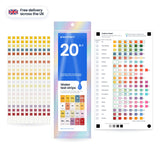
Test the tap water and the RO water side by side. Fill a clean glass or cup from the cold kitchen tap, dip one strip, wait 30 to 60 seconds and match the pads to the chart. Then draw RO water from its own tap, following the maker's instructions, and test it with a fresh strip. You can enter the colours in our free results checker, or scan the QR code on the colour chart in the pack. No app or account is needed. The table is WaterKit's reading of the chart steps, not a claim from the DWI.
Several things are outside what the strip can do. It cannot show whether the membrane is intact, and the DWI says there is no simple way to check that on private supply units. It cannot read lead at the UK limit, so for lead see the lead pipes guide. On our reading of the chart, the fluoride, nitrite and iron pads start above the UK limits, and the strip cannot read aluminium, mercury or chromium at UK limits, so a clear result on those pads says nothing about what an RO unit removes. A strip result is not a legal sample. The separate rapid coliform test is a presence screen, read after 24 to 48 hours, and it does not pick up every kind of bacteria. A positive result on RO water indicates coliforms in that small sample, which is a prompt to ask the installer or maker about cleaning and servicing, since the DWI says skipped maintenance can create a breeding ground for bacteria.
| Pad | Chart steps (mg/L) | What before and after can show |
|---|---|---|
| Hardness | 0, 25, 50, 100, 250, 425 | A tap reading of 250 or 425 and an RO reading of 0 or 25 indicates, on our reading, that the unit is lowering hardness sharply. The unit basis of the pad is unconfirmed, and it cannot say how much is left below its first step |
| Free and total chlorine | 0, 0.5, 1, 3, 5, 10, 20 | A tap reading of 0.5 or 1 and an RO reading of 0 indicates chlorine is below the chart's first step in the RO sample. It cannot say which stage of the unit did it |
| Total alkalinity | 0, 40, 80, 120, 180, 240 | A lower RO reading indicates less ability to resist pH swings, which is how the results portal describes alkalinity. We have no UK standard to compare it with |
| Sodium chloride (salt) | 0, 100, 250, 500, 1000, 2000 | A drop from 100 or 250 to 0 indicates fewer dissolved salts. It reads salt, so it is not a total dissolved solids meter |
The area figure is an average, and your tap can differ because of your own pipes and fittings, which the DWI says can cause colour or particles, or because soft water is more corrosive to pipework. The pads that matter here are hardness, free and total chlorine, total alkalinity and sodium chloride. A lower reading on the RO water than at the cold tap indicates the unit is changing that, and a reading that moves between tests, for example after servicing, indicates something about the unit has changed. Best pack: 20 strips, enough to test the tap and the RO water side by side now and again after servicing, £5.99 (or £10.99 with a bacteria test), with free 2nd Class delivery on every order. See the kit
Your reverse osmosis questions
What is reverse osmosis?
Pressure forcing water through a membrane with pores below 0.002 micrometres, as the DWI describes it.
What is reverse osmosis water?
Water treated that way, which the DWI says has most dissolved solids removed and is softened.
How does reverse osmosis work?
Pressure on the stronger solution pushes water through a semi-permeable membrane, leaving treated water and a concentrated waste stream, says the DWI.
Is reverse osmosis water good for you?
The four DWI pages we read give no direct answer. The DWI says RO water is not generally considered suitable for drinking and cooking.
What is a reverse osmosis water filter?
A point-of-use unit built around an RO membrane. The DWI says these are probably the most common membrane process on private supplies.
Can you drink reverse osmosis water?
The DWI says it is not generally considered suitable for drinking and cooking, and that the WHO recommends adding minerals back.
Is reverse osmosis water safe to drink?
The DWI gives no verdict on home RO water beyond saying it is not generally considered suitable for drinking and cooking. Separately, it says mains supplies in England and Wales need no extra home treatment as a health protection measure. We make no safety claim of our own.
Does reverse osmosis soften water?
Yes, going by the DWI, which says RO removes most dissolved solids and softens the water.
Do you need a water softener and reverse osmosis?
In the DWI pages we read, we found no guidance on using both. The DWI advises keeping an unsoftened kitchen tap if you have a softener.
How much water does reverse osmosis waste?
The DWI says the waste stream is equivalent to 20 to 30% of the incoming flow.
How much is a reverse osmosis system?
The DWI calls RO expensive and gives no price, and the four DWI pages we read give no figure either.
How long do reverse osmosis filters last?
The four DWI pages we read give no interval. The DWI says to follow the maker's instructions on cleaning and changing cartridges.
Sources
- Drinking Water Inspectorate, Domestic water filters and softeners (RO removes most dissolved solids and softens; 20 to 30% waste stream; specialist uses; not generally considered suitable for drinking and cooking; WHO advice to add minerals back; metered bills up to one third; notice to the water company; no need for home treatment as a health protection measure; taste, pipes and fittings, soft water and pipework; maker's maintenance advice; undated page; read 29 October 2026). The page points to a WHO publication, WHO/HSE/WSH/11.03, on adding minerals back. We have not used its contents.
- Drinking Water Inspectorate, Treatment Guide, physical removal of contaminants (osmosis and reverse osmosis, pore size below 0.002 micrometres, 15 to 50 bar, desalination the most common use, point-of-use units, membranes not the sole means of disinfection, multiple barrier principle; undated page; read 29 October 2026).
- Drinking Water Inspectorate, Treatment Guide, comparison of treatment capabilities (RO as a point-of-use physical filter, waste water, minerals reduced to unacceptable levels, pH and pipework; undated page; read 29 October 2026).
- Drinking Water Inspectorate, Manual on treatment for small water supply systems (adapted from a 2001 report; we used the private supply, arsenic, nitrate and lead sections; undated page; read 29 October 2026).
- In the sources we read we found no UK official price for a home RO unit, no official interval for changing RO filters and no official guidance on drinking RO water beyond the DWI lines above.
- WaterKit, Water Test Kit (20-in-1 strip, 30 to 60 second read, optional rapid coliform test read after 24 to 48 hours, from £3.99, free 2nd Class delivery on every order, next-day delivery for £3.99) and results portal. The chart-step table is WaterKit's own reading of the colour chart.
Contains public sector information licensed under the Open Government Licence v3.0.