

Does tap water have minerals and electrolytes?
Share
Part of our tap water guide
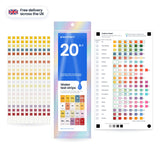
Your kettle grows a crust, so something is dissolved in the water. What is it, and does it count as electrolytes? You can check the hardness at your own tap with a 20-in-1 test strip.
Short answer: Yes, as dissolved minerals. The Drinking Water Inspectorate says hardness comes from dissolved calcium and magnesium, and ranks water from soft, up to 100 mg/l, to very hard, over 300 mg/l. England's 2016 Regulations limit sodium to 200 mg/l at the tap but set no limit for calcium or magnesium.
By Andrew Tomlinson, WaterKit · Last reviewed 29 October 2026
Does tap water have electrolytes?
Yes, in the sense of dissolved minerals. The NHS describes electrolytes as minerals in the blood with a tiny electric charge, such as sodium, calcium, potassium, chlorine, magnesium and bicarbonate. The Drinking Water Inspectorate (DWI) says water hardness is caused by dissolved calcium and magnesium. The 2016 Regulations list sodium, and the chlorine in the NHS list appears there as chloride.
In the sources we read, we found no DWI or gov.uk page giving an electrolyte level for tap water.
How hard is tap water, and why does it matter?
Hardness is the main mineral measure for tap water, and the DWI classes it in bands, in mg/l as calcium carbonate. The DWI says hardness varies with local geology.
| DWI band | Hardness (mg/l CaCO3) |
|---|---|
| Soft | Up to 100 |
| Slightly hard | 100 to 150 |
| Moderately hard | 150 to 200 |
| Hard | 200 to 300 |
| Very hard | More than 300 |
The DWI says hard water causes scaling in hot water systems, kettles, electric irons and appliances, which shortens the life of heating elements and makes appliances less efficient. It cites the World Health Organization (WHO) 2017 guidelines for 200 mg/l or more producing scale, and 100 mg/l or less being more corrosive to pipework. Our guides to hard water and why kettles get limescale go further.
What do the rules say about minerals in tap water?
In England, the Water Supply (Water Quality) Regulations 2016 set a limit of 200 mg/l for sodium at the consumer's tap. Their indicator parameters include chloride at 250 mg/l and conductivity at 2,500 µS/cm, both measured at the supply point. The DWI says the UK drinking water regulations specify no standards for hardness, calcium or magnesium, and potassium is not in either schedule we read.
What is total dissolved solids (TDS) in water?
It is the inorganic salts and small amounts of organic matter dissolved in water, according to a WHO background document (2003, reprinted from 1996). It names calcium, magnesium, sodium and potassium, with carbonate, hydrogencarbonate, chloride, sulfate and nitrate, as the usual main parts. Taste panels rated water below 300 mg/l excellent and above 1,200 mg/l unacceptable. The document says that above 500 mg/l, scaling in kettles and boilers becomes excessive. It proposes no health-based guideline value for TDS, and we found no UK TDS limit or typical UK figure. The nearest UK rule is the conductivity indicator above, and WHO says conductivity is converted to TDS with a factor that varies with the water.
Does filtering take minerals out of tap water?
Some filters do, and some do not. The DWI says reverse osmosis removes most dissolved solids and softens the water, that the result is not generally considered suitable for drinking and cooking, and that WHO recommends adding minerals back. It says softeners swap calcium and magnesium for sodium, and advises keeping an unsoftened kitchen tap. On jugs, it says some contain resin beads that alter temporary hardness but not permanent hardness. See also our guides to reverse osmosis, filter jugs and softened water.
To compare, dip one strip in tap water and one in filtered water. The hardness pad can show whether the filtered reading is lower.
Why might my tap differ from the area figure?
“If your water comes through a softener or filter at home, or you simply live somewhere the area average may not tell the whole story, I would test the tap itself rather than rely on the map. A quick strip on a few different days tells you far more about your own glass than a regional figure can.”
- Local variation. The DWI says its hardness map shows typical values and that some areas have local variation it does not show, so it advises asking your water company for an accurate figure.
- Water moves around. Yorkshire Water's 2025 report for its Kimberworth zone, which serves a population of 40,300, calls the water soft to very hard, and says its grid means hardness may occasionally vary.
- Treatment at home. A softener or reverse osmosis unit changes what leaves the tap. The DWI says softeners add sodium, and that its rules include a sodium standard a softener may risk breaching.
What can a test strip show about minerals at your tap?
Two pads give a reading for dissolved minerals, the hardness pad and the sodium chloride pad. The WaterKit Water Test Kit has a 20-in-1 strip. Fill a clean glass, dip one strip, wait 30 to 60 seconds and match the pads to the chart, or enter the colours in our free results checker. The right-hand column is our reading of the chart steps.
| Pad | What it reads | What our chart can show |
|---|---|---|
| Hardness | Calcium and magnesium together | Steps at 0, 25, 50, 100, 250 and 425 mg/L, with no UK standard. It cannot split calcium from magnesium, and its unit basis is unconfirmed. If it is calcium carbonate, the 100 step would match the top of the DWI soft band and 250 would sit in the hard band, but that is our reading |
| Sodium chloride | Dissolved salt | Steps at 0, 100, 250, 500, 1000 and 2000 mg/L. Our portal says 250 mg/L of salt is about 100 mg/L of sodium, so by our arithmetic the 200 mg/l sodium limit is about 500 mg/L as salt, the 500 step |
A reading indicates hardness or salt at about that step. It does not say which mineral, and no pad reads potassium, calcium or magnesium separately, chloride alone or total dissolved solids. A strip result is not a legal sample.
The area figure is an average. The DWI says its map misses local variation, and a softener or reverse osmosis unit changes what leaves your tap. The hardness and sodium chloride pads are the ones to watch, and a step that moves between days, or drops on filtered water, would indicate your tap differs from the area figure. Best pack: 20 strips, enough to test your tap on different days and compare it with filtered water, £5.99 (or £10.99 with a bacteria test), with free 2nd Class delivery on every order. See the kit
Your tap water mineral questions
Does mineral water have electrolytes? What minerals are in mineral water?
We read no source on bottled mineral water composition for this guide. Our mineral water and spring water guide covers how the labels differ.
Does spring water have minerals?
The WHO background document says dissolved solids come from natural sources and depend on the minerals in each geological region.
Does filtered water remove minerals? Does filtered water have minerals?
It depends on the filter. The DWI says reverse osmosis removes most dissolved solids, and that some jugs change temporary hardness but not permanent hardness.
What is mineral rich water?
We found no UK official definition for tap water in the sources we read. The hardness bands above are the DWI's way of describing calcium and magnesium.
What is total dissolved solids in water? What are total dissolved solids in water? What is total dissolved solids?
The inorganic salts and small amounts of organic matter dissolved in water, according to the WHO.
Sources
- NHS, Diabetes insipidus, complications (the description of electrolytes; page last reviewed 13 October 2022, and its next review date of 13 October 2025 has passed; read 29 October 2026) and Electrolyte test (page last reviewed 15 March 2022, and its next review date of 15 March 2025 has passed; read 29 October 2026).
- Drinking Water Inspectorate, Water Hardness / Hard Water (hardness bands, geology, scaling, no standards for hardness, calcium or magnesium; undated page; read 29 October 2026).
- Drinking Water Inspectorate, Domestic water filters and softeners (reverse osmosis, softeners, jugs, taste; undated page; read 29 October 2026).
- The Water Supply (Water Quality) Regulations 2016, Schedule 1 (sodium 200 mgNa/l, Part II item 6) and Schedule 2 (chloride 250 mg/l and conductivity 2500 µS/cm at the supply point; these apply to water companies in England; read 29 October 2026).
- World Health Organization, Total dissolved solids in drinking-water, background document (2003, originally published 1996; definition, taste ratings, conductivity method, scaling; read 29 October 2026).
- Yorkshire Water, Kimberworth 2019 water supply zone report (1 January to 31 December 2025, dated May 2026; commentary, population 40,300; read 29 October 2026). The report's table text was scrambled in our copy, so we used only its commentary.
- WaterKit, Water Test Kit (20-in-1 strip, 30 to 60 second read, 20 strips £5.99 or £10.99 with a bacteria test, free 2nd Class delivery on every order) and results portal. The chart-step comparisons and the salt-to-sodium arithmetic are WaterKit's own.
Contains public sector information licensed under the Open Government Licence v3.0.