

How long does tap water last in a bottle or the fridge?
Share
Part of our tap water guide
There is half a bottle of tap water in the fridge door from the weekend. Do you drink it, or pour it away?
Short answer: Keep it covered in the fridge and use it within 24 hours, as the Drinking Water Inspectorate (DWI), Scotland's regulator and Welsh Water all say for jug water. No UK source we read gives a time for a sealed bottle or room temperature. You can check the chlorine at your own tap with a 20-in-1 test strip.
By Andrew Tomlinson, WaterKit · Last reviewed 29 October 2026
How long does tap water last in the fridge?
Up to 24 hours, according to every UK water body we read that gives a figure. The DWI says a jug of tap water in the fridge reduces the chlorine smell and taste, and that unused water should be thrown away after 24 hours.
| Source | What it says |
|---|---|
| DWI (England and Wales) | Jug of tap water in the fridge for a short period, then throw away unused water after 24 hours |
| Drinking Water Quality Regulator for Scotland | Covered jug in the fridge, and throw away unused water after 24 hours |
| Welsh Water | Covered jug in the fridge, and discard water not used after 24 hours |
| Scottish Water | Covered jug in the fridge for a couple of hours before drinking, and use it within 24 hours |
| nidirect (Northern Ireland) | Chlorine taste and smell should fade in the fridge over a few hours, with no keeping time |
| DWI, after a boil water notice | Cooled boiled water in a clean container in the fridge, discarded if not used within 24 hours (boiled water, not plain tap water) |
The DWI's filter page describes a clean, glass, covered jug. Our chlorine removal guide covers the taste.
Why do the sources say 24 hours?
None of the sources explains the figure, though each gives it as part of its chlorine advice. The DWI says the chlorine is there to preserve quality as water travels through the pipes, and Scottish Water says leaving water to stand helps the chlorine dissipate.
How long does tap water last in a bottle or at room temperature?
The sources we read give no figure for either, and none mentions a closed bottle or any time at room temperature. Our bottled water guide covers shop-bought bottles.
For planned supply cuts of up to 12 hours, Scottish Water asks customers to store enough water in containers, and gives no keeping time.
How long does filtered water last?
Welsh Water says to keep filtered water in the fridge, use it within 24 hours and keep it out of direct sunlight. It also says to wash the jug, but not the filter, in hot soapy water. The DWI says to change the cartridge in line with the maker's instructions, or it stops being effective and may leach other chemicals or bacteria. Our filter jug guide covers what a jug does and does not do.
Why might your own tap and jug differ from the typical figures?
Because the typical figure is a general one set by water companies, not a reading from your home. The DWI says water companies typically keep residual chlorine to 0.5 mg/l or less, that most aim for below 1 mg/l, and that the World Health Organization's guideline value is 5 mg/l. Your own tap can sit above or below that for reasons the sources spell out.
- Distance from the works. The DWI says a property near a treatment works may have a little more chlorine than one several miles away. Welsh Water adds that levels vary through the day and run higher in winter.
- Your plumbing. The DWI says plumbing, fittings and appliances are the most common cause of strange tastes. A medicinal taste may be stronger if water has been boiled or left to stand in a glass, and metallic or bitter tastes can be more noticeable when water is warmed.
- Standing water. The DWI says a musty or earthy taste can come from water left standing in little used sections of plumbing, and that running the taps for a few minutes should clear it. Welsh Water suggests drawing a washing-up bowlful after several hours of no use.
- Tanks. The DWI says cold water in bathrooms may come from a tank not suitable for drinking, and advises the cold kitchen tap fed from the mains. Our loft tank guide explains why.
“Treat the area figure as a starting point, because your own tap can read differently depending on your plumbing, how far you are from the works and whether the water has been standing. If you want to see whether the chlorine reading in your jug has moved from the tap, dipping a strip in each is a sensible way to look.”
The DWI says a strong smell or TCP-like taste, or a new one that does not go away, is a reason to contact your water company. Our chlorine smell guide has more.
How can you check the chlorine in your own tap and jug?
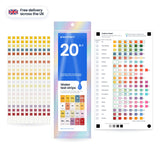
Compare two strips. The WaterKit strip has a free chlorine pad and a total chlorine pad. Fill a clean glass from the cold kitchen tap, dip one strip, wait 30 to 60 seconds and match the pads to the chart, or scan the QR code on the chart to open the free results checker in your browser. Fill a covered jug from the same tap, keep it in the fridge and dip a fresh strip later. The table is our own reading of the chart steps.
| Pad | Chart steps (mg/L) | What a comparison can indicate |
|---|---|---|
| Free chlorine and total chlorine | 0, 0.5, 1, 3, 5, 10, 20 | A tap at 0.5 or 1 and a jug at 0 indicates the level fell below the first step. Two matching readings say only that any change did not cross a chart step |
Some limits apply. Typical tap levels are 0.5 mg/l or less, so we would expect many taps to read 0 or 0.5, leaving little room to show a drop. We have not run a timed test, so we give no result for how fast chlorine falls. A strip cannot tell you how long water has stood, and the sources we read give no official chlorine level for judging jug water, so we give no pass mark. The optional bacteria test is a coliform presence screen, read after 24 to 48 hours, and describes only the sample you take. A strip result is not a legal sample.
The area figures above are averages, and your own tap can differ with its distance from the works, your plumbing and water left standing. The pads that matter here are free chlorine and total chlorine, where a tap reading of 0.5 or 1 and a jug reading of 0 would indicate the chlorine had fallen below the first chart step. Best pack: 20 strips, enough for 10 pairs of a tap strip and a jug strip, £5.99 (or £10.99 with a bacteria test), with free 2nd Class delivery on every order. See the kit
Your stored tap water questions
How long does tap water last in a bottle?
The sources we read give no figure for a closed bottle. The DWI's nearest advice is to throw away unused jug water after 24 hours.
How long does filtered water last in the fridge? How long can you keep filtered water in the fridge? How long does filtered water last?
Welsh Water says to keep it in the fridge and use it within 24 hours. The DWI says to follow the filter maker's instructions.
How long does filtered water last at room temperature? How long can you keep filtered water at room temperature?
We found no figure in the sources we read. Welsh Water advises the fridge and out of direct sunlight.
How to make tap water taste like bottled water?
The sources we read do not compare the two. The DWI says taste varies with hardness and chlorine, and that a clean, glass, covered jug in the fridge is a more cost-effective fix than a carbon filter. nidirect says boiling also removes chlorine. Our taste guide has more.
Sources
- Drinking Water Inspectorate, Chlorine (typical residual 0.5 mg/l or less; most companies aim below 1 mg/l; WHO guideline 5 mg/l; fridge jug; throw away unused water after 24 hours; undated page; read 29 October 2026).
- Drinking Water Inspectorate, Domestic water filters and softeners (clean, glass, covered jug; taste varies with hardness and chlorine; cartridge changes; undated page; read 29 October 2026).
- Drinking Water Inspectorate, Taste and odour in drinking water (plumbing the most common cause; medicinal, metallic and musty tastes; bathroom taps and tanks; undated page; read 29 October 2026).
- Drinking Water Inspectorate, Receiving a boil water notice (cooled boiled water in a clean container in the fridge, discarded if not used within 24 hours; undated page; read 29 October 2026).
- Drinking Water Quality Regulator for Scotland, Chlorine (covered jug in the fridge; throw away unused water after 24 hours; undated page; read 29 October 2026).
- Scottish Water, Water quality FAQs (covered jug in the fridge for a couple of hours; use within 24 hours; chlorine dissipates on standing) and Water supply FAQs (store water in containers before a planned interruption of up to 12 hours); both undated, read 29 October 2026 and paraphrased.
- nidirect, Dealing with drinking water problems (chlorine taste fades in the fridge over a few hours; boiling also removes chlorine; undated page as read; read 29 October 2026).
- Dŵr Cymru Welsh Water, Strange taste or smell to my water (covered jug in the fridge; discard after 24 hours; chlorine varies through the day, higher in winter and near works; dead legs) and Water quality in the home (filtered water in the fridge, used within 24 hours, out of direct sunlight; the page text we read was cut off partway); both undated, read 29 October 2026 and paraphrased.
- WaterKit, Water Test Kit (20-in-1 strip, 30 to 60 second read, optional bacteria test read after 24 to 48 hours, 20 strips £5.99, free 2nd Class delivery on every order) and results portal. The strip-chart table is WaterKit's own reading of the colour chart steps.
Contains public sector information licensed under the Open Government Licence v3.0.