

What is limescale, and what causes it?
Share
Part of our hard water guide
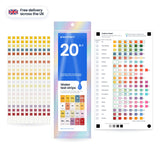
You see it on the kettle element, the shower screen and the base of the tap. What is it actually, and why does it keep coming back? You can check how hard the water is at your own tap with a 20-in-1 test strip.
Short answer: Limescale is solid calcium carbonate left behind when hard water is boiled, according to the Royal Society of Chemistry. The Drinking Water Inspectorate, citing WHO guidelines, says water at 200 mg/l or more, measured as calcium carbonate, will produce scale. It adds that UK drinking water regulations set no standard for hardness.
By Andrew Tomlinson, WaterKit · Last reviewed 29 October 2026
What is limescale?
It is the solid calcium carbonate that comes out of hard water when the water is boiled, according to the Royal Society of Chemistry (RSC) and Nuffield Foundation teaching notes. The Drinking Water Inspectorate (DWI) defines scaling as deposits of calcium and magnesium that build up on heating elements over time, and uses the word limescale for the hardness salts that precipitate out of water.
How much forms depends on how hard your water is at the tap. The last section shows how to check it at your tap.
What is limescale made of, and how does it form?
It is calcium carbonate that was dissolved in the water and has come out of solution. The RSC sets the school-level version out in two steps.
| Step | What happens | Who says so |
|---|---|---|
| Rain water with dissolved carbon dioxide runs over limestone | CaCO3 + CO2 + H2O → Ca(HCO3)2. The calcium stays dissolved as calcium hydrogencarbonate, the RSC's example of temporarily hard water | RSC |
| The water is heated or boiled | Ca(HCO3)2 → CaCO3 + CO2 + H2O. The RSC says the reaction is reversed, shows as a white cloudiness, and that the solid calcium carbonate is limescale | RSC |
| Hardness from other salts (permanent hardness) | The RSC says it comes from calcium or magnesium salts other than hydrogencarbonates and is unaffected by boiling. The DWI says temporary hardness, from calcium and magnesium carbonates and bicarbonates, can be removed by boiling, forming scale, and that resin jug filters do not alter permanent hardness | RSC and DWI |
A real pipe is messier than the school model. The World Health Organization (WHO) says hardness is not one substance. Calcium and magnesium predominate, with aluminium, barium, iron, manganese, strontium and zinc also contributing, and the main natural sources are sedimentary rocks such as limestone and chalk. It adds that scale deposition depends on factors such as pH and alkalinity. Our guide to whether limescale is bad for you sets out what the official sources say about its effects.
Where does limescale form in a home?
Wherever hard water is heated, and the DWI and WHO also name places that are not heated. The table lists what each source says.
| Where | What the source says | Who says so |
|---|---|---|
| Kettles and heating elements | Scaling shortens the life of heating elements and makes appliances less efficient | DWI |
| Hot water systems, electric irons and domestic appliances | Hard water causes scaling in them | DWI |
| Boilers and kettles | Limescale wastes energy when it forms in them | RSC |
| Basins, sinks, baths and toilets | Hard water leaves tide marks (the DWI does not say what they are made of) | DWI |
| Pipes, washing machines and heat exchangers | The RSC says limescale can block pipes or washing machines. The WHO says scale can deposit in the distribution system and coat surfaces in heated water applications | RSC and WHO |
What does limescale look like?
The RSC describes the calcium carbonate that comes out of boiled hard water as a white cloudiness and a solid residue. The WHO says hard water often leaves a noticeable deposit in containers, including a "bathtub ring".
Soap scum is a separate thing. The RSC explains that calcium in hard water reacts with soap to form calcium stearate, an insoluble scum. The DWI lists a film on the surface of hot drinks as another sign of hard water, and says it is especially seen on tea brewed in the cup with a teabag, due to the air and oils in the tea.
Is there a UK legal limit for limescale?
No, because there is no standard for hardness. The DWI says the Drinking Water Directive and the UK drinking water quality regulations do not specify standards for hardness, calcium or magnesium. The numbers that exist are bands and guidance.
| Description (DWI) | Hardness, mg/l as calcium carbonate |
|---|---|
| Soft | Up to 100 |
| Slightly hard | 100 to 150 |
| Moderately hard | 150 to 200 |
| Hard | 200 to 300 |
| Very hard | More than 300 |
The DWI cites the WHO's 2017 guidelines for 200 mg/l or higher producing scale, and for soft water at 100 mg/l or less being more corrosive to pipework. The WHO's 2011 background document uses different bands, with more than 180 mg/l described as very hard, so check which scale a source is using.
Why might the limescale at my tap differ from the area figure?
The area figure is an average. Your tap can differ, and the DWI explains part of why. Its map shows typical hardness of water supplies in England and Wales, and it warns that some areas have local variation the map does not show. For an accurate measurement it says to ask your water company directly. A figure for the area does not tell you what comes out of your own tap, and the sources we read give no hardness figure for any single town.
Two more reasons are in the sources. The DWI says domestic softeners work by replacing calcium and magnesium with sodium, that fitting one just before the hot water tank or boiler is more economical than softening the whole supply, and that the kitchen drinking tap should stay unsoftened. On our reading, one house can therefore have taps with different hardness. The WHO also says whether hard water deposits scale depends on factors such as pH and alkalinity.
“The area figure is only an average, so I would always check the tap you actually use rather than assume it matches. A softener fitted before the boiler, or different conditions in the water itself, can make one house behave differently from the map.”
A hardness pad on a 20-in-1 strip gives a reading at your own tap in under a minute. Our postcode guide shows how to find the area figure to set beside it.
What is descaling, and what is a limescale remover?
Descaling is removing limescale, and a limescale remover is a product sold for that job. The DWI, RSC and WHO pages we read give no household descaling methods and do not cover products, so the label and the manufacturer's instructions are the guide. The only chemistry in the sources is a classroom test, where the RSC shows that the scraped residue fizzes with dilute hydrochloric acid, which indicates a carbonate. That is a teacher demonstration, not a household method. Our kettle guide covers the kettle in more detail.
Can anything stop limescale forming?
Some things reduce it, and the DWI sets out limits or conditions for each.
- Water softener. The DWI says that in a hard water area it will improve the efficiency and increase the life of domestic appliances. Our guide to how a water softener works goes further.
- Some jug filters. Those that contain ion exchange resin alter temporary hardness, so the filtered water has a lower tendency to form scum on tea and may build up less scale in kettles. They do not alter permanent hardness.
- Magnetic devices. The DWI says they do not soften the water and were designed for large industrial systems. If you are considering one, it recommends sale or return and asking for performance data in a home setting.
The DWI page gives no figure for how much any of these reduces scale in a home.
How can I check how hard the water at my tap is?
Use the hardness pad on the strip. Fill a clean glass or cup with tap water, dip one strip, wait 30 to 60 seconds and match the pads to the chart, or enter the colours in the results portal. The hardness pad steps are 0, 25, 50, 100, 250 and 425 mg/l. The portal does not say whether they are read as calcium carbonate, the unit of the DWI bands, so the table is our own reading of the chart against them. The free checker needs no app or account, and the QR code on your chart opens it.
| Pad step (mg/l) | Against the DWI bands (WaterKit's reading) |
|---|---|
| 0, 25, 50 and 100 | In the soft band (up to 100) |
| 250 | In the hard band (200 to 300), above the 200 mg/l scale figure |
| 425 | In the very hard band (more than 300) |
| Between 100 and 250 | No step, so the pad cannot say whether you are slightly hard, moderately hard or hard |
The kit also has total alkalinity and carbonate pads. The WHO says scale depends on pH and alkalinity, so they give context beside the hardness pad, but the DWI, RSC and WHO pages we read give no figure that links either reading to scale.
The strip indicates hardness at your tap. It cannot show what a deposit is made of or how much scale is inside a kettle or boiler, a strip result is not a legal sample, and your water company's zone figure remains the reference for your area.
The area figure is an average, and the DWI says some areas have local variation its map does not show, while a softener fitted before the boiler can make one tap in a house differ from another. The hardness pad is the one that matters most here, with total alkalinity and carbonate alongside it for context. A different hardness reading between two taps, or before and after you fit a softener or a jug filter, would indicate that the hardness at that tap has changed. Best pack: 20 strips, enough to test your kitchen tap, another tap and then again after any change, £5.99 (or £10.99 with a bacteria test), with free 2nd Class delivery on every order. See the kit
Your limescale questions
What is limescale?
Solid calcium carbonate left when hard water is boiled, according to the RSC. The DWI defines scaling as calcium and magnesium deposits that build up on heating elements over time.
What causes limescale?
Hard water being heated. The RSC explains that dissolved calcium hydrogencarbonate turns back into solid calcium carbonate on boiling, and the DWI says how hard your water is depends on local geology.
What does limescale look like?
A white deposit, going by the RSC, which describes the boiled calcium carbonate as a white cloudiness and solid residue, and the DWI names tide marks on basins, baths and toilets.
What is limescale made of?
Calcium carbonate, says the RSC. The DWI names calcium and magnesium deposits, and the WHO says other metals such as iron and zinc can also contribute to hardness.
What is descaling?
Removing limescale. The sources we read give no household methods, so follow the instructions on any product or appliance.
What's limescale?
The scale that hard water leaves where it is heated. The DWI says it shortens the life of heating elements and makes appliances less efficient.
How does limescale form?
When hard water is boiled, the RSC says its dissolved calcium hydrogencarbonate breaks down into solid calcium carbonate, carbon dioxide and water.
What is limescale remover?
A product sold to remove limescale. The sources we read do not cover products or their ingredients, so check the label and the manufacturer's instructions.
Sources
- Drinking Water Inspectorate, Water Hardness / Hard Water (undated page; hardness bands, definition of scaling, appliances affected, tide marks, tea film, no standards for hardness, calcium or magnesium, WHO 2017 figures, temporary hardness, softener, jug filter and magnetic device statements, map and local variation; read 29 October 2026).
- Royal Society of Chemistry and Nuffield Foundation, Practical Chemistry, How can hardness in water be removed? and Testing the hardness of water (undated pages; calcium hydrogencarbonate, the reversed reaction on boiling, limescale, permanent hardness, soap scum as calcium stearate, the hydrochloric acid test; school-level teaching notes; read 29 October 2026).
- World Health Organization, Hardness in drinking-water, background document for development of WHO Guidelines for Drinking-water Quality (2011 background document, not the current guidelines edition; composition and sources of hardness, bands, scale, pH and alkalinity; read 29 October 2026).
- WaterKit, Water Test Kit (20-in-1 strip, 30 to 60 second read, packs from £3.99, optional bacteria test, free 2nd Class delivery on every order) and results portal (hardness pad steps 0, 25, 50, 100, 250 and 425 mg/l; total alkalinity and carbonate pads). The pad table is WaterKit's own reading of the colour chart steps. Store details verified 26 to 28 October 2026.
Contains public sector information licensed under the Open Government Licence v3.0.