

Does a water filter remove limescale?
Share
Part of our filters and softeners guide
The kettle still furs up and the jug has a white film inside. Is the filter doing anything about the scale, or only the taste?
Short answer: Some do. The Drinking Water Inspectorate (DWI) says resin beads in some carbon jugs alter only temporary hardness, the kind that forms scale on boiling, while softeners and reverse osmosis units soften water. Which? tested 10 jugs in April 2025 and found significant variation in softening.
By Andrew Tomlinson, WaterKit · Last reviewed 29 October 2026
Does a water filter remove limescale?
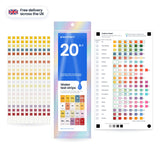
Only some do, and they are the ones that take out calcium and magnesium. The Drinking Water Inspectorate says hardness is caused by dissolved calcium and magnesium, and defines scaling as deposits of them building up on heating elements. You can see where your own tap starts with a 20-in-1 test strip, which has a hardness pad. None of the pages we read credits activated carbon itself with removing hardness. The DWI credits the resin beads that some carbon jugs also hold.
| Kind | What the UK sources say about hardness and scale | Who says so |
|---|---|---|
| Activated carbon | The DWI's private supply table lists colour, taste, odour and pesticides as what carbon treats, and its consumer page says to choose carbon for taste and odour | DWI |
| Carbon jug with resin | The resin alters temporary hardness, not permanent hardness, and may minimise kettle scale. Which? tested 10 jugs of mixed types in April 2025 and says all softened the water to some extent | DWI, Which? |
| Filter fitted to the tap | Does not soften water in the way a softener does, though it may improve taste and reduce some impurities | Which? |
| Shower head filter | Some are designed to reduce limescale build-up, with results that vary. Which? says it has not tested them | Which? |
| Reverse osmosis (RO) | Removes most dissolved solids and softens the water. It sends 20% to 30% of the incoming flow to waste, and RO water is not generally considered suitable for drinking and cooking | DWI |
| Ion-exchange softener | Replaces calcium and magnesium with sodium, which reduces scale in hot water systems. The DWI advises an unsoftened kitchen tap | DWI |
| Magnetic or electromagnetic conditioner | The DWI says these do not soften water. The ASA understands there is no evidence such devices inhibit scale formation generally | DWI, ASA |
Our softener guide and reverse osmosis guide cover those two in detail.
What is in a water filter that removes hardness?
Ion-exchange resin, according to the DWI and Which? It is a bed of small beads that swap one set of ions for another. Which? says jug beads exchange calcium and magnesium for sodium and hydrogen ions, and the DWI says a softener replaces them with sodium.
The DWI says the resin in a jug alters only "temporary" hardness, meaning calcium and magnesium carbonates and bicarbonates, which form scale when water is boiled. Permanent hardness is unchanged. The DWI also says some softeners can add significantly to the sodium in drinking water. None of the DWI or Which? pages we read gives a figure for the sodium a resin jug adds.
Will a filter stop limescale in my kettle and boiler?
For the kettle, a resin jug may help. The DWI says filtered water from such jugs may minimise scale build-up in kettles, and Which? advises considering filtered water in the kettle because it has fewer minerals. Our kettle limescale guide covers why it furs up.
A boiler or shower is different. The DWI describes jug filters as stand-alone, with no connection to the water supply, so by our reading they cannot treat the pipes feeding a boiler. For hot water systems the DWI says a softener fitted just before the hot water tank or boiler is more economical than softening the whole supply. Our jug guide covers what else a jug does.
How do you remove limescale from a water filter jug?
None of the DWI or Which? pages we read gives a method for descaling a jug. The DWI says to follow the maker's advice on cleaning and maintenance, because skipping it builds up deposits.
Which? says limescale dissolves easily in a mild acid, and its kettle methods use white vinegar or citric acid. Those are written for kettles, so for a jug, lid or cartridge check the maker's instructions. Cartridge timing is in our filter change guide.
Why might my tap not match the hardness figure for my area?
The area figure is an average. Your tap can differ. The DWI says its map shows typical hardness in England and Wales, that some areas have local variation the map does not show, and that you should ask your water company directly for an accurate measurement. Its bands are soft up to 100 mg/l as calcium carbonate, hard at 200 to 300 and very hard above 300, and it cites WHO guidelines that water at 200 mg/l or more will produce scale.
“The area figure is a useful starting point, but it is still an average, so I would always test your own tap before deciding whether a filter is doing anything about your scale. Dipping a strip in the tap water and then the jug water tells you more than guessing from the kettle.”
A filter adds its own variable. The DWI says a cartridge not changed on the maker's schedule ceases to be effective, and that skipped cleaning builds up deposits. Which? says the pores in carbon fill up, so trapped impurities can be released.
How can I check what a filter changes at my own tap?
Test the tap, then the jug water, and compare the hardness pad. Which? does the same in its jug tests, using hardness strips on tap and filtered water, and says colours that barely change mean the filter is doing little. Fill a clean glass from the cold kitchen tap, dip a strip, wait 30 to 60 seconds and match the pads to the chart, or scan the QR code on the chart to enter the colours in the free results checker (no app or account). Repeat with water freshly filtered through the jug, and again near the end of the cartridge's life from the same tap.
| Pad | Chart steps (mg/L) | What tap against jug can show |
|---|---|---|
| Hardness | 0, 25, 50, 100, 250, 425 | A tap at 250 and jug water at 100 or below indicates a clear drop. The same step on both indicates little change, or one smaller than the gap between steps. A tap already at 50 or below leaves little to compare |
The table is WaterKit's reading of the chart. The pad gives total hardness and cannot split temporary from permanent. The portal does not say whether its steps are calcium carbonate, the DWI's basis for its bands, so any comparison with them is ours. A drop inside one step will not show, the strip does not show scale inside a kettle or boiler, and a strip result is not a legal sample. For the official figure ask your water company, or read how hard your water is and our hardness testing guide.
The hardness figure for your area is an average, and the DWI says some areas have local variation its map does not show, so your own tap may differ. The hardness pad is the one that matters here. A tap reading well above the jug reading indicates the resin is still exchanging minerals, while the same step on both, or a jug reading that creeps back up over the cartridge's life, indicates little change. Best pack: 20 strips, enough to test the tap and the jug at the start, the middle and the end of a cartridge and again after any change, £5.99 (or £10.99 with a bacteria test), with free 2nd Class delivery on every order. See the kit
Your water filter and limescale questions
Do water filters remove limescale? Does water filter remove limescale?
Only the kinds that treat hardness, which by the DWI's descriptions means ion exchange, including the resin in some jugs, and reverse osmosis.
Do water filter jugs remove limescale?
Some can, by amounts that vary. The DWI says resin jugs alter only temporary hardness. Which? says the best of its 10 jugs removed nearly all the hardness-causing minerals and the worst showed little improvement over tap water.
How to filter calcium from water
The DWI describes ion exchange as normally treating hardness, and RO as removing most dissolved solids. It lists particulate filters under particles, colour and turbidity, so by our reading they are not the tool for dissolved calcium.
What water filter will remove calcium?
We do not recommend products and WaterKit sells no filters. By the DWI's descriptions, ion exchange and RO are the kinds that treat hardness.
Sources
- Drinking Water Inspectorate, Domestic water filters and softeners (undated page; carbon for taste and odour, reverse osmosis, softeners and sodium, the unsoftened kitchen tap, maker's advice on cleaning and maintenance, water fittings regulations; read 29 October 2026).
- Drinking Water Inspectorate, Water Hardness / Hard Water (undated page; calcium and magnesium, scaling, hardness bands, WHO 200 mg/l scale figure, local variation, resin jugs and temporary hardness, softener before the hot water tank or boiler, magnetic devices; read 29 October 2026).
- Drinking Water Inspectorate, Comparison of treatment capabilities and verification of treatment solutions (guidance for private supplies, undated page; what particulate filters, activated carbon, reverse osmosis and ion exchange treat; read 29 October 2026).
- Which?, Best water filter jugs, tried and tested (10 jugs, hardness strips, ion exchange resin, best and worst softening, carbon pores; tested April 2025, page dated 20 August 2026, results table for members only; read 29 October 2026).
- Which?, How to buy the best water softener (page dated 17 September 2026; tap filters and shower head filters; read 29 October 2026) and How to descale a kettle (page dated 20 October 2026; filtered water in the kettle, mild acid, vinegar and citric acid; read 29 October 2026). Which? is a consumer organisation and not an official body.
- Advertising Standards Authority and CAP, Water treatment devices (advice dated 23 April 2025; magnetic and electromagnetic conditioners; read 29 October 2026).
- WaterKit, Water Test Kit (20-in-1 strip, 30 to 60 second read, 20 strips £5.99 or £10.99 with a bacteria test, free 2nd Class delivery on every order) and results portal (hardness pad steps 0, 25, 50, 100, 250 and 425 mg/L). The strip method and table are WaterKit's own reading of the colour chart.
Contains public sector information licensed under the Open Government Licence v3.0.