

Why is my pool or hot tub water cloudy?
Share
Part of our pool and hot tub water guide
The water was clear last week. Now you cannot see the bottom. What do the UK pool experts say is going on?
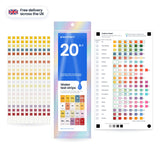
Short answer: PWTAG names three main causes of cloudy pool water, which are low free chlorine, a failed circulation pump and a pH that is too high. It gives 7.0 to 7.4 as the recommended pH range. You can check pH and free chlorine at home with a 20-in-1 test strip.
By Andrew Tomlinson, WaterKit · Last reviewed 29 October 2026
Why is my pool water cloudy?
Most often because the disinfectant is too low, the water is not being circulated and filtered, or the pH is too high. The Pool Water Treatment Advisory Group (PWTAG) says many cases of cloudiness are associated with bacterial growth, and names those three as the main causes. You can check the pH and free chlorine at your own pool or tub with a 20-in-1 test strip before you add anything. PWTAG's note is written for pool operators, so treat it as a checklist of what to rule out.
PWTAG says free chlorine may be low for several reasons, including a blocked dosing point, under-strength hypochlorite that has aged in storage, empty dosing units, too many bathers, or isocyanurate chlorine products that are not monitored. It says a pH that is too high makes disinfection inadequate, because the lower the pH, the more active the hypochlorite is.
The same note lists causes that are not bacterial.
- Excess air in the system, often from a failed seal around the pump strainer basket, which usually clears with standing.
- Localised high pH from hand dosing an alkaline chemical in one spot, which can precipitate hardness scale.
- Solid or powdered chemicals that were not dissolved before being added.
- Cleaning products that are incompatible with the water treatment.
- Sudden changes in water temperature, which can also precipitate hardness scale.
- Algae, and inadequate filtration.
PWTAG gives a clarity test for public pools. You should be able to see the detail of the bottom clearly from the pool surround at the deepest point, and it uses 0.5 NTU (a turbidity unit measured with a meter) as a guideline. It says a public pool that fails these measures should be closed for investigation. We found no home pool version of that test in the sources we read.
Why is my hot tub water cloudy?
The PWTAG note above is about pools, not hot tubs, and the hot tub slides on its site could not be read reliably for this update. So in the sources we read for this guide we have no hot tub-specific cause list or chemical ranges, and we have left them out rather than guess. Your tub's manual or dealer will have the ranges for your model. Our hot tub chemicals guide and guide to changing hot tub water cover the rest. For colour rather than cloudiness, see why a hot tub turns green and why a pool turns green.
Why might my own tap water make cloudiness worse than my neighbour's?
The area figure is an average. Your tap's water goes into your pool or tub, and PWTAG lists the hardness of the fill water among the causes of cloudiness. In its note on cloudy water, PWTAG says excessive hardness can be a problem, for example from using calcium hypochlorite in an already hard supply, especially if the water is out of balance. Its list of typical pool problems names high calcium hardness as one cause of dull, cloudy water, and "water too hard" as a cause of scaling on surfaces, fittings and pipes.
PWTAG does not give a hardness figure for your area, and a figure for the area does not tell you what comes out of your own tap. How hard it is depends on where your supply comes from. You can look up your postcode with our hardness by postcode guide, or see how hard your water is in a few minutes. The hardness pad on the strip gives a band for your fill water. We have not confirmed whether our hardness pad uses a calcium carbonate basis, so treat it as soft, moderate or hard, not as a calcium reading.
“Fill water is the bit people forget, because the area figure is only an average and your own tap can sit either side of it. If cloudiness keeps coming back, it is sensible to check the hardness of what you are topping up with before blaming the chemicals.”
What numbers does PWTAG give, and what can our strip show?
PWTAG gives public pool figures, so please read them as a reference and not as a home standard. The right-hand column is our own reading of the strip's colour chart steps.
| Check | PWTAG (public pools) | Our strip chart |
|---|---|---|
| pH | 7.0 to 7.4 recommended for the free chlorine residual | Steps at 7.2 and 7.6. It cannot tell 7.2 from 7.4 |
| Free chlorine, algae or slime on surfaces | Raise to 5 mg/l overnight, scrub, and check circulation | Steps at 3 and 5 mg/l, so 5 sits on a step |
| Clarity | See the bottom at the deepest point; 0.5 NTU guideline | No turbidity pad. Judge clarity by eye |
How does PWTAG say to work out the cause?
By checking the plant and the chemistry in a set order, then fixing what the checks find. For cloudy, dirty water, PWTAG's typical pool problems page lists these actions for public pools.
- Check bather numbers and the pool plant for restricted turnover, blockages or a partly closed valve.
- Check the filter pressures and flow rates, and backwash thoroughly if the bed is dirty.
- Check disinfection dosing, free chlorine and pH.
- Control calcium hardness.
- Check air release on the filters and look for air drawn in on the suction side, for example through the strainer gasket.
- Check that coagulant dosing is continuous and at low levels.
PWTAG also says to look for a pattern. For example, does it happen only during heavy use, and does it clear after backwashing? The page does not give a recipe for a home pool.
What about a garden pool or a paddling pool?
PWTAG's note on above-ground temporary pools says these pools are designed for use by a family in a domestic setting. With more bathers and heavier use, it says the circulation and filtration system may not cope, which causes water quality problems. It adds that in and above-ground domestic pools should be treated in the same manner as other pools, and that the bather load should be recorded and observed. We found no figure in the sources we read for how often a small paddling pool's water should be changed. Our paddling pool guide and guide to how long water can stay in one go further.
What one reader found
A self-described UK hot tub user on Quora says cloudy hot tub water is, in their words, "As a user in the UK, usually it's because the water needs changing". They say chlorine granules work for a while, and that they would not want to use a tub in that state because they fear infection, since warm water is a good growing medium for bacteria. That is one person's account, not a source for figures, but it matches the order above. Look at the water before you add more chemicals. Shared on Quora.
How can I check my own water before I change anything?
Dip a strip in a clean cup of the pool or tub water, wait 30 to 60 seconds and match the pads to the chart, or enter the colours in our free results checker. The pads that matter here are free chlorine, total chlorine, bromine, pH, total alkalinity and hardness. A reading of 3 or 5 mg/l on free chlorine, or a pH step at 7.2 or 7.6, indicates roughly where you are against the ranges your dealer gives. Test the fill water from your tap the same way, to see how hard it reads before it goes in. Our guide to testing your water at home covers the steps.
Several things are outside what the strip can do.
- It does not measure turbidity, and has no pad for cyanuric acid or phosphate. Cloudiness is judged by eye.
- The chlorine steps are 2 mg/l apart (3 and 5), so it cannot check a combined chlorine limit.
- If your tub uses bromine, use the bromine pad. We have not checked how the chlorine pads respond to bromine.
- We do not claim the rapid bacteria test for pool or hot tub water. It is an optional add-on for tap and private supply samples, including your fill water.
- A strip result has no legal effect, and it does not replace a pool operator's testing.
If the water stays cloudy after you have checked the chemistry, the sources above point to the filter, circulation and bather load, and to your dealer or a qualified pool operator.
The area figure for hardness is an average, and PWTAG lists the hardness of the fill water among the causes of cloudiness, so your own tap can sit either side of it. The pads worth watching are free chlorine, where a lower step than before would indicate the disinfectant has dropped, pH, where the 7.6 step would indicate a value above PWTAG's 7.0 to 7.4 range, and hardness, where a hard band would indicate hard fill water. Best pack: 20 strips, enough to test the fill water and the pool or tub several times as you adjust, £5.99 (or £10.99 with a bacteria test), with free 2nd Class delivery on every order. See the kit
Your pool and hot tub questions
Why is my hot tub water cloudy?
In the sources we read, PWTAG's cloudy water note covers pools and not hot tubs. Its list of causes (low chlorine, high pH, undissolved chemicals, hard fill water, temperature changes) is a checklist to rule out, and your dealer has the ranges for your tub.
Why is my pool water cloudy?
PWTAG names low free chlorine, a circulation pump failure and a pH that is too high as the three main causes. Its other causes include air, undissolved chemicals, algae and poor filtration.
How do I clear cloudy pool water?
PWTAG's order for public pools is bather numbers and plant first, then filter, then disinfectant dosing, free chlorine and pH, then calcium hardness, as listed above. It says remedies follow once the cause is identified, and we found no home pool recipe in the sources we read.
How do I raise the pH of pool water?
For public pools, PWTAG says to stop dosing acid and consider sodium carbonate if pH is too low, and to raise alkalinity with sodium bicarbonate if pH is erratic. Our guide to raising or lowering pool pH goes into more detail.
How do I keep paddling pool water clean?
We found no UK official guidance on paddling pool water quality in the sources we read. PWTAG's note on domestic above-ground pools says heavier use can overload the circulation and filtration, so bather numbers matter. See our paddling pool guide.
Sources
- Pool Water Treatment Advisory Group, Cloudy water (Technical Note 34, dated January 2026; page undated; clarity guideline, main and non-bacterial causes; read 29 October 2026).
- Pool Water Treatment Advisory Group, Typical Pool Problems (undated page; cloudy water causes and actions, algae, pH, scaling; read 29 October 2026).
- Pool Water Treatment Advisory Group, Above ground temporary pools (Technical Note 65, version 3, March 2026; domestic above-ground pools and bather load; the extract we read is incomplete; read 29 October 2026).
- Quora, Why is the hot tub getting cloudy? (one user's answer, paraphrased; we could not load the page itself, so this uses a summary of the post; seen 29 October 2026).
- WaterKit, Water Test Kit (20-in-1 strip, 30 to 60 second read, 20 strips £5.99 or £10.99 with a bacteria test, free 2nd Class delivery on every order, 30-day money-back guarantee) and results portal. The strip-chart column in the table and the list of limits are WaterKit's own reading of the colour chart steps.
Contains public sector information licensed under the Open Government Licence v3.0.