

How often should you change hot tub water?
Share
Part of our pool and hot tub water guide
The numbers are in range and the water looks fine. Do you still have to drain the tub, and how often? Here is what the UK hot tub and pool bodies say, and where a 20-in-1 test strip fits in.
Short answer: BISHTA, the UK hot tub trade body, says to change hot tub water ideally monthly and at most every 3 months, and most likely monthly if used 3 or 4 times a week. PWTAG's slides say at least monthly. For business tubs, the HSE says weekly, or after each group of users if earlier.
By Andrew Tomlinson, WaterKit · Last reviewed 29 October 2026
How often should you change hot tub water?
Ideally every month and at most every three months, says the British & Irish Spa & Hot Tub Association (BISHTA). It adds that using the tub three or four times a week or more will most likely mean changing it monthly rather than quarterly. The Pool Water Treatment Advisory Group (PWTAG) says at least monthly for home hot tubs, which is the tighter figure. We found no UK official or trade-body source that gives a longer interval for a home tub.
| Source | Applies to | Water change |
|---|---|---|
| BISHTA factsheets C3, C6 and C28 | Home hot tubs | Ideally every month, at most every three months |
| PWTAG slides (dated 2 March 2022) | Home hot tubs | At least monthly (drain, clean the whole system, refill) |
| HSE, HSG282 (2017) | Hot tubs used in a business | Replace the total water volume each week, or after each group of users if earlier |
| Your tub's manufacturer | Your own tub | BISHTA says its instructions should include recommended periods for water changes |
The Health and Safety Executive's HSG282 figures do not apply to a private tub that is not rented out and is used only by the owner, family and occasional guests (paragraph 75). The HSE's guidance does cover a tub in a holiday rental or a hotel bedroom (paragraphs 76 and 118). The Scottish Environment Protection Agency (SEPA) notes that self-catering tubs are often emptied weekly after guests leave, and domestic tubs generally less often.
What makes the water need changing sooner?
Heavy use, and water that has stopped responding to treatment. BISHTA says a hot tub is a small body of water with a high bathing load, so treatment products and particles the filter does not remove build up until the water looks and feels lifeless even when the chemistry is right, and the only fix left is to drain and refill (C3). Its factsheets give these signs.
- Water that looks tired and slightly musty although the chemistry is within range (C6).
- Chemistry that gets harder to hold despite your efforts (C6).
- Foam when the jets run, which BISHTA links to a build-up of products and total dissolved solids (TDS). If its clearing steps fail, it says a full water change may be needed (C29).
- Cloudy water that does not clear after the steps in our cloudy water guide, which BISHTA says is probably chemically irrecoverable on a cost-effective basis, so drain and refill (C28). Green water is covered in why is my hot tub water green.
BISHTA says showering before use, rinsing swimwear in clean water and weekly shocking reduce the build-up (C29). For business tubs, the HSE says TDS should be no more than 1,000 mg/l above the fill water, and that above this the spa pool will need emptying and refilling (paragraph 131 and Table 3). We found no UK TDS limit for a home tub.
How much water does a hot tub hold, and how much does it use?
Around 1,000 to 3,000 litres for typical tubs, depending on size, in the two UK sources we found. The last column is our conversion, at 4.546 litres to the UK gallon.
| Source | Litres | UK gallons (ours) |
|---|---|---|
| BISHTA running costs factsheet (C10, April 2026) | Some hot tubs hold around 1,000 to 1,500. Swim spas can often be over 10,000 | About 220 to 330, and over 2,200 |
| BISHTA cloudy water factsheet (C28) | The average hot tub is about 1,500 | About 330 |
| United Utilities (page undated) | An average 4 seater holds about 1,250 and a 7 seater around 3,000 | About 275 and 660 |
Each change uses a full tub's worth. Our arithmetic for a 1,250-litre tub is about 15,000 litres a year if you change it monthly and about 5,000 if you change it every three months, before top-ups. We found no UK official figure for water lost to splashing and evaporation. United Utilities says a metered customer may notice a higher bill, depending on the tub's size and how often it is filled. BISHTA suggests fitting a water meter, keeping the cover on when the tub is not in use and fixing leaks quickly (C7).
On hosepipe bans, BISHTA says domestic hot tubs typically must not be filled or topped up by hosepipe during a ban, that a bucket or other hand-held container is usually permitted, and that rules vary by supplier (C46, April 2026). The ban powers in section 76 of the Water Industry Act 1991, and the 2010 Order that defines their terms, cover England and Wales and do not name hot tubs, so read your water company's current notice.
What one reader found
A poster in a Mumsnet property-board thread (started December 2020) described changing their tub's water every 3 weeks, refilling with one third cold and two thirds hot. They put the running cost at £15 to £25 a week depending on the season. That is a shorter gap than BISHTA's monthly ideal, and it is one household's account, not a UK recommendation. We do not know the tub's size or type. Shared on Mumsnet.
How do you change hot tub water?
Follow your manufacturer's instructions first. BISHTA's drain-down and refill advice (C26) runs in this order, and its chemicals for the fill are in our hot tub chemicals guide.
- Use a proprietary spa plumbing system flush before draining.
- Clean the shell with a cleaner made for hot tubs, never kitchen or bathroom products. Vacuum the pipework, jets, blowers and heaters, and check behind the jets.
- Refit the pump drain plugs and check the compression fittings. Fill through the skimmer or filter area with the hose kept clear of the water, and let the first few minutes of hosepipe water run away from the tub, because bacteria can build up in the hose.
- Add chlorine or bromine to the filter area as the tub fills, never mixing the two neat. Filling typically takes one to three hours, and BISHTA says not to leave the tub unattended.
Where can you empty hot tub water?
On the garden or into the main drain, after the tub has cooled overnight, says BISHTA. It says the chlorine will often have dissipated by then, and to spread the water around rather than emptying it into one spot (C3). It says bromine-treated water does not appear to damage plants, while chlorine in a treated tub can be much higher than some plants tolerate. United Utilities suggests reusing the old water where you can, such as in the garden, after checking first.
PWTAG's slides say water at 20 to 50 mg/l of chlorine can damage sewage systems, particularly septic tanks, and say to run the jets with the cover off until chlorine is 5 mg/l or less before sending water to drain or using it on the garden. In Scotland, SEPA's rule for a site with one hot tub draining onto land or into a soakaway says the water must be dechlorinated or debrominated and cooled to 20 degrees or less first, discharged more than 10 metres from any surface water and kept out of surface water drains. For sites that need registration, such as those with several hot tubs, it says to use the public sewer where possible, never a septic tank or sewage treatment plant, and calls chlorine and bromine very harmful to aquatic life. In England, the Environment Agency's groundwater guidance allows up to 5 cubic metres a day of swimming pool drain-down water onto land if it is of drinking water quality, has been left to dechlorinate for at least 2 days and has no more than 0.2 mg/l of chlorine. It does not mention hot tubs, and we found no gov.uk guidance written for them. We did not check Wales or Northern Ireland.
Who should I call?
For a home hot tub, BISHTA's advice is to contact your BISHTA hot tub dealer and follow your manufacturer's instructions. For a domestic tub used in a business, BISHTA gives its office as the contact (C29). For a hosepipe ban or a meter, ask your water company. In Scotland, SEPA's guidance says to contact Scottish Water about the public sewer.
Why might the water you fill with differ from the figure for your area?
The area figure is an average. Your tap, and the hose between it and the tub, can differ from it, and a figure for the area does not tell you what goes into your own tub. Two reasons are sourced here.
- Hardness varies by area and by house. BISHTA says to test the fill water for calcium while it is still cold, with 200 to 400 mg/l as its ideal (C17). Your water company's hardness figure is a starting point, and our postcode hardness guide shows how to find it.
- The hose. BISHTA says bacteria can build up in a hose, which is why the first few minutes of hosepipe water should run away from the tub.
“”
A strip dipped in a glass of your fill water gives a reading of your own tap in under a minute. See how hard is my water for what the hardness steps mean.
How can a test strip help with a water change?
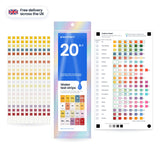
It gives a colour-step reading for each pad, matched to the chart. The WaterKit Water Test Kit has pads for free chlorine, total chlorine, bromine, pH, total alkalinity and hardness. Fill a clean glass with the water, dip one strip, wait 30 to 60 seconds and match the pads to the chart, or scan the QR code on the chart to open the free results checker. For the method, see how to test your water at home. BISHTA says a strip is the easiest way to check a home hot tub, if it is in good condition and in date. BISHTA and PWTAG tie a water change to time, use and the signs above, not to a reading. Only the HSE's business-use table ties it to chemistry, saying a spa pool whose pH is still outside 7.0 to 7.6 after faults are fixed will need emptying and refilling. Here is what the pads can and cannot show, by our reading of the chart steps.
- On a refill, the hardness pad (steps 25, 50, 100, 250 and 425) indicates whether the fill water reads soft, moderate or hard. We have not checked whether it reads calcium or total hardness, so it cannot be set against BISHTA's 200 to 400 mg/l calcium figure.
- Before emptying, the free chlorine pad has steps at 3, 5 and 10 mg/l, so it indicates roughly whether chlorine is down to PWTAG's 5 mg/l or less. Its first step above zero is 0.5 mg/l, so it cannot show SEPA's test that no chlorine or bromine is detectable, or the Environment Agency's 0.2 mg/l figure.
- We give no pH verdicts. There is no pad for TDS, so the strip cannot show the HSE's 1,000 mg/l line, and no reading can say whether water looks lifeless or musty.
- The optional bacteria test is for your tap's fill water. We do not claim it for hot tub water. A strip result is not a legal sample.
The figure for your area is an average, and your own tap and the hose between it and the tub can differ, since BISHTA says bacteria can build up in a hose. The pads that matter here are hardness on a refill, where a different step from one fill to the next would indicate different fill water, and free chlorine before emptying, where a step at or below 5 mg/l would indicate chlorine is near PWTAG's level for draining. Best pack: 20 strips, enough for 13 weekly tests across BISHTA's three-month maximum between changes, plus a fill-water test and a before-emptying test (15 in all, our arithmetic), £5.99 (or £10.99 with a bacteria test), with free 2nd Class delivery on every order. See the kit
Your hot tub water change questions
How often should you change hot tub water UK?
BISHTA says ideally every month and at most every three months. We found no UK official figure for a longer gap.
How often do you change the water in a hot tub?
PWTAG says at least monthly for home tubs. BISHTA says most likely monthly if the tub is used three or four times a week or more.
When to change hot tub water
BISHTA's signs are tired or musty water with in-range chemistry, chemistry that is hard to hold, foam that will not clear, and cloudy water that stays cloudy after shocking and a clarifier.
Can I change hot tub water once a year?
None of the UK official or trade-body sources we read gives once a year. BISHTA's longest interval is three months, and it says to follow your manufacturer's instructions.
How many litres or gallons of water in a hot tub?
BISHTA says some hold around 1,000 to 1,500 litres. United Utilities says about 1,250 for a 4 seater and 3,000 for a 7 seater, about 275 to 660 UK gallons by our conversion. A US gallon is smaller.
How much water does a hot tub use?
A full tub's worth for each change, plus top-ups. United Utilities says a metered customer may see a higher bill.
How do you shock the water in a hot tub?
BISHTA's shock factsheet (C30) says to shock at least once a week and after heavy use. Its steps are cover off, pH checked at 7.2 to 7.6, pumps on with the air off, and the dose from the product label. Our hot tub chemicals guide covers the waiting times it gives.
Sources
- British & Irish Spa & Hot Tub Association (BISHTA), Water treatment (C3; March 2026 PDF; why and how often to change water, guidance on emptying), Regular maintenance saves money (C6), Tips on saving water (C7), Running costs for hot tubs and swim spas (C10, April 2026 PDF), Hot tubs and hard water (C17), Daily, weekly, monthly and annual hot tub checks (C26, April 2026), How to prevent and deal with cloudy hot tub water (C28), Hot tub foam (C29), Why and when should I shock my hot tub? (C30) and Temporary hosepipe bans (C46, PDF footer April 2026). Most BISHTA web pages carry no date; the Owners Handbook (April 2026) lists C3, C6, C7, C10, C17, C26, C28, C29 and C30. Handbook read 29 October 2026; factsheet pages read 25 October 2026.
- Pool Water Treatment Advisory Group, Introducing Hot Tubs for Home (slides dated 2 March 2022; water replacement on slide 28, discharge on slide 34; read 25 October 2026).
- Health and Safety Executive, HSG282: The control of legionella and other infectious agents in spa-pool systems (2017; paragraphs 75, 76, 117, 118 and 131, Tables 1 and 3; business-use guidance; read 25 October 2026) and Spa-pool systems (updated 28 October 2024; read 25 October 2026).
- Scottish Environment Protection Agency, WAT-G-050, Discharge of hot tub or swimming pool effluent (registration guidance) (version 1.0, August 2025) and Discharge to groundwater from a site with one hot tub (page undated); read 25 October 2026.
- Environment Agency, Groundwater activity exclusions from environmental permits (updated 5 August 2021; section 2.5, swimming pool water; England; read 25 October 2026).
- United Utilities, How much water does my hot tub use? (page undated; read 25 October 2026).
- legislation.gov.uk, The Water Use (Temporary Bans) Order 2010 (SI 2010/2231, England and Wales; articles 8 and 9) and Water Industry Act 1991, section 76; read 25 October 2026.
- Mumsnet, Hottub - yeah or nay? (Property board thread started 17 December 2020; one poster's account, seen as a search excerpt; read 29 October 2026).
- WaterKit, Water Test Kit (20-in-1 strip, 30 to 60 second read, 10 strips £3.99 to 100 strips £12.99, optional bacteria test add-on, free 2nd Class delivery on every order) and results checker. The strip statements, the litre-to-gallon conversions and the water and test-count arithmetic are WaterKit's own.
Contains public sector information licensed under the Open Government Licence v3.0.