

Why is my hot tub water green?
Share
Part of our pool and hot tub water guide
You lifted the cover and the water has a green tint. What do the UK hot tub and pool bodies say is behind it, and what do they leave out?
Short answer: The UK sources we read point to algae. PWTAG, which writes pool guidance, names sunlight, poor circulation and a low disinfectant residual, while the trade body BISHTA says algae are rare in a covered tub. BISHTA's first step is testing, with chlorine 3 to 5 mg/l and pH 7.0 to 7.6 for home tubs.
By Andrew Tomlinson, WaterKit · Last reviewed 29 October 2026
Why has my hot tub water turned green?
Most likely algae, although no UK source gives a full answer for a home hot tub, and a 20-in-1 test strip can at least check the chlorine and pH side at your own tub. The Pool Water Treatment Advisory Group (PWTAG) says in its guide to typical pool problems that algal growth can be green, dark green or red-brown. It says algae are caused by sunlight, and also by poor hydraulics, mixing and turnover, and it lists a disinfectant residual that may be too low as another possible reason for discoloured walls and floors. That advice is written for public pools.
For hot tubs, the Health and Safety Executive's guide HSG282 lists algal and bacterial growth among the things cloudy water may indicate, alongside an unused tub, a failed circulation pump and undissolved chemicals. PWTAG's slides for home hot tub owners carry a similar list. PWTAG's code of practice leaves spa pools to HSG282 and is written for public pools, but says algae thrive in sunlight and can make pool water cloudy or green. We found no current UK official text that describes green hot tub water as such.
The British & Irish Spa & Hot Tub Association (BISHTA) is the UK hot tub trade body. None of the factsheets or FAQ answers on its website is about green water or algae, but its cloudy water factsheet (C28) says algae and bird droppings are rare in a hot tub because the cover is on when it is not in use. We found no BISHTA, PWTAG or HSE text that blames copper or iron for green hot tub water. Trade blogs do, and we have not repeated them.
What do UK sources say makes algae more likely?
A low sanitiser level, light, a tub left unused and a few other things, according to these sources, which give a checklist and not a diagnosis for your tub.
| Factor | What the source says |
|---|---|
| Low disinfectant | PWTAG lists a disinfectant residual that may be too low, alongside algal growth, among the possible reasons for discoloured pool walls and floors. It also lists sunlight breaking down free chlorine, a dirty filter and poor flow among the reasons a free chlorine level is low in a pool |
| Sunlight and no cover | PWTAG says algae thrive in sunlight, and BISHTA says algae are rare in a covered hot tub |
| Standing unused | HSG282 lists a spa pool that has been left unused among the things cloudiness may indicate |
| Stabilised chlorine build-up | HSG282 says cyanuric acid, which chloroisocyanurate products add, should be kept below 100 mg/l by dilution with fresh water, and that higher levels can encourage algal growth. This is HSE's guidance for business-use tubs |
| Dirty or clogged filters | BISHTA says blocked or clogged filters cannot do their job, and HSG282 lists incorrect filter cleaning among the things cloudiness may indicate |
Why might my tub's water not match what the guides describe?
No figure for your area tells you what goes into your own tub, and the sources give a few reasons. PWTAG's code of practice says mains water, especially from a river or reservoir, is likely to contain some or all of organic materials, lime and other alkalis, phosphates and other substances. It says phosphates, added to stop lead and copper dissolving from pipework, encourage algal growth. That is written for pools, and PWTAG's point is that disinfection, pH, alkalinity, calcium hardness and filtration need careful control whatever comes out of the tap.
“No figure for your area can tell you what is going into your own tub, because your tap, your chemicals and how often the tub gets used all play a part. If the water has gone green, I would test your own water first and not assume the guide's description fits your tub.”
Hardness is another local difference. PWTAG's typical problems page lists high calcium hardness among the reasons for cloudy pool water, and water that is too hard as a reason for scaling on surfaces and fittings. Our how hard is my water guide shows how to find yours. PWTAG also says pool source water should meet drinking water standards, and that this applies to private supplies too. A figure for the area does not tell you what comes out of your own tap, or what your tub does with it.
What one reader found
A poster on the MoneySavingExpert Forum wrote on 28 June 2020 that a newly bought £320 inflatable hot tub for 4 to 6 people had gone well so far. They said it "did turn a green mirky colour after the hottest day of year", and put that down to their own chlorine level. The post does not say what the level was or how they fixed it. PWTAG's pool guide lists sunlight breaking down free chlorine as a reason a level can be low, but we cannot say that applied here. Shared on MoneySavingExpert Forum
Does green hot tub water matter for health?
We found no UK official statement on green hot tub water in itself. What the sources say is narrower. BISHTA says to test the water daily before use, and that a tub used infrequently, left uncovered in the sun or not sanitised correctly is at risk of harbouring bacteria. It says some, such as biofilm, mainly affect clarity, while Legionella can cause serious illness.
The NHS says Legionnaires' disease is caught by breathing in tiny droplets of water containing the bacteria, and lists spa pools and hot tubs among the sources. It says the disease is uncommon but can be very serious, and that it is less common to catch it at home. It says to ask for an urgent GP appointment or call NHS 111 if you have symptoms such as a cough lasting 3 weeks or more, coughing up blood, chest pain or shortness of breath, and to say where you have been in the last 10 days.
How do you fix green hot tub water?
We found no UK official method for green water in a home hot tub, so these steps are BISHTA's advice for cloudy water and shocking, the nearest we found. For public pools, PWTAG's typical problems page says to raise free chlorine to 5 mg/l overnight, scrub discoloured areas and vacuum or brush algae from surfaces, and we found nothing equivalent for home tubs.
- Test first, for example with a test strip. C28 says to start by testing the water chemistry. BISHTA's ranges for a home hot tub are pH 7.0 to 7.6 and chlorine 3 to 5 mg/l, or bromine 2 to 4 mg/l, although its factsheets differ on some figures, as our chemicals guide shows.
- Shock, following BISHTA's shock factsheet (C30). Take the cover off, check the pH is between 7.2 and 7.6, run the pumps with the air off, choose the dose from the package label, then wait. BISHTA says to wait 10 to 15 minutes before entering after a non-chlorine shock, that a chlorine shock can take up to 24 hours to clear, and to test again before getting in.
- Check and clean the filters. BISHTA (C27) says to treat them with a hot tub filter cleaner at least monthly and replace them at least every 12 months, or 24 months if two sets are rotated.
- If it is still green, BISHTA says badly affected water may need repeated shock treatments, and that if a full empty and refill is due soon, bringing it forward may be cheaper and more effective. It says water that will not clear is probably chemically irrecoverable on a cost-effective basis, and the tub should be drained and refilled.
BISHTA says to clean a drained tub only with products made for hot tubs, never household cleaners, never to mix hot tub chemicals other than as the maker allows and never to switch between chlorine and bromine without consulting your retailer. We give no doses of our own. For a home tub, BISHTA's advice is to contact your BISHTA hot tub dealer, and we found no HSE guidance written for private owners. For draining, see the hot tub water change guide. If the same problem appears in a pool, see why is my pool water green.
How do you keep hot tub water clear and clean?
BISHTA's advice is mostly about keeping contaminants out and keeping up the routine, and its factsheets (C28, C27, C6 and C3) give this list.
- Shower before getting in, without soap or shower gel, and use a foot bath.
- Do not wear fake tan, moisturiser, cosmetics, deodorant or perfume in the tub, and rinse swimwear in plain warm water.
- Keep the cover on when the tub is not in use, and keep pets, food and drink out of it.
- Shock at least weekly and after heavy use, and use a chemical clarifier once a week.
- Clean the filters regularly and test the water before each use.
- Change the water ideally every month, and at most every three months.
PWTAG's slides for home hot tubs say to check that the water is clear at least daily, so that you can see the bottom of the tub clearly with the aeration off, and to clean the filter cartridge every two weeks.
What can a test strip show, and what should I do next?
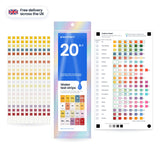
It gives a colour-step reading for each pad, matched to the chart, for the sanitiser and pH checks BISHTA says to make first. Fill a clean glass or cup with water from the tub, dip one strip, wait 30 to 60 seconds and match the pads to the chart, or scan the QR code on the chart to open the free results checker. The WaterKit Water Test Kit has pads for free chlorine, total chlorine, bromine, pH and total alkalinity. This is our reading of the chart, not a claim from BISHTA.
| BISHTA range | What the pad steps can show |
|---|---|
| Chlorine 3 to 5 mg/l (C3 and C28, while C26 gives 2 to 4 for hypochlorite chlorine) | The free chlorine steps are 0, 0.5, 1, 3, 5, 10 and 20 mg/l. A reading at 0, 0.5 or 1 indicates a level below the range, which fits the low residual PWTAG lists for algae, and 3 or 5 matches its ends |
| Bromine 2 to 4 mg/l | The bromine steps are 0, 1, 2, 5, 10 and 20 mg/l. 2 matches the start of the range and 5 sits above it |
| pH 7.0 to 7.6 | The 7.2 and 7.6 steps fit. We give no pH verdicts, because the chart cannot tell 7.2 from 7.4 |
It has limits.
- There is no pad for algae, cyanuric acid or phosphate, so a strip cannot test the causes above.
- The strip has a copper pad, but we found no UK official figure for copper in hot tub water, so we do not read it against one.
- BISHTA says chloramines and bromamines can give false readings for sanitiser levels, and our results page says the bromine pad also responds to chlorine. We have not checked how the chlorine pads respond to bromine, so use the pad that matches your sanitiser.
- We do not claim the optional bacteria test for hot tub water, and a strip result is not a legal sample.
BISHTA says a test strip is the easiest way to check a home hot tub's water, as long as it is in good condition and in date. For the method see how to test your water at home, and for pH see how to raise or lower the pH in a pool.
Best pack: 20 strips, enough for a daily test for two weeks plus 6 re-tests while you clear the water (our arithmetic), £5.99 (or £10.99 with a bacteria test for your tap water), with free 2nd Class delivery on every order. See the kit
Your green hot tub water questions
Why does hot tub water turn green?
The UK sources we read point to algae, which PWTAG and the HSE both list, helped by a low sanitiser level, sunlight or an unused tub. We found no UK official source that blames metals.
Is green hot tub water harmful?
We found no UK official statement either way. BISHTA says to test the water before every use, and the NHS lists hot tubs among the places Legionnaires' disease can be caught, though it says this is less common at home.
How to fix green hot tub water, and how to get rid of green water in a hot tub
We found no UK official method for green water in a home hot tub. BISHTA's nearest advice is to test, shock, clean the filters and, if the water will not clear, drain and refill.
How to shock hot tub water
BISHTA's factsheet C30 says to take the cover off, check the pH is 7.2 to 7.6, run the pumps with the air off, choose the dose from the package label and wait before entering.
How to make hot tub water clear, and how to keep it clean, clear or crystal clear
BISHTA says to shower first, keep the cover on, shock weekly and keep the filters clean. We found no UK official standard for crystal clear, and PWTAG says you should be able to see the bottom clearly with the aeration off.
Sources
- Pool Water Treatment Advisory Group, Typical Pool Problems (algal growth, low free chlorine, high calcium hardness and scaling; undated page; read 29 October 2026) and Code of Practice (July 2021, last updated July 2025; section 1.8 on spa pools, sections 3.2 and 3.3 on mains water and phosphates, glossary entry on algae; written for public pools; read 29 October 2026).
- Pool Water Treatment Advisory Group, Introducing Hot Tubs for Home (slides dated 2 March 2022; slides 28 and 30; read 25 October 2026).
- Health and Safety Executive, HSG282: The control of legionella and other infectious agents in spa-pool systems (2017; Table 1 on checking water clarity, Table 2 on water clarity, Information box 5 on cyanuric acid; business-use guidance; read 25 October 2026).
- British & Irish Spa & Hot Tub Association (BISHTA), factsheet index and FAQs (none on green water or algae), How to prevent and deal with cloudy hot tub water (C28), Why and when should I shock my hot tub? (C30), How should I take care of my hot tub filters? (C27), Daily, week