

How can you soften hard water at home?
Share
Part of our hard water guide
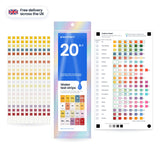
The kettle has a crust and the shower screen never clears. Which fixes do UK official bodies describe, and which do they say do not soften anything? You can check your own tap's hardness first with a 20-in-1 test strip.
Short answer: The Drinking Water Inspectorate (DWI) names ion-exchange softeners, which swap calcium and magnesium for sodium, and says boiling removes temporary hardness as scale. It says magnetic devices do not soften water. The DWI puts 200 to 300 mg/l as calcium carbonate in its hard band, so find your own figure first.
By Andrew Tomlinson, WaterKit · Last reviewed 29 October 2026
Do you need to soften your water at all?
That depends on how much scale, weak lather and tide marks bother you, and on your own hardness figure. The Drinking Water Inspectorate says the UK drinking water regulations set no standard for hardness and calls using a softener a matter of personal choice. Citing the World Health Organization, it reports that water of 200 mg/l or more as calcium carbonate will produce scale. You can read your own tap with a 20-in-1 strip from the WaterKit Water Test Kit, and our postcode guide shows how to ask your water company for its figure.
Which methods actually lower hardness?
An ion-exchange softener, a jug filter with resin, a reverse osmosis unit and, for the temporary part only, boiling. This is what the DWI says about each.
| Method | What the DWI says |
|---|---|
| Ion-exchange softener | The most common home treatment, swapping calcium and magnesium for sodium. Some softeners can add significantly to the sodium in drinking water, so keep an unsoftened kitchen tap. Softened water should not be used to make up baby feeds. Fitted just before the hot water tank or boiler, a softener is more economical for limescale than softening the whole supply |
| Jug filter with resin | Some carbon jugs also hold resin beads that alter temporary hardness, so tea is less likely to scum and kettles may scale less. They do not alter permanent hardness |
| Boiling | Removes temporary hardness (calcium and magnesium carbonates and bicarbonates), forming scale. The DWI's treatment manual says permanent hardness, caused by sulphates and chlorides, is not precipitated by boiling |
| Reverse osmosis | Removes most dissolved solids and softens the water, but sends 20% to 30% of the incoming flow to waste and cuts pressure substantially. The DWI says to consider it only for specialist domestic purposes, and that RO water is not generally considered suitable for drinking and cooking. By law you must tell your water company before installing one |
Our guide to how a softener works goes further, and can you drink water from a water softener? covers the sodium side. The DWI advises buying from a reputable supplier, using a qualified plumber who belongs to a recognised trade association, and checking with your water company in advance that a device meets the water fittings regulations. It also says not to buy from a door-to-door seller, particularly one offering to test your water, and to report such scams to trading standards.
Do magnetic and electromagnetic descalers soften water?
No, according to the DWI, which says devices sold on the idea that a magnetic field reduces scaling do not soften the water. It adds that they were designed for large industrial systems, where water flows continuously, not for homes where water may not flow for up to eight hours a night. If you are considering one, it recommends sale or return and asking for performance data in a home setting. The advertising regulator's advice (the ASA and CAP, 23 April 2025) describes these conditioners as claimed to work differently from softeners, by encouraging ions to clump together instead of sticking to pipes. We read only the start of that passage. Our magnetic softener guide covers the claims.
How do you stop limescale in a boiler?
By treating the water before it reaches the heating element. The DWI says scaling of heating elements shortens their life and makes appliances less efficient, and that a softener just before the hot water tank or boiler is the more economical way to prevent limescale. In the sources we read we found no UK official figure for how much any device cuts boiler scale, so ask your installer and the boiler maker.
Can you soften water for a fish tank?
The sources we read for this guide (the DWI and the ASA) do not cover fish tanks, so we give no method here. Their advice is about water for the home, and the DWI says to keep an unsoftened outlet for drinking. Our fish tank hardness guide covers the aquarium question.
What one reader found
A poster on Gransnet, a UK forum, wrote in a December 2017 thread about limescale on wetroom floor tiles. They said they had struggled with dreadful water for 20 years until they found a water softener. They called it a revelation, said the bathroom was now sparkly and the shower doors see-through, and described it as "the best money I ever spent". The only upkeep they mentioned was topping up the salt monthly. That is one person's experience and says nothing about your water. The DWI's points about a separate unsoftened drinking tap still apply. Shared on Gransnet
Why might your own tap differ from the area figure?
The area figure is an average. Your tap may read differently, and a figure for the area does not tell you what comes out of your own tap. The DWI says its map shows only typical hardness in England and Wales, that some areas have local variation the map does not show, and that for an accurate measurement you should ask your water company directly.
“The area figure is only an average, so I would treat it as a starting point and not as a description of what comes out of your own tap. Checking the tap you actually use is a sensible way to see how your water compares with it.”
Your own plumbing matters too. If a softener is already fitted, the DWI says to keep an unsoftened outlet for drinking, so the kitchen tap and the bathroom tap can differ. It also says hard water causes scaling in hot water systems, kettles, electric irons and domestic appliances, so the effect shows up wherever water is heated, not only where it is drunk. A strip reading at the tap you use gives you a number to set beside the area one.
How can a test strip show whether a method worked?
It can show whether a tap's hardness reading moved, which is what a softener, a resin jug, boiling and reverse osmosis aim to do. The strip's hardness pad has colour steps at 0, 25, 50, 100, 250 and 425 mg/L. Test your cold kitchen tap before any change, then test the treated tap the same way afterwards. Fill a clean glass, dip one strip, wait 30 to 60 seconds and match the pads to the chart, or enter the colours in the results portal. Our hardness testing guide walks through it. The table is our own reading of what the pad could indicate.
| Method | What the pad could indicate |
|---|---|
| Softener | A softened tap at a lower step than the unsoftened kitchen tap. A blend or partial setting may land in between |
| Resin jug | Jug water at a lower step than the tap, though the DWI says only temporary hardness is altered |
| Boiling | Possibly a lower step if your hardness is mostly temporary. We have not tested this and found no UK official figure |
| Magnetic or electromagnetic conditioner | The same step before and after, which is what the DWI's description leads you to expect. The pad cannot show whether less scale forms |
These limits are our reading. The steps are uneven, with none between 100 and 250, so a change inside one step may not show. The portal does not say whether the steps are calcium carbonate, the DWI's basis, so any comparison with its bands is ours. The pad gives total hardness, not temporary against permanent, and it does not show scale in a kettle or boiler or give a sodium figure for softened water. The DWI says water of 100 mg/l or less as calcium carbonate is more corrosive to pipework, which could dissolve plumbing metals such as lead, copper, brass and nickel. The strip cannot read lead at the UK limit, so see how to tell if your house has lead pipes. A strip result is not a legal sample.
The area figure is an average, and the DWI says its map shows only typical hardness with local variation it does not show, so your own tap may differ. The hardness pad is the one that matters here. A lower step at a treated tap than at the unsoftened kitchen tap would indicate the method is lowering hardness, while the same step before and after would indicate no change. Best pack: 20 strips, enough to test the kitchen tap and each treated tap before and after, and again later, £5.99 (or £10.99 with a bacteria test), with free 2nd Class delivery on every order. See the kit
Your hard water softening questions
How to soften hard water?
The DWI describes an ion-exchange softener, a resin jug and boiling for the temporary part, and says reverse osmosis is for specialist uses. See the table above.
How to make hard water soft?
Remove or swap the calcium and magnesium. The DWI says magnetic devices do not soften the water.
How to soften hard water UK?
The DWI's pages cover England and Wales, and the methods are the same ones. Get your own hardness figure from your water company first.
How to prevent limescale?
The DWI defines scaling as calcium and magnesium deposits building up on heating elements, and says boiling temporary hardness forms scale. Fitting a softener before the boiler is its economical route. Our limescale guide covers more.
How to treat hard water?
Treat it where it causes the problem. The DWI says a softener just before the hot water tank or boiler is more economical for limescale than softening the whole supply.
How to prevent limescale in boilers?
The DWI points to a softener fitted just before the hot water tank or boiler. We found no figure in the sources we read for how much any device reduces boiler scale.
How to reduce water hardness?
The table above lists the four methods that lower the reading.
How to fix water hardness?
The DWI says UK regulations set no standard for hardness and calls using a softener a matter of personal choice.
How to soften water in fish tank?
The sources we read for this guide do not cover it. See our fish tank hardness guide.
How to reduce hardness of water?
Choose the method by where you need it. The DWI says most water softeners replace hardness with sodium and advises keeping the kitchen drinking tap unsoftened.
How to soften hard water in fish tank?
The same answer applies, because the DWI and ASA pages we read say nothing on aquariums.
How to lower water hardness?
Measure first, change one thing, then measure again with the same test.
How to fix water hardness in fish tank?
We found no fix in the sources we read for this guide. Our fish tank guide above covers it.
Sources
- Drinking Water Inspectorate, Water Hardness / Hard Water (undated page; hardness bands, no hardness standard, WHO 200 mg/l and 100 mg/l figures, ion exchange, softener before the hot water tank or boiler, magnetic devices, jug filters and temporary hardness, personal choice, qualified plumber, ask your water company for an accurate figure; read 29 October 2026).
- Drinking Water Inspectorate, Domestic water filters and softeners (undated page; most common home treatment, sodium and the unsoftened kitchen tap, baby feeds, reverse osmosis waste, pressure and suitability, water fittings check, door-to-door salespeople; read 29 October 2026).
- Drinking Water Inspectorate, Manual on Treatment for Small Water Supply Systems (undated page, adapted from a March 2001 report; temporary and permanent hardness; read 29 October 2026).
- Advertising Standards Authority and CAP, Water treatment devices (advice dated 23 April 2025; softeners and magnetic or electromagnetic conditioners; we read only the opening of the page; read 29 October 2026).
- Gransnet, Hard water and limescale (forum thread, December 2017; one poster's experience, not an official source; read 29 October 2026).
- WaterKit, Water Test Kit (20-in-1 strip, 30 to 60 second read, optional rapid coliform test, from £3.99, free 2nd Class delivery on every order) and results portal (hardness pad steps 0, 25, 50, 100, 250 and 425 mg/L). The pad table and its limits are WaterKit's own reading of the colour chart steps.
Contains public sector information licensed under the Open Government Licence v3.0.