

How does rainwater harvesting work at home?
Share
Part of our garden and rainwater guide
Gutters, a tank and a pump sound simple enough. What happens between the roof and the toilet cistern, what does it cost and who sets the rules? You can check this at your own tap with a 20-in-1 test strip.
Short answer: Rain from a roof runs through pipes into a tank, and a pump or tap supplies it for jobs such as toilet flushing and the garden. The Drinking Water Inspectorate's expert group, citing an Energy Saving Trust study, puts toilet flushing at 22% of typical home water use, and calls the harvested supply non-drinking water.
By Andrew Tomlinson, WaterKit · Last reviewed 29 October 2026
What is rainwater harvesting?
It is collecting rain from roofs and other above-ground surfaces and storing it for later use. The Environment Agency (EA) says harvested rainwater is collected through a system of above-ground pipes and tanks and is kept apart from inland waters and groundwater. The simplest version is a garden water butt, which our guide to what a water butt is covers. A larger system stores the water in a tank and supplies it through a second set of pipes in the house.
How does a rainwater harvesting system work?
Rain is collected, stored and then delivered through a separate pipe supply, with the mains kept apart from it. The Drinking Water Inspectorate (DWI) expert group report, published in March 2026 and covering England and Wales, describes the set-up as a dual pipe supply. One supply is the normal drinking water supply. The second is labelled non-drinking water.
| Stage | What the sources say |
|---|---|
| 1. Collection | The DWI report, quoting BS EN 16941, defines rainwater harvesting as direct collection of rainwater before it runs off to the environment or the sewers. It says rainwater is typically collected from the roof, and hard-standing areas can be included with additional filtration |
| 2. Storage | The DWI report says possible contaminants in harvested rainwater include faecal matter from birds and lead from roofs. It treats storage as a key point in the risk assessment |
| 3. Dual pipe supply | The DWI report says the second supply is meant for a limited number of uses, mainly toilet flushing, some garden uses and sometimes laundry |
| 4. Mains back-up | The DWI report says installing a reuse system connected to a public water supply back-up must be notified to the local water company |
| 5. Labelling | The DWI report, summarising WHO guidance, lists clear labelling of each system, outlets physically separated from drinking water outlets, and installation only by qualified plumbers. It cites BS 1710:2014 for colour coding pipes |
What is rainwater harvesting used for?
Mostly for jobs that do not need drinking water. The DWI expert group lists toilet flushing, garden irrigation of lawn and non-edible plants, car washing, pressure washing and other outdoor uses, and laundry for people who are not vulnerable as potential uses. It lists drinking, food preparation, washing, showering, bathing, teeth brushing, washing dishes, and outdoor hot tubs and paddling pools as unsuitable.
The report quotes an Energy Saving Trust study of typical household use. It gives 33% for showers and baths, 31% for taps, 22% for toilet flushing, 10% for washing machines and 2% for dishwashers. It also says the EA has predicted a demand gap of five billion litres per day by 2055 in England and Wales unless urgent action is taken. Our guide to drinking rainwater in the UK covers what the official sources say about the drinking question, and watering plants with grey water covers the other reuse source.
Do I need a licence to harvest rainwater?
In England, not for water that only consists of harvested rainwater, according to the EA's regulatory position statement. It also says you do not need a licence to use rainwater that has not entered inland surface waters or groundwater, or to use stored water for irrigation where the tank is filled only by harvested rainwater. A licence may be needed if you combine harvested rainwater with water from a watercourse, land drainage, underground strata or another licensed source in a reservoir that discharges to inland waters. The EA says the statement is valid until April 2029 and is reviewed every 2 years. Our guide to whether it is illegal to collect rainwater goes further.
What rules apply to a system connected to the house?
Plumbing, building and private water supply rules rather than a ban. The table sets out what the DWI report says about each, plus the government pages we read.
| Rule | What the source says |
|---|---|
| Water Supply (Water Fittings) Regulations 1999 | The DWI report says they set legal requirements for plumbing design, installation, operation and maintenance, and are enforced by water companies for public supplies. It says water companies carry out around 70,000 inspections a year across the UK |
| Building Regulations 2010, Approved Document G (England) | The DWI report says paragraph G1 (1.6) allows alternative water sources for toilets, washing machines and irrigation if a competent person carries out a risk assessment. The Ministry's page says the current edition was last updated on 1 October 2024 |
| Drainage, Approved Document H (England, 2015 edition) | Its contents list rainwater drainage as requirement H3 and include a section on greywater recovery systems. We have not summarised its tank rules here |
| Private Water Supplies Regulations (England 2016, Wales 2017) | The DWI report says alternative supply systems would currently fall under these Regulations, which local authorities enforce. It says Regulation 6 exempts single properties from a risk assessment |
| British Standards | BS EN 16941-1:2024 covers on-site non-potable systems for the use of rainwater. The DWI report says compliance is not mandatory but is often written into building contracts |
| Water quality | The DWI report says it was not possible within the timeframe to recommend with confidence which quality standards should apply to non-drinking water |
The expert group's recommendations include an Approved Code of Practice on an official government website and mandatory registration of installed systems. They are recommendations in a report published on 17 March 2026, not rules in force.
How much does a rainwater harvesting system cost?
We found no official UK price for a household system in the sources we read. The UK Water Reuse Association's position, quoted in the DWI report, is that domestic rainwater systems are at the moment typically self-build projects and small community systems, and the report calls the market for reuse systems comparatively undeveloped in England and Wales. The EA published a 2010 science report quantifying the energy and carbon impacts of domestic and business scale systems. We read only its summary page, so we quote none of its results. One householder's figures are below.
What one reader found
A poster on a UK money forum described a self-installed system in June 2025. They bought a package of about £2,000 that included a tank and a pump with a mains back-up unit, and spent perhaps another £500 on parts to install it. They fitted an underground tank while dealing with a garden drainage problem, then put off the pump because they wanted to remodel the bathroom first. They now use rainwater for laundry, toilet flushing and the garden, and wrote that they were "kicking myself for not doing it sooner".
By their own estimate, they expect a saving of £200 to £250 a year on their water bill and a payback of around ten years. They also wrote that the sums would be hard to make work if you paid someone else to do the installation, and told DIYers to learn the regulations first. These are one household's figures, not a general cost. Shared on the MoneySavingExpert Forum.
Why might the water from my own tank or taps differ from what I expect?
The area figure is an average. A figure for the area does not tell you what comes out of your own tap, and it says nothing at all about water you have collected yourself.
“”
The DWI report gives several reasons a home with a reuse system is a special case.
- Tank water is outside the drinking water standards. The report says the Water Supply (Water Quality) Regulations set wholesome water requirements for public supplies, and names microbial and chemical contaminants, including bird droppings and lead from roofs, as possible hazards in harvested rainwater.
- Connections inside the house. The report says cross connections between a drinking water supply and a reuse system, through inadequate backflow protection, have been notified to the DWI.
- Standing water. Summarising WHO guidance, the report says a dual supply may reduce use of the drinking water system, so stagnation risks in those pipes must be considered.
- Uneven oversight. The report cites DWI research from 2024 finding uneven implementation of the private water supply rules across England and Wales.
If you want a side-by-side of the two supplies at your own property, you can check this at your own taps with a WaterKit strip. Our guide to how to test your water at home covers taking the sample.
How can I check my tank and tap with a test strip?
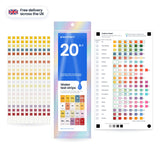
Dip one 20-in-1 strip into a clean glass or cup of water, wait 30 to 60 seconds and match the pads to the chart, or enter the colours in our free results portal. The DWI expert group could not say which quality standards should apply to non-drinking water, so we give no verdict on a reading. The strip is made for drinking water and we have not validated it on harvested rainwater, so treat its pads as an indication. The last column is our own reading of the chart steps.
| Pad | Steps on our chart | What it can show here |
|---|---|---|
| Hardness | 0, 25, 50, 100, 250, 425 mg/L | Which step a tank sample sits nearest, beside a tap sample from the same day (see our hardness guide). Our chart does not say whether mg/L means as calcium carbonate, so any match with DWI classes is approximate |
| pH | 6.2, 6.8, 7.2, 7.6, 7.8, 8.4 | Which step the sample sits nearest. We give no verdict on a reading |
| Copper | 0, 0.2, 0.5, 1, 2, 5 mg/L | Which step the sample matches |
Several things are outside what the kit can do.
- The strip cannot read lead at the UK limit, because its lead pad's first colour step sits far above it, so a blank pad says little about lead from roofs, which the DWI report names. Our guide to how to tell if your house has lead pipes covers the plumbing side.
- The rapid bacteria test is a presence screen for coliforms read after 24 to 48 hours, not a count. We do not claim the test for rainwater, and it cannot be set against count-based standards.
- The strip does not read turbidity or Legionella, a strip result is not a legal sample, and it does not replace any maintenance a system calls for.
The area figure is an average, and the DWI report gives reasons your own tap or tank may differ, from cross connections and standing water in the pipes to uneven oversight of private supplies. The pads that matter here are hardness, pH and copper, and a step that differs between tank and tap on the same day would indicate the two supplies are not alike. Best pack: 20 strips, enough to read the tank and the tap side by side a few times across a year, £5.99 (or £10.99 with a bacteria test), with free 2nd Class delivery on every order. See the kit
Your rainwater harvesting questions
What is rainwater harvesting?
Rainwater collected from roofs and other above-ground surfaces through above-ground pipes and tanks, kept apart from inland waters and groundwater, as the EA describes it.
How to collect rainwater?
The EA's definition is from roofs and other above-ground surfaces, through pipes into tanks. The sources we read give no step-by-step instructions.
How to collect rainwater for plants?
The EA says you do not need a licence to use stored water for irrigation if the tank is filled only by harvested rainwater. The DWI report lists lawn and non-edible plants, and names skin contact, aerosols from hoses or sprinklers and drinking from a garden tap as the risks. The passages we read do not cover edible plants.
How to collect rainwater without gutters?
In the sources we read we found no guidance on a roof with no gutters. The EA's definition refers to above-ground pipes and tanks.
How does rainwater harvesting work?
Rain is collected from a roof, held in a tank and delivered through a separate labelled supply, with the mains kept apart. The stages table above sets it out.
What is a rainwater harvesting system?
The DWI report describes a dual pipe supply, with the normal drinking water supply plus a second supply labelled non-drinking water.
How much does a rainwater harvesting system cost?
We found no official UK figure in the sources we read. One forum poster reported about £2,000 for a package plus about £500 for installation parts, doing the work themselves.
How to reuse rainwater?
The DWI report lists toilet flushing, garden irrigation of lawn and non-edible plants, outdoor cleaning and car washing, and laundry for people who are not vulnerable.
What is rainwater harvesting used for?
The same list. The DWI report calls drinking, food preparation and bathing unsuitable for non-drinking water.
How to harvest rainwater?
Collect from the roof into a tank, and use it for the jobs above. Where a system links to a mains back-up, the DWI report says the local water company must be notified.
How to make rainwater harvester?
We give no build instructions. The DWI report says UK domestic systems are at the moment typically self-build, and that the Water Fittings Regulations apply to plumbing.
How to install a rainwater collection system?
We give no installation steps. The DWI report says a system connected to a public supply back-up must be notified to the water company, and that building regulations call for a risk assessment by a competent person.
How long can you store rainwater for plants?
We found no UK official time limit in the sources we read.
Is rainwater harvesting worth it?
The sources do not give one answer. One poster expects payback in about ten years on their DIY system, and the DWI report calls the UK market undeveloped. We give no verdict.
Is it against the law to collect rainwater?
We found no UK law banning it in the sources we read. The EA says that in England you do not need an abstraction licence for water that only consists of harvested rainwater.
Sources
- Environment Agency, Rainwater harvesting: regulatory position statement (applies to England; © Crown copyright 2021, page undated; definition of harvested rainwater, no licence for water that only consists of harvested rainwater, valid until April 2029; read 29 October 2026).
- Drinking Water Inspectorate, Governance framework for non-drinking water from rainwater harvesting and greywater reuse systems: Expert Group recommendations (March 2026; England and Wales; dual pipe supply, uses and unsuitable uses, Energy Saving Trust usage shares, hazards, legislation, notification, no recommendation on quality standards; read 29 October 2026).
- Drinking Water Inspectorate, Governance framework for rainwater harvesting and greywater reuse systems report published (17 March 2026; read 29 October 2026).
- Environment Agency, Energy and carbon implications of rainwater harvesting and greywater recycling (published 1 July 2010; 16 years old, summary page only; read 29 October 2026).
- Ministry of Housing, Communities and Local Government, Approved Document G (England; first published 3 March 2010, last updated 1 October 2024; read 29 October 2026).
- Ministry of Housing, Communities and Local Government, Approved Document H, 2015 edition (England; contents only, rainwater drainage H3 and greywater recovery systems; read 29 October 2026).
- MoneySavingExpert Forum, Time to rethink rainwater harvesting (forum post, June 2025; one household's own figures).
Contains public sector information licensed under the Open Government Licence v3.0.