

Rainwater in the garden: collecting it, storing it and using it in the UK
Share
The butt is full, the lawn is crisp and the forecast says another dry week. What are you allowed to collect, how do you keep it, and what can you use it for?
Short answer: yes, for the garden. The Environment Agency says harvested rainwater alone needs no abstraction licence in England, and the RHS says it is the best option for garden watering, though not for seedlings. It says a small shed roof in dry south-east England can yield 2,500 to 3,500 litres a year.
By Andrew Tomlinson, WaterKit · Last reviewed 25 October 2026
Is it legal to collect rainwater in the UK?
Yes, for an ordinary garden butt. The Environment Agency's regulatory position statement, which applies to England, says you do not need an abstraction licence to use water that only consists of harvested rainwater. A licence may be needed if you combine harvested rainwater with ground or surface water that you then abstract or transfer.
The RHS goes wider, saying collecting from roofs is legal in the UK and that the worry likely comes from historic water-rights rules in some US states. In searches of the Welsh, Scottish and Northern Irish regulators' sites (Natural Resources Wales, SEPA and DAERA) we found no matching statement on rainwater, only general abstraction rules, so ask them if you plan more than a butt. Our guide to whether it is illegal to collect rainwater in the UK goes through the myth.
How do you collect rainwater at home?
With a roof, a gutter and something to catch the water. The RHS says to collect from a house, garage, greenhouse or shed roof, and that a roof with a decent pitch and a relatively clean surface gives the cleanest water. Our guide to what a water butt is covers sizes.
| Set-up | What the sources say |
|---|---|
| Water butt on a downpipe | The RHS says you need a gutter with a downpipe or a downpipe kit, a filter against leaves and debris, and a firm, level stand so a watering can fits under the tap. Butts can be joined with connector kits or siphons |
| No water butt | The RHS says that without a butt you can still use watering cans and old bins to collect rainwater |
| A hose from the butt | The RHS says you can connect a hose to the tap, but good pressure needs a pump |
| A larger system | The RHS says some have underground tanks. Plumbing one into the house changes the rules (see below) |
On volume, the RHS says a small shed roof in dry south-east England can collect 2,500 to 3,500 litres a year, enough to fill about 10 to 15 standard 240-litre butts. Both figures are the RHS's, and we did not find a UK official figure for a house roof.
How do you keep stored rainwater in good condition?
With a lid, a filter, regular cleaning and regular use, according to the RHS.
| Routine | What the RHS says |
|---|---|
| Lid | Use a close-fitting lid to keep out spores of plant diseases and to discourage algae |
| Gutters | Keep gutters clear so organic debris stays out, which reduces the risk of plant diseases such as Phytophthora and Pythium |
| Cleaning | Clean butts every year to prevent disease build-up and smells, using warm water and a little washing-up liquid |
| Use it | Use stored water often to keep it fresh. If it smells, empty and clean the butt rather than adding chemicals |
| Hoses | Use a coarse spray setting so droplets are less likely to be breathed in, and disconnect hoses and let them drain when not in use |
The RHS says breathing in droplets from stagnant, warm water can pose a health risk, and that uncovered troughs (dipping tanks) can stagnate and harbour harmful micro-organisms. A separate RHS page on damping off advises adding a proprietary water butt cleaner after cleaning and refilling a butt, which we do not name. We found no UK official time limit for how long stored rainwater stays usable.
What can you use butt water for in the garden?
Watering, mostly, and the RHS rates it highly. It says rainwater is the best option for garden watering because it is naturally soft, low in minerals and has the right pH for most plants, including acid-lovers such as rhododendrons and camellias. It adds that the minerals in mains water, especially in hard water areas, can raise soil pH and affect nutrient availability.
The RHS also sets limits. It says to use butt water on established plants, meaning those in place for two or three years, but to avoid it on seedlings because it may contain damping-off diseases, and to use mains water for seedlings in pots and trays if possible.
On vegetables and fruit, the RHS's watering guide suggests collecting rainwater in water butts to cut mains use. The Drinking Water Inspectorate's (DWI) March 2026 expert group report deals mainly with plumbed non-drinking systems in homes in England and Wales, and says installing, using and maintaining water butts can be adequately covered by product design, correct installation and instructions. It lists garden irrigation of lawn and non-edible plants as a possible low-risk use of non-drinking water, and names skin contact, breathing in spray from hoses or sprinklers, and drinking from a garden tap as the risks. We report both and make no claim of our own about vegetables. Nothing here is about drinking the water, which our guide to drinking rainwater in the UK covers.
Can you use butt water in a hosepipe ban?
Yes under the two company rules we quote below, but the rules are your water company's. Under section 76 of the Water Industry Act 1991, which applies in England and Wales, a water company may ban listed uses of water it supplies through its supply system, including watering a garden using a hosepipe. Water UK says that in an area under a ban you cannot use a hosepipe or similar device to water gardens or plants. It says buckets and watering cans are generally allowed, and that exemptions differ by region.
On rainwater, two companies say so directly. South East Water's Sussex FAQs say a hosepipe connected to a water butt is not restricted, but that you cannot use a mains-connected hosepipe to fill the butt. Cambridge Water says you can still use water that is not from the mains, such as rainwater from a butt. These are those two companies' rules, read on 25 October 2026, and others may word theirs differently, so check yours. The Environment Agency lists installing a rain butt among things you can do now, without waiting for a ban.
Does using rainwater inside the house change the rules?
Yes, once it is plumbed in. Water Regs UK says that if a property has any mains supply, including a back-up one, the water fittings regulations apply (byelaws in Scotland). It says rainwater should never be directly connected to the mains drinking water, that combining them needs a break tank with an air gap, and that the water company should be told. The DWI's expert group describes such a system as a second, non-drinking supply, mainly for toilet flushing, some garden uses and sometimes laundry. The DWI also says a rainwater system used for domestic purposes, including toilet flushing, is a private water supply, which our guide to drinking rainwater explains.
How can a test strip help with butt water?
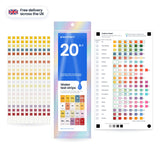
It gives readings for pH, hardness and copper from a sample, though it is made for drinking water. The WaterKit Water Test Kit has a 20-in-1 strip and a separate rapid coliform bacteria test. Fill the sample tube from the butt tap, dip one strip, wait 30 to 60 seconds and match the pads to the chart. Our guide to how to test your water at home covers sampling. The last column is our own reading of the chart steps, not an official claim.
| Pad | Steps on our chart | What it can show here |
|---|---|---|
| pH | 6.2, 6.8, 7.2, 7.6, 7.8, 8.4 | Which step your butt sample sits nearest. The RHS says rainwater has the right pH for most plants but gives no figure, so we give no verdict |
| Hardness | 0, 25, 50, 100, 250, 425 mg/L | A side-by-side with your tap water. The DWI classes soft water as up to 100 mg/l as calcium carbonate, and our chart gives mg/L without saying whether that is as calcium carbonate, so treat any match as approximate. See our hardness guide |
| Copper | 0, 0.2, 0.5, 1, 2, 5 mg/L | Which step the sample matches. We have not matched it to a garden-water limit |
Dipping one strip in tap water and one in butt water and comparing the hardness pads gives a simple side-by-side. That comparison is our suggestion, not an RHS method. Some things are outside what the kit can do.
- We have not designed or validated the strip for rainwater, so treat what its pads show on a butt sample as an indication.
- Our rapid test is a presence screen for coliform bacteria in a small sample, and it is not designed for rainwater. It does not look for the plant pathogens the RHS names, such as Phytophthora and Pythium.
- A strip result is not a legal sample.
Best pack: 50 strips, enough to compare tap and butt now and again after cleaning the butt or a long dry spell, £8.99 (or £13.99 with a bacteria test), with free 2nd Class delivery on every order. See the kit or check your results.
Your garden and rainwater questions
What is rainwater harvesting?
Collecting rain from roofs and other above-ground surfaces through pipes into tanks, as the Environment Agency describes it. A garden butt is the simplest form.
How to collect rainwater without gutters?
The RHS says a water butt needs a gutter with a downpipe or a rainwater downpipe kit, and that without a butt you can still use watering cans and old bins to collect rainwater. We found no UK official guidance on collecting from a roof with no gutters.
How to collect rainwater for plants?
The RHS says to collect from a house, garage, greenhouse or shed roof, fit a filter and a close-fitting lid, and clean the butt every year.
Is rainwater good for plants?
The RHS says it is the best option for garden watering, being naturally soft and low in minerals. It says to avoid butt water on seedlings because of damping-off diseases.
How long can you store rainwater for plants?
We found no UK official time limit. The RHS says to use stored water often to keep it fresh, and to empty and clean the butt if the water smells.
What is a hosepipe ban?
A water company's ban on listed hosepipe uses, such as watering a garden, during a serious water shortage. The Environment Agency says its official name is a temporary use ban, that only a water company can introduce one, and that it must notify customers.
Can you use a watering can during a hosepipe ban?
Generally yes, according to Water UK, though exemptions vary. Check your own water company's rules.
Everything in our garden and rainwater guide
- Is it illegal to collect rainwater in the UK? The law, the myth and where it comes from.
- What is a water butt, and is the water OK for plants? How a butt works and what the RHS says about using it.
- Can you drink rainwater in the UK? What the DWI and WHO say about drinking it.
- How does rainwater harvesting work?
- Can you water plants with grey water? What the RHS and UK sources say about bath, sink and pool water on plants.
Sources
- Environment Agency, Rainwater harvesting: regulatory position statement (applies to England; no abstraction licence for water that only consists of harvested rainwater; read 25 October 2026).
- Royal Horticultural Society, Collecting, storing and reusing water (published 9 April 2026; legality, collecting, shed-roof volume, cleaning, hoses, established plants and seedlings, rainwater and soil pH; read 25 October 2026).
- Royal Horticultural Society, Damping off (published 12 March 2026; mains water for seedlings, covered and cleaned butts), Watering vegetables and fruit (published 14 April 2026; collect rainwater in butts) and Use less water in the garden (undated; watering cans and old bins without a butt; read 25 October 2026).
- Legislation.gov.uk, Water Industry Act 1991, section 76, temporary bans on use (applies to England and Wales; listed uses; supply system; read 25 October 2026).
- Water UK, Hosepipe bans FAQs (undated; what is restricted, buckets and watering cans, exemptions vary; read 25 October 2026).
- South East Water, Sussex hosepipe restrictions FAQs (hose connected to a water butt not restricted; mains hose cannot fill the butt) and Cambridge Water, Temporary hosepipe ban (rainwater from a butt may still be used). Both are single-company rules and may change; read 25 October 2026.
- Environment Agency, Why do we have temporary use (hosepipe) bans during a drought? (blog dated 12 June 2025 with 2026 updates; who decides, notification, rain butt suggestion; read 25 October 2026).
- Drinking Water Inspectorate, Governance framework for non-drinking water from rainwater harvesting and greywater reuse systems: Expert Group recommendations (March 2026; England and Wales; mainly plumbed systems, water butts, second non-drinking supply, garden irrigation of lawn and non-edible plants, risks named; read 25 October 2026).
- Drinking Water Inspectorate, Frequently asked questions and useful references (a rainwater system used for domestic purposes is a private water supply; read 25 October 2026).
- Water Regs UK, Alternative Water Supplies (no direct connection to the mains drinking water, break tank, notify the water undertaker; read 25 October 2026).
- Drinking Water Inspectorate, Water hardness (soft up to 100 mg/l as calcium carbonate; read 25 October 2026). Searches of Natural Resources Wales, SEPA and DAERA pages for a rainwater collection statement found none (read 25 October 2026).
- WaterKit, Water Test Kit (20-in-1 strip, 30 to 60 second read, from £3.99, free 2nd Class delivery on every order, 30-day money-back guarantee) and results portal. The strip-chart column and the pad readings are WaterKit's own reading of the colour chart steps.
Contains public sector information licensed under the Open Government Licence v3.0.