

Is distilled water the same as filtered or purified water?
Share
Part of our bottled and other water guide
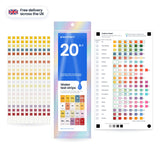
The jug says filtered, the bottle says purified and the iron handbook says distilled. Are those three names for one thing? You can check the minerals at your own tap with a 20-in-1 test strip.
Short answer: No. Distilled water is boiled and condensed, and the Royal Society of Chemistry says it should contain no dissolved solids. Filtered water is tap water through a filter, so what it keeps depends on the type. The Drinking Water Inspectorate says reverse osmosis removes most dissolved solids, with a waste stream of 20 to 30% of the flow.
By Andrew Tomlinson, WaterKit · Last reviewed 29 October 2026
Is distilled water the same as filtered or purified water?
No, because the words name different kinds of thing. Distilled is a method, filtered is a step, and purified has no drinking-water definition in the sources we read.
| Word | What it names | What the sources say |
|---|---|---|
| Distilled | A method. The water is boiled and the steam condensed | The Royal Society of Chemistry (RSC) says distilled water should contain no dissolved solids |
| Filtered | A step. The water passes through a filter | The RSC says filtration cannot separate a solution. The Drinking Water Inspectorate (DWI) describes home filters by type, and the answer differs for each |
| Purified | A claim about the result | Not defined as a drinking-water label in the RSC or DWI pages we read. Exam boards list "purification" of water samples as including distillation |
| Pure | A chemistry term | The RSC defines a pure substance as one made of only one element or compound |
Our guides explain what distilled water is and how it differs from deionised water, so this one covers the other words.
Does filtered water still contain dissolved minerals?
In a school practical, yes, and with home filters it depends on the type. The RSC's sand and salt experiment filters the mixture, and the filtrate is a salt solution that has to be heated to recover the salt. Its distillation page adds that a solution poured through filter paper runs through unchanged, so in our reading a dissolved substance needs another method, such as evaporation or distillation.
In its guidance on domestic water filters and softeners, the DWI describes home filters by what they do.
- Activated carbon. The DWI says to choose carbon when the aim is taste and odour.
- Carbon jugs with resin. The DWI's hardness page says some jugs contain ion exchange resin beads that alter the "temporary" hardness of the water.
- Reverse osmosis (RO). The DWI says RO removes most dissolved solids and softens the water, with a waste stream of 20 to 30% of the incoming flow. It says RO should be considered only for specialist domestic purposes such as photographic processing or hydroponic culture, that RO water is not generally considered suitable for drinking and cooking, and that the World Health Organization recommends adding minerals back when RO water is used for drinking.
What does purified water mean?
The RSC and DWI pages we read do not define it as a drinking-water label. The RSC's tap water and seawater practical lists AQA's GCSE chemistry practical as "analysis and purification of water samples from different sources, including pH, dissolved solids and distillation". In our reading, that treats distillation as one route to purification, not the whole meaning of the word. We have not read UK bottled water legislation, so check what a maker says purified means on its label.
Why might your tap water differ from the area figure?
The DWI says hardness varies with local geology and its map does not show areas with local variation, so for an accurate figure you ask your water company. It says taste varies between regions because of differing hardness and residual chlorine, and that a carbon filter cartridge should be changed in line with the manufacturer's instructions or it will cease to be effective, so in our reading filtered water can differ from one jug to the next.
“If you only go by the figure for your area, you are reading an average, so I would dip a strip in your own tap and see where it actually lands. The DWI is clear that hardness and taste vary locally, and that pipes and fittings in your own building are a separate matter from anything the water company reports.”
The DWI's hardness bands, in mg/l calcium carbonate, are soft up to 100, slightly hard 100 to 150, moderately hard 150 to 200, hard 200 to 300 and very hard above 300. It says hard water causes scaling in hot water systems, kettles, electric irons and appliances, which shortens heating element life. Our steam iron water guide goes further.
How can you check your tap against filtered and distilled water?
Dip a strip in each and compare the mineral and chlorine pads. Use a clean glass or cup per water, dip one strip, wait 30 to 60 seconds and match the pads to the chart, or enter the colours in the free results checker. The table is our own reading of the chart steps against the RSC and DWI statements. We have not run strips on these waters, so it is not a test result.
| Pad | Chart steps (mg/L) | Tap water | Filtered tap water | Distilled water |
|---|---|---|---|---|
| Hardness | 0, 25, 50, 100, 250, 425 | A step that depends on your area | The same step as the tap for a plain carbon filter, in our reading. A resin jug may read lower, since the DWI says the resin alters temporary hardness | The zero step. A higher step indicates dissolved calcium and magnesium |
| Sodium chloride | 0, 100, 250, 500, 1000, 2000 | The zero step unless your tap has 100 or more, in our reading, so this pad may not separate the three waters | As the tap | The zero step, which means below 100 |
| Free and total chlorine | 0, 0.5, 1, 3, 5, 10, 20 | A low step that depends on your tap | A fall to the zero step would indicate chlorine below 0.5, in our reading of a carbon filter | The zero step |
Test all three on the same day. Our hardness testing guide covers the dip. Several limits apply.
- A zero on any pad means none detected at that pad's first step, which is not the same as nothing being there. The hardness steps may not be calcium carbonate, the DWI's basis for its bands, so any comparison with them is ours.
- The strip cannot tell distilled from deionised or RO water, which in our reading also read at the bottom steps, and has no pad for organic substances.
- We do not give a pH reading for distilled water.
- The separate bacteria test is a presence screen for tap and drinking-water samples. We do not claim it for bottled or distilled water.
- A strip result has no legal effect.
The area figure is an average, and the DWI says hardness varies with local geology and that its map does not show areas with local variation, so your own tap may differ. The pads that matter here are hardness, where a step above zero in water sold as distilled would indicate dissolved calcium and magnesium, and free and total chlorine, where a fall to zero on filtered water would indicate chlorine below 0.5 in our reading of a carbon filter. Best pack: 20 strips, enough to test your tap, your filtered water and a bottle side by side and repeat the check later, £5.99 (or £10.99 with a bacteria test), with free 2nd Class delivery on every order. See the kit
Your distilled, filtered and purified water questions
Is filtered water the same as distilled water? Is distilled water the same as filtered water? Is filtered water the same as distilled? Is distilled water filtered water? Is filtered water distilled? Is filtered water distilled water?
No. Distillation boils the water and condenses the steam, while filtering passes it through a medium. The RSC says filtration cannot separate a solution.
Is purified water the same as distilled water? Is distilled water the same as purified water?
Not by any definition in the sources we read. Distilled names a method and purified does not.
Is distilled water and pure water the same? Is distilled water pure?
In chemistry lessons, the RSC uses simple distillation to obtain pure water. As a label, we found no definition of "pure water" in these sources.
Sources
- Royal Society of Chemistry, Simple distillation, practical videos, 14 to 16 years (distillation, distillate, definition of "pure", filtration and solutions; undated page; read 29 October 2026).
- Royal Society of Chemistry, Dissolved substances in tap water and seawater (distilled water should contain no dissolved solids, tap water some; AQA required practical wording; undated page; read 29 October 2026).
- Royal Society of Chemistry, Separating sand and salt by filtering and evaporation (the filtrate is a salt solution that is then evaporated; undated page; read 29 October 2026).
- Drinking Water Inspectorate, Domestic water filters and softeners (carbon, reverse osmosis, taste and chlorine, pipes and fittings; undated page; read 29 October 2026).
- Drinking Water Inspectorate, Water hardness and hard water (hardness bands, scaling, local variation, resin jugs and "temporary" hardness; undated page; read 29 October 2026).
- WaterKit, Water Test Kit (20-in-1 strip, 30 to 60 second read, optional rapid coliform test read after 24 to 48 hours, free 2nd Class delivery on every order) and results portal. The strip table is WaterKit's own reading of the colour chart steps.
Contains public sector information licensed under the Open Government Licence v3.0.