

Is deionised water the same as distilled water?
Share
Part of our bottled and other water guide
The steam iron handbook says distilled, the bottle in your hand says deionised. Are they one thing under two names, and what does your own tap hold? A 20-in-1 test strip can show part of that.
Short answer: No, they come from 2 different processes. The Royal Society of Chemistry describes distillation as evaporation followed by condensation, and deionisation as ion exchange, where a mixed-bed resin swaps positive ions for hydrogen and negative ions for hydroxide, which combine to form water. In the sources we read, no UK official body ranks their purity.
By Andrew Tomlinson, WaterKit · Last reviewed 29 October 2026
What is the difference between deionised water and distilled water?
The method. Deionized (US) and de-ionised are the same word. The Royal Society of Chemistry (RSC) defines simple distillation as separating a liquid from a solution through evaporation followed by condensation, and calls the liquid collected at the end the distillate. Our guide to what distilled water is covers it in more detail.
Deionised water is made by ion exchange. In an RSC classroom problem about treating sea water, students treat it as sodium chloride solution for simplicity. The RSC's answers describe a "mixed bed" of two resins. One converts all the positive ions to hydrogen ions and the other converts all the negative ions to hydroxide ions, and these combine to form water. The RSC calls this an excellent method.
| Distilled | Deionised | |
|---|---|---|
| How it is made | Water is boiled and the steam condensed | Water passes over ion exchange resin, in the RSC exercise a mixed bed of hydrogen-form and hydroxide-form resins |
| What the RSC says about dissolved material | Distilled water should contain no dissolved solids | In its simplified exercise, all the positive ions become hydrogen ions and all the negative ions become hydroxide ions |
| Official UK ranking of purity | None in the sources we read | |
The RSC practical on dissolved substances in tap water and seawater lists "distilled (or deionised) water" as a single item, so for that experiment it accepts either. It does not compare their purity. Reverse osmosis and boiled water are different again, and our guides cover reverse osmosis water and boiled versus distilled water.
Can you use deionised water instead of distilled water?
Sometimes, but the handbook for your appliance decides, and the sources we read give no rule for irons. The RSC practical above lists either one for the same job. Beyond that, we found nothing in the pages we read that says a particular iron, battery or machine takes one and not the other. Our guide on what water to use in a steam iron goes through the options.
Can you drink deionised water?
We found no UK official guidance on drinking it in the sources we read. The nearest we have is a World Health Organization (WHO) meeting. In November 2003, WHO convened experts in Rome to examine the possible effects of long-term drinking of water that has been manufactured or modified to add or remove minerals. It named demineralisation processes such as desalination as a starting point for the question. We read only the overview page, so we do not summarise its findings.
Which is purer, deionised or distilled water?
The sources we read do not say. The RSC notes say distilled water should contain no dissolved solids, and its ion exchange exercise describes a mixed bed in which positive and negative ions are all swapped. The RSC's ion exchange page lists "relative purity of deionised and distilled water" under Republic of Ireland Leaving Certificate chemistry, but gives no ranking. A bottle label tells you the method, not a measured result, and we found no UK official purity grading in these sources.
Why might your own tap water behave differently from either?
Because tap water carries dissolved solids and distilled water should not. The RSC's teaching notes say tap water holds some dissolved solids, those causing hardness for example, and its class practical has pupils evaporate tap water, distilled water and sea water to compare the solid residue. The area figure is an average. Your tap is the water you actually put in the iron or kettle, and a figure for the area does not tell you what comes out of your own tap. In the sources we read there is no local Drinking Water Inspectorate or water company figure on this topic, so we give none.
“If you fill an iron or kettle from the tap, I would check your own water rather than lean on the postcode average, because the figure for your area is only a guide to what comes out of your kitchen tap.”
Our guide to how hard your water is covers area figures. For a reading at your own tap, the hardness pad on a WaterKit strip takes 30 to 60 seconds, as set out in our guide to testing hardness at home.
What can a test strip show on tap, deionised and distilled water?
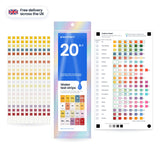
A strip can show how far your tap differs from either bottled water. On the mineral pads it indicates much the same for both, so it cannot tell you which one you have. Fill a clean glass or cup, dip one strip, wait 30 to 60 seconds and match the pads to the chart. You can also enter the colours in our free results checker, with no app or account. The table is our own reading of the chart steps against the RSC statement that distilled water should hold no dissolved solids. We have not run strips on either water, so it is a reading of the chart and not a test result.
| Pad | Chart steps (mg/L) | What to expect on either water |
|---|---|---|
| Hardness | 0, 25, 50, 100, 250, 425 | The zero step. Any higher step indicates dissolved calcium and magnesium (unit basis unconfirmed) |
| Total alkalinity | 0, 40, 80, 120, 180, 240 | The zero step |
| Sodium chloride | 0, 100, 250, 500, 1000, 2000 | The zero step, which means below the first step of 100 |
| Copper | 0, 0.2, 0.5, 1, 2, 5 | The zero step |
Test your tap on the same day to see the contrast. If a bottle labelled deionised or distilled shows a hardness step above zero, that indicates dissolved calcium and magnesium at that step. Several limits apply.
- A zero on any pad means none detected at that pad's first step, which is not the same as nothing being there.
- The strip does not show how a water was made, so it cannot tell distilled from deionised.
- We do not claim the rapid bacteria test for bottled water or for water in an appliance.
- A strip result has no legal effect.
Best pack: 20 strips, enough to test your tap and a sample of bottled or appliance water side by side and repeat the check later, £5.99 (or £10.99 with a bacteria test for your tap), with free 2nd Class delivery on every order. See the kit
Your questions about deionised and distilled water
Is deionised water the same as distilled water?
No. Distilled water is boiled and condensed, and deionised water goes through ion exchange, as the RSC describes. The RSC practical lists either for the same use, but we found no UK official comparison of their purity in the sources we read.
Is ionised water the same as distilled water?
We cannot say. None of the pages we read defines ionised water. It is a different word from deionised, which the RSC uses for water put through ion exchange.
What is the difference between deionised water and distilled water?
The method. Distillation evaporates and condenses the water, and deionisation swaps its ions on resin. The table above sets out what the RSC says about each.
Can I use deionised water in my iron?
Check your iron's handbook. The pages we read contain no iron guidance. Our steam iron water guide covers the options.
Sources
- Royal Society of Chemistry, Simple distillation, practical videos, 14 to 16 years (definition of simple distillation and "distillate"; undated page; read 29 October 2026).
- Royal Society of Chemistry, Dissolved substances in tap water and seawater (supporting resources updated in 2025; distilled water should contain no dissolved solids, tap water some, such as those causing hardness; materials list "distilled (or deionised) water"; read 29 October 2026).
- Royal Society of Chemistry, Ion-exchange resin and water (a classroom problem-solving exercise, sea water treated as sodium chloride solution; mixed bed converting positive ions to hydrogen ions and negative ions to hydroxide ions, which combine to form water; the "relative purity of deionised and distilled water" curriculum note; undated page; read 29 October 2026).
- World Health Organization, Nutrients in drinking-water (overview page only, undated; the November 2003 Rome expert meeting on water manufactured or modified to add or delete minerals; we did not read the full report; read 29 October 2026).
- WaterKit, Water Test Kit (20-in-1 strip, 30 to 60 second read, optional rapid coliform test read after 24 to 48 hours, free 2nd Class delivery on every order) and results portal. The strip table is WaterKit's own reading of the colour chart steps. This rewrite used only the pages listed above, and we did not search UK government, NHS or Drinking Water Inspectorate sites for it, so "none in the sources we read" refers to these pages only.