

Is boiled water the same as distilled water?
Share
Part of our bottled and other water guide
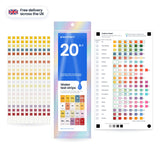
The kettle clicks off, the steam has gone and there is scale on the element. Has that turned the water in the jug into distilled water, or is something else going on? You can compare your own tap and a cooled boiled sample with a 20-in-1 test strip.
Short answer: No. Distillation is boiling followed by condensing the steam, and the Royal Society of Chemistry says distilled water should contain no dissolved solids. A kettle collects no steam. The Drinking Water Inspectorate says boiling can remove temporary hardness as scale, and cites the WHO that hardness of 200 mg/l or more produces scale.
By Andrew Tomlinson, WaterKit · Last reviewed 29 October 2026
Is boiled water the same as distilled water?
No. Boiling is only the first half of distilling. The Royal Society of Chemistry (RSC) defines simple distillation as separating a liquid from a solution through evaporation followed by condensation, and calls the liquid collected at the end the distillate. In its school practical, the steam from a boiling coloured solution is led through a delivery tube into a test tube standing in ice-water, and collected there. A kettle or pan has no second half. The steam goes into the air, so what you pour is the boiled water itself and not a distillate.
The RSC's tap water and seawater practical says distilled water should contain no dissolved solids and tap water some, including those that cause hardness. In the sources we read, none compares boiled and distilled water directly, so this guide sets out what each body says about boiling and marks where we join the two ourselves. The last section shows how to compare readings at your own tap. Our guide to what distilled water is covers the water itself.
What does boiling change in tap water, and what stays?
Some things change and some do not, according to the sources we read. The table sets out what each body says boiling does.
| In the water | What the source says about boiling | Who says so |
|---|---|---|
| Bacteria, viruses, parasites | Heating water is one of the best ways to kill or inactivate them | Drinking Water Inspectorate (DWI) |
| Dissolved gas | In a practical, heating tap water makes dissolved gas bubble out, and the gas that comes out is air | RSC |
| Temporary hardness (calcium and magnesium carbonates and bicarbonates) | Can be removed by boiling, forming scale | DWI |
| Permanent hardness (calcium and magnesium sulphate) | Does not go on to form scale when heated or boiled | United Utilities hardness factsheet (one company's statement) |
| Nitrate | Boiling tap water will not reduce nitrate levels | North Norfolk District Council, private water supplies page |
| Chlorine | If you are sensitive to it and still notice a smell after chilling the water, boiling can help remove most of it | United Utilities (one company's advice) |
Set that against the RSC's statement that distilled water should hold no dissolved solids. The sources say boiling does not reduce nitrate and does not turn permanent hardness into scale, so in our reading boiled and cooled tap water can still carry both. That is our inference and not a measurement. For people under a boil water notice, the DWI's advice is to let boiled water cool naturally, store it in a clean container in the fridge and discard it if not used within 24 hours. None of the sources we read gives a figure for how much hardness a kettle takes out, so we give none. Our boiling guide covers the rest of what boiling does, and the kettle limescale guide covers the crust.
Why might your own tap differ from the area figure?
The area figure is an average, and a figure for the area does not tell you what comes out of your own tap. The DWI says hardness varies with local geology. Its map shows only typical hardness for England and Wales, and for an accurate measurement it says to ask your water company, because some areas have local variation the map does not show. United Utilities says people who move between hard and soft areas may notice a difference in the taste of the water, especially in tea, or in limescale. The DWI says scaling shortens the life of heating elements and makes appliances less efficient. It lists hot water systems, kettles and electric irons. Our guide to how hard your water is shows how to find your own area.
Chlorine varies from house to house too. United Utilities says the taste or smell can be stronger if you live near one of its treatment works, when flow through the main rises at busy times, or when a nearby main has been replaced. United Utilities lists boiling as one option for people sensitive to the taste. On a private supply, North Norfolk District Council says higher nitrate levels in its area are associated with supplies from shallow wells or boreholes.
“If your kettle scales up, that tells you something about your own water, but it doesn't tell you what's left in the jug or how it compares with the area average. I would always dip a strip in your own tap before trusting a general figure.”
If an appliance handbook asks for distilled water, we found no UK official source in those we read that says boiled water counts as the same, so follow the handbook. Our steam iron water guide covers irons. A strip dipped in your cold tap and in a cooled boiled sample gives you readings for your own water rather than an average.
How can you check tap, boiled and distilled water yourself?
Dip a strip in each and compare four pads. The WaterKit Water Test Kit has a 20-in-1 strip. Fill a clean glass or cup with the water, dip one strip, wait 30 to 60 seconds and match the pads to the chart. You can also scan the QR code on the chart, or go to the results portal, to enter the colours and read the report in your browser, with no app or account. WaterKit has not published a before-and-after result for boiled or distilled water, so the table is our own reading of the chart steps against the sources above, not a test result.
| Pad | Chart steps (mg/l) | Boiled and cooled tap water | Distilled water |
|---|---|---|---|
| Hardness | 0, 25, 50, 100, 250, 425 | In our reading, the same step as the cold tap, or a lower one if boiling has taken enough temporary hardness out as scale | The zero step. A higher step indicates dissolved calcium and magnesium |
| Total alkalinity | 0, 40, 80, 120, 180, 240 | No source we read says what boiling does to alkalinity, so we make no prediction | The zero step |
| Nitrate | 0, 10, 25, 50, 100, 250, 500 | Going by the council's statement, the same step as the cold tap | The zero step, which means none detected at the first step of 10 |
| Free and total chlorine | 0, 0.5, 1, 3, 5, 10, 20 | A fall to the zero step would indicate chlorine below 0.5, but water left standing also loses chlorine, so a fall alone does not show boiling was the cause | The zero step |
Several limits apply so the readings are not over-read.
- The hardness steps are wide, so a small fall after boiling may not move a step. We have not confirmed whether the steps are read as calcium carbonate, the unit the DWI uses for its hardness bands, so any comparison with those bands is our reading.
- A zero on any pad means none detected at that pad's first step, which is not the same as nothing being there.
- We do not give a pH reading for distilled water, and we have not tested the pH pad on it.
- The strip has no pad for dissolved gases such as air.
- The distilled water column is our reading of the RSC statement that distilled water should contain no dissolved solids. No source we read covers chlorine in distilled water, so the zero step for chlorine there is our assumption.
- The separate rapid bacteria test is a presence screen for drinking-water samples. We do not claim the test for bottled or distilled water, or for water in an appliance.
- A strip result has no legal effect.
Best pack: 20 strips, enough to test your tap, a boiled sample and a bottle of distilled water side by side and repeat the check later, £5.99 (or £10.99 with a bacteria test), with free 2nd Class delivery on every order. See the kit
Your questions about boiled and distilled water
Is boiled water distilled?
No. Distillation collects the steam and cools it back into a liquid, as the RSC describes, and a kettle does not. A kettle also leaves scale behind, which the DWI says forms when temporary hardness is boiled.
Is distilled water the same as boiled water?
No. The RSC says distilled water should contain no dissolved solids. Boiled tap water is tap water that has been heated, and the sources above say boiling does not reduce nitrate and does not make permanent hardness form scale.
Is distilled water just boiled water?
No, though boiling is part of making it. The second part is condensing the steam and collecting it, and the RSC calls what is collected the distillate.
Does boiling water make it distilled?
No. Boiling turns water into steam. The water only becomes distilled if the steam is condensed and collected. Our guide to making distilled water at home covers doing that.
Is boiled water deionised?
No. The RSC's tap water practical uses "distilled (or deionised) water" as the comparison with tap water, whereas the DWI says boiling can remove temporary hardness as scale and United Utilities says permanent hardness does not form scale when boiled. None of them says boiling deionises water, so the No here is our reading. See deionised and distilled water.
Sources
- Royal Society of Chemistry, Simple distillation, practical videos, 14 to 16 years (definition of simple distillation and "distillate", method; undated page; read 29 October 2026).
- Royal Society of Chemistry and Nuffield Foundation, Dissolved substances in tap water and seawater (distilled water should contain no dissolved solids, tap water some; dissolved gas released by heating is air; supporting resources updated 2025; read 29 October 2026).
- Drinking Water Inspectorate, Water hardness and hard water (temporary hardness removed by boiling, forming scale; hardness bands in mg/l calcium carbonate; the WHO 2017 figure of 200 mg/l; scaling in kettles, irons and appliances; the map and local variation; undated page; read 29 October 2026).
- Drinking Water Inspectorate, Receiving a Boil Water Notice (heating kills or inactivates bacteria, viruses and parasites; undated page; read 29 October 2026).
- United Utilities, Water hardness factsheet (document code 09/25; permanent hardness does not form scale when heated or boiled; moving between hard and soft areas; read 29 October 2026) and Chlorine taste or smell (why it can be stronger; boiling can help remove most chlorine; undated page; read 29 October 2026). These are one company's statements.
- North Norfolk District Council, Private water supplies, nitrate and nitrite (boiling tap water will not reduce nitrate levels; higher levels in North Norfolk associated with shallow wells and boreholes; undated page; read 29 October 2026).
- WaterKit, Water Test Kit (20-in-1 strip, 30 to 60 second read, optional rapid coliform test read after 24 to 48 hours, packs from 10 strips at £3.99, free 2nd Class delivery on every order) and results portal. The strip table is WaterKit's own reading of the colour chart steps.
Contains public sector information licensed under the Open Government Licence v3.0.