

Why is my tap water yellow?
Share
Part of our tap water guide
The glass has a straw tint, or the bath looks faintly yellow. Is that rust in the mains, a problem at home, or just how your water is? You can check iron and manganese at your own tap with a 20-in-1 test strip.
Short answer: Usually deposits stirred up in the pipes. The Drinking Water Inspectorate (DWI) says discoloured water is most commonly caused by deposits moving in mains after changes in flow, and lists yellow among colours mains or home plumbing can cause. In England in 2025, companies logged 24,810 brown, black or orange appearance contacts.
By Andrew Tomlinson, WaterKit · Last reviewed 29 October 2026
Why is my tap water yellow?
Usually because deposits in the pipes have been disturbed. The Drinking Water Inspectorate says a burst main, valves opened or closed, a main brought back after repairs, a poor service pipe, plumbing inside the property and booster pumps in high-rise buildings can turn water yellow, orange, brown, grey or white. It adds that most older mains in England and Wales are cast iron, which corrodes and sheds rust particles.
| Where the deposit may come from | What the DWI says |
|---|---|
| The mains network | Bursts, valve changes, repairs and new mains nearby can disturb deposits |
| The service pipe | Its condition can be the cause, and repeated problems can mean it is in poor condition |
| Plumbing inside the property | Internal pipework can discolour water, and the DWI says an internal cause is likely to last weeks or months |
| An old storage tank | Traditional galvanised iron tanks rust over time, leading to bits in the water or a brown or yellowish tinge |
Is yellow water different from brown water?
In the sources we read, the DWI gives the same causes for both. It lists yellow beside orange, brown, grey and white, and groups brown, black and orange as the usual result of disturbed sediment from older pipes. The DWI's 2025 consumer contacts table has no yellow category. Our brown or cloudy water guide covers the brown case in full.
What should I do about yellow tap water?
Check whether your neighbours have it. The DWI says that if you and they have discoloured tap water, you should contact the company immediately.
- For brown, black or orange water present for less than 24 hours, the DWI says to run the tap to help clear it. It suggests contacting your supplier if the water has been discoloured for more than 24 hours, has an unusual taste or odour, or is not one of those three colours.
- The DWI suggests keeping a dated sample in a sealed clean glass bottle or jar in the fridge to show the company.
- If only your property is affected, the DWI advises a qualified plumber. If the company's explanation is not satisfactory, or the problem persists after it has acted and you have checked your own pipes and fittings, it points to the Consumer Council for Water (CCWater).
Why might my tap be yellow when the area figures look clean?
Your tap sits at the end of a service pipe, your own plumbing and perhaps a tank, and the DWI says these can change what comes out. In its Drinking Water 2025 tables for England, none of 57,066 colour tests failed the 20 mg/l Pt/Co standard in the 2016 Regulations. The same table shows iron failing in 98 of 53,039 tests against its 200 µg/l standard, and manganese in 18 of 52,918 tests against 50 µg/l.
The DWI's consumer contacts report says brown, black and orange discolouration was the most common appearance complaint in England in 2025, with 24,810 of 57,759 contacts about appearance, taste or odour.
“The area figures tell you about the water company's wider network, but your tap also depends on your own service pipe, your plumbing and any old tank in between. If yellow keeps turning up when the averages look clean, I would check at your own tap rather than rely on the area picture.”
At home, the DWI's guidance on storage tanks says water in a tank can deteriorate if it is warm, has no lid or is stored in too large a volume with low turnover. The DWI's quick check is to put your thumb over the outlet with the tap fully open, and if you can hold back all the water the tap is likely fed from a tank. A 20-in-1 strip on that tap and on the mains-fed kitchen tap lets you compare iron and manganese readings between the two.
Can yellow tap water be natural colour from the source?
The sources we read do not name yellow as a natural source colour. The DWI's guide to treating small private supplies says water can be coloured by humic and fulvic material from peat or decaying vegetation and by natural iron or manganese, and it describes the peat colour as brown. That page is for private supplies, so for a tint that lasts on a mains supply we suggest asking your company for its results for your zone.
What can a test strip show about yellow water?
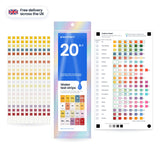
It indicates whether iron or manganese reads high at the tap. The strip does not read colour and cannot tell rust from peat. It cannot read lead at the UK limit, so for older pipes see our lead pipes guide, and a strip result is not a legal sample. Run the tap clear first, then dip one strip in a clean glass of water, wait 30 to 60 seconds and match the pads to the chart, or enter the colours in the free results checker. Our home water testing guide covers the steps; the last column below is our own reading.
| Pad | Chart steps (mg/l) | UK standard | Our reading |
|---|---|---|---|
| Iron | 0, 1, 5, 10, 25, 50, 100 | 0.2 mg/l | The first colour step is 1 mg/l, five times the standard. A coloured pad indicates well above it, and a zero means none detected at that first step, so it cannot show whether iron is under the 0.2 mg/l standard |
| Manganese | 0, 0.05, 0.1, 0.5, 1, 2, 5 | 0.05 mg/l | 0.05 sits at the standard, so 0.1 or more indicates above it |
The area figure is an average, and your tap sits at the end of a service pipe, your own plumbing and perhaps a tank, which the DWI says can change what comes out. The iron and manganese pads matter most here. A coloured iron pad, or manganese at 0.1 mg/l or more, would indicate readings above the standard, and a difference between the cold kitchen tap and a second cold tap would fit the storage tank point, in our reading. Best pack: 20 strips, enough to test two taps now and again after any plumbing or tank work, £5.99 (or £10.99 with a bacteria test), with free 2nd Class delivery on every order. See the kit
Your yellow water questions
Why is my tap water yellow?
Usually deposits stirred up in the mains or your own pipes, as set out above.
Why is my water yellow brown?
The DWI gives one cause for the shades, disturbed deposits, and has no yellow category in its contacts table. Our brown water guide has the detail.
Should I drink yellow tap water?
The DWI says not to assume suddenly discoloured water can be drunk until you have sought advice from your water company. Where an area is known to have an iron or manganese problem, it says the water can be used once the tap has run clear, unless the supplier has issued a warning notice.
Sources
- Drinking Water Inspectorate, Discoloured water (yellow among the colours, causes in the network and inside the property, cast iron mains, contact the company, sample, plumber, CCWater; undated page; read 29 October 2026) and Brown, black or orange water (24 hour advice, internal causes persisting for weeks or months; undated page; read 29 October 2026).
- Drinking Water Inspectorate, Water storage tanks and cisterns (galvanised iron tanks rust, brown or yellowish tinge, how water in a tank deteriorates, annual check; undated page; read 29 October 2026).
- Drinking Water Inspectorate, The physical and chemical properties of water (colour from humic and fulvic materials, peaty moorland water, seasonal effect; part of the private supply treatment guide; undated page; read 29 October 2026).
- Drinking Water Inspectorate, Drinking Water 2025, England, Annex B, Table 26 (colour 57,066 tests, none failing; iron 98 failures in 53,039 tests; manganese 18 in 52,918; undated page; read 29 October 2026) and Consumer contacts (Table 12, 57,759 contacts, 24,810 brown, black or orange, around 63 events, England rate 0.42 per 1,000, company ranking, iron and manganese rarely a direct risk to health; undated page; read 29 October 2026).
- The Water Supply (Water Quality) Regulations 2016, Schedule 1 Part II (colour 20 mg/l Pt/Co, iron 200 µg/l and manganese 50 µg/l at consumers' taps, in England; read 29 October 2026).
- WaterKit, Water Test Kit (20-in-1 strip, 30 to 60 second read, 20 strips £5.99, free 2nd Class delivery on every order) and results portal (iron and manganese pad steps). The pad column is WaterKit's own reading of the colour chart steps.
Contains public sector information licensed under the Open Government Licence v3.0.