

Why is my fish tank water cloudy?
Share
The tank was clear yesterday and today it looks milky. What do the UK fish-keeping bodies say to check, and what can you check at your own tap with a 20-in-1 test strip?
Short answer: In the RSPCA and OATA pages we read, none names a cause of cloudy tank water. The RSPCA says clear water is not always healthy water and gives 0 mg/L as the target for both ammonia and nitrite. OATA says to test at least weekly and that a new or overstocked tank may lack filter bacteria.
By Andrew Tomlinson, WaterKit · Last reviewed 29 October 2026
Why is my fish tank water cloudy?
The pages we read do not say. The RSPCA's fish-keeping page mentions cloudiness once, as a sign of a poor shop tank, and the Ornamental Aquatic Trade Association (OATA) does not mention it in the two leaflets we read. So treat the points below as background to check, not a diagnosis.
- The RSPCA says tanks in a shop should not have cloudy water.
- The RSPCA's aquarium page says you cannot judge water quality by looking, because clear water does not always mean healthy water.
- The OATA set-up leaflet says overstocking or stocking too quickly can leave too few filter bacteria for the waste load. In a new tank, it says, ammonia and nitrite rise first and then fall to zero as the bacteria build up.
- OATA says waste comes from fish and from uneaten food, and the RSPCA says too many fish in a tank pollute the water.
How do I fix cloudy water in a fish tank?
In the RSPCA and OATA pages we read, we found no fix for cloudiness itself, only advice on the waste behind poor water quality. The RSPCA says that if ammonia or nitrite tests above zero, change half the water every day, keep testing, and ask your aquatics shop for help if it does not improve. OATA says partial water changes and avoiding overstocking and overfeeding reduce ammonia and nitrite, and that your retailer can advise.
On filters, the RSPCA and OATA both say not to wash filter media under the tap, because this kills the beneficial bacteria, and OATA says chlorine and chloramine in tap water harm them. They say to rinse it in water removed from the tank. Water change sizes differ between the pages we read. The RSPCA gives weekly 30% changes in one place and a 10% siphon in another, and OATA says up to 25% a week. Our water change guide goes into this.
How do I test fish tank water?
With kits for at least ammonia, nitrite, nitrate and pH, according to OATA. It says kits come as liquids, tablets or strips, that all work by matching a colour chart, and that the sample should come from the main body of the tank, not the filter. OATA says to test at least weekly and more often when setting up, and the RSPCA says once a fortnight, or every other day while a new tank is cycling. The RSPCA calls ammonia and nitrite kits essential. Our aquarium testing guide covers the method.
How do I reduce water hardness in a fish tank?
The UK sources we read give no method. OATA says each fish species is adapted to water of a particular hardness, which may differ from your tap, that products exist to harden or soften water, and that your retailer can advise. It also says most water companies have an online postcode checker showing whether your tap water is hard or soft. Our postcode hardness guide shows how to use one, and our guide to lowering hardness in a tank picks up from there.
Could my tap water differ from what my tank needs?
The sources we read do not link tap water to cloudiness, but they give three reasons your tap matters to the tank. The area figure is an average. Your tap may not match it. OATA says nitrate levels in tap water can vary widely between areas, and its leaflet asks you to seek advice on nitrate for the fish you keep. It also says each species suits a particular hardness, which may differ from your tap's.
“I wouldn't lean on an area figure or a friend's tank advice for your own tank. What comes out of your tap can differ, so a quick check of your own water is a sensible place to start.”
The third reason is treatment. The OATA water quality leaflet says water companies add chlorine or chloramine to tap water, that these are harmful to fish and to the filter bacteria, and that water conditioners convert them to a form that is no longer harmful. The RSPCA says to add a dechlorinating product or leave new water standing for 24 hours. Our tap water in a tank guide and our chlorine guide cover the tap side.
What can a test strip indicate?
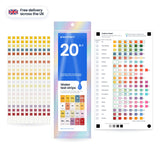
It indicates pH, hardness, nitrate and chlorine in a glass of water in 30 to 60 seconds, but not ammonia. Fill a clean glass or cup with the water, dip one strip, wait 30 to 60 seconds and match the pads to the chart, or enter the colours in our free results checker. The strip is made for drinking water and we have not tested it against fish-keeping targets, so the right-hand column is our own reading of the chart steps.
| Check | What the UK sources give | Our strip chart (our reading) |
|---|---|---|
| Ammonia | 0 mg/L (RSPCA and OATA) | No pad. Needs a separate test |
| Nitrite | 0 mg/L (RSPCA and OATA) | First colour step is 1 mg/L, so a zero reading means none detected at that step, not 0 mg/L |
| Nitrate | OATA says check species care sheets, and that tap water nitrate varies by area | Steps at 0, 10, 25, 50, 100, 250 and 500 are coarse, so test tap and tank side by side |
| pH | OATA says sudden changes can make water too acidic or alkaline for fish | Steps at 6.2, 6.8, 7.2, 7.6, 7.8 and 8.4, so regular dips can show a move from one step to the next |
| Hardness | Species-specific (OATA) | Steps at 0, 25, 50, 100, 250 and 425, with the unit basis unconfirmed, so a rough comparison with your tap only |
| Chlorine | Harmful to fish and filter bacteria (OATA) | Free and total pads start at 0.5 mg/L |
The chlorine pads can therefore indicate chlorine in fresh tap water, but a clear pad cannot show low levels. We have not checked how they respond to chloramine. We do not claim the optional bacteria test for aquarium water, since it is for drinking water, and a strip cannot say why a tank is cloudy.
What should I do next?
Start with ammonia and nitrite, because the RSPCA calls kits for both essential. Our strip has no ammonia pad and its nitrite pad starts at 1 mg/L, and OATA says many of its retailers offer free water testing. Then test a glass of your tap water and a glass from the main body of the tank side by side with a strip. In our reading, if the tank's nitrate step is higher than the tap's, the tank is probably adding it, and if both show the same step, much of it may be coming from the tap, though the steps are too coarse to say for certain. A hardness or pH step that differs from your tap's is worth raising with your retailer.
The RSPCA's fish health page says to check water quality first when fish look unwell, and to contact a specialist fish vet if you need help diagnosing or treating disease. Once you have a reading, you can enter the colours in the results checker to see what each pad indicates.
The figure for your area is an average, and OATA says nitrate levels in tap water can vary widely between areas, so your own tap may differ. The pads that matter here are nitrate, pH, hardness and chlorine. A nitrate, pH or hardness step that moves between dips, or differs from your tap's, indicates a change worth raising with your retailer, and a chlorine pad that colours indicates chlorine in the water. Best pack: 20 strips, enough to test your tap and tank together on several days, £5.99 (or £10.99 with a bacteria test), with free 2nd Class delivery on every order. See the kit
Your fish tank questions
Why is my fish tank water cloudy?
The RSPCA and OATA pages we read do not name a cause. The RSPCA says clear water does not always mean healthy water.
How to fix cloudy water in fish tank?
The RSPCA and OATA pages we read give no fix for cloudiness itself. If ammonia or nitrite tests above zero, the RSPCA says to change half the water daily and keep testing.
How to reduce water hardness in fish tank?
The RSPCA and OATA pages we read give no method. OATA says each species suits water of a particular hardness and that your retailer can advise.
How to test fish tank water?
OATA says to test pH, ammonia, nitrite and nitrate at least weekly. Our strip covers pH and nitrate but has no ammonia pad.
Sources
- RSPCA, Choosing an Aquarium for Pet Fish (undated page; ammonia and nitrite 0 mg/L, clear water, test kits, water changes, filters, chlorine and standing water, cycling; read 29 October 2026).
- RSPCA, Keeping Fish as Pets (undated page; shop tanks should not have cloudy water; read 29 October 2026) and Fish health and welfare (undated page; check water quality first, specialist fish vet; read 29 October 2026).
- OATA, How to understand and test water quality in freshwater aquariums (September 2022; chlorine and chloramine, nitrogen cycle, test kits, sample, weekly testing, pH, hardness, postcode checkers; read 29 October 2026).
- OATA, How to set up and maintain a freshwater aquarium (September 2022; test kits for ammonia, nitrite, nitrate and pH as a minimum, overstocking, maturing, nitrate in tap water, water changes, filters, free testing at many retailers; read 29 October 2026).
- WaterKit, Water Test Kit (20-in-1 strip, 30 to 60 second read, 20 strips £5.99 or £10.99 with the optional bacteria test, free 2nd Class delivery on every order) and results checker. The strip chart column is WaterKit's own reading of the colour chart steps.
Contains public sector information licensed under the Open Government Licence v3.0.