

Why is my hot water cloudy when the cold is clear?
Share
Part of our tap water guide
The cold tap runs clear and the hot tap looks like milk, or like tea. Is that the boiler, the tank or the pipes?
Short answer: The Drinking Water Inspectorate (DWI) says cloudy water is normally tiny air bubbles, which clear from the bottom up in a glass, and normally clears within 24 hours. If it is persistent but clears after seconds, it says internal plumbing may be the cause. Its page does not name the hot tap.
By Andrew Tomlinson, WaterKit · Last reviewed 29 October 2026
This guide covers the hot tap only. If the cold tap is cloudy or brown too, start with our brown or cloudy water guide. A glass on the worktop is the free first test, and you can also check the cold water at your own tap with a 20-in-1 test strip.
Why is my hot water cloudy when the cold is clear?
Usually for the same reason as any cloudy water, which is tiny air bubbles. The DWI says white or cloudy water is normally caused by trapped air, and you can check by pouring a glass and watching it clear from the bottom up. It says cloudiness that is persistent, but runs clear after a few seconds each time, may come from your internal plumbing.
The DWI's examples of internal causes are cold pipes warmed by heating or hot water pipes, a partly shut internal or external stop tap, and an aerator on the tap. In the sources we read, the DWI does not explain why heating water might release more air, and it does not mention combi boilers.
How can I tell bubbles from something else?
Fill a clear glass and watch it. The DWI's pages give these readings.
| What you see | What the DWI says it may mean |
|---|---|
| Clears from the bottom up in a glass | Tiny trapped air bubbles |
| Persistent, but runs clear after a few seconds each time | Internal plumbing, such as warmed cold pipes, a partly shut stop tap or an aerator |
| Brown, black or orange, or particles | Sediment, which can come from an internal tank or internal plumbing, and then is likely to persist for many weeks or months |
| Cloudy for more than 24 hours and not clearing, or with an unusual taste or smell | Contact your water supplier |
Can hard water make hot water look cloudy or flaky?
It can leave deposits when heated, which may look like white flecks. The DWI says hard water causes scaling in hot water systems, kettles and appliances, and that temporary hardness can be removed from water by boiling, forming scale. It does not say that this makes hot water cloudy, so linking flecks to scale is our reading. You can check the hardness of your own cold tap with a 20-in-1 test strip. See what limescale is and how hard your water is.
Could my loft tank or pipes be involved?
Possibly, particularly in an older property. The DWI says many older properties have a cold water tank in the loft, while newer homes, especially those with unvented heating systems, are likely to have hot and cold taps at mains pressure. Its quick check is to hold your thumb over a fully open tap, and if you can hold all the water back, the tap is likely fed from a tank.
The DWI says water in a tank will deteriorate if there is no lid, the water becomes warm, or too much is stored and turnover is low. Old galvanised iron tanks rust, which can bring bits, a brown or yellowish tinge or a metallic taste. Our loft tank guide covers what the tank does.
Should I drink or cook with hot tap water?
The DWI says not to. Its taste and odour page says hot tap water is not recommended for drinking because it can contain elevated levels of metals such as copper. Its chlorine page advises freshly drawn water from the cold kitchen tap supplied directly from the mains. Our bathroom tap guide has more on tank-fed taps.
Why might my hot tap differ from the water the company supplies?
Your tap sits at the end of your own pipes, so a figure for the area does not tell you what comes out of it.
“If the hot tap looks different from the cold, I would not assume the area average tells you the whole story, because your own pipes, tank and boiler sit between the main and your glass. Pour a glass first, and if it keeps looking odd, checking the cold kitchen tap is a sensible next step.”
- Your plumbing is yours. The DWI says the building owner is responsible for the plumbing system, including the supply pipe from the edge of the highway to the inside stopcock.
- Heat and standing water. The DWI says stored water deteriorates if it becomes warm, and that a metallic or bitter flavour from copper, iron or galvanised fittings can be more noticeable when water has been warmed.
- Local hardness. The DWI says hardness varies with local geology, and that its map does not show every local variation.
The DWI suggests checking other taps in the house, then asking neighbours, to see whether a problem is confined to your own plumbing. It recommends a WaterSafe plumber (see its plumber advice), and Water Regs UK says the water fittings regulations put a legal duty on owners, occupiers and anyone doing plumbing work.
What can a test strip show, and what should I do next?
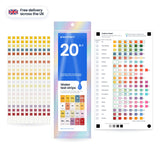
A strip checks the cold water at your kitchen tap, not the hot tap. The DWI says that in older houses the kitchen cold tap may be the only tap connected directly to the mains, and that hot water usually comes from a loft tank, so a cold kitchen tap reading shows the mains supply, not the tank. The strip does not read bubbles, particles or colour, and cannot see inside a boiler, cylinder or tank. Fill a clean glass, dip one strip, wait 30 to 60 seconds and match the pads to the chart, or enter the colours in our free results checker. A strip result is not a legal sample.
- Hardness. The pad's steps are 0, 25, 50, 100, 250 and 425 mg/l. The DWI classes 200 to 300 mg/l as hard and above 300 mg/l as very hard, as calcium carbonate. We have not checked the strip's unit basis, so that comparison is our reading of the chart.
- Iron and manganese (if the cold water is brown). The iron pad's first step is 1 mg/l, above the UK limit, so a clear pad is not a pass. The manganese pad's steps are 0.05, 0.1, 0.5 and 1 mg/l. A normal cold-tap result does not rule out a problem inside your cylinder or pipework.
If the glass does not clear, or only the hot tap is affected for more than a day, the DWI says to contact your water supplier for further advice.
The area figure is an average, and your tap sits at the end of your own pipes, where the DWI says internal plumbing, an internal tank or warmed pipes can change what you see. The hardness pad is the one that matters most here, and a reading at 250 or 425 would indicate hard water, in which scale can form in heated water, while 0 to 50 would make scale a less likely reason for white flecks. The iron and manganese pads matter if the cold water is brown. Best pack: 20 strips, enough to test the cold tap now and again after any plumbing or tank work, £5.99 (or £10.99 with a bacteria test), with free 2nd Class delivery on every order. See the kit
Your hot water questions
Why is my hot water cloudy but cold water clear?
The DWI says cloudy water is normally trapped air, and that persistent cloudiness that clears after a few seconds may come from internal plumbing. Its page does not discuss the hot tap specifically.
Why does hot water come out cloudy?
The DWI gives trapped air as the usual cause and does not explain a heating mechanism.
Why is warm water cloudy?
The DWI lists cold pipes warmed by heating or hot water pipes among internal plumbing causes of persistent cloudiness.
Is it normal for hot water to be cloudy?
The DWI says cloudiness is very occasional, usually air. It says to contact your supplier if it lasts more than 24 hours or comes with an unusual taste or smell.
Is cloudy hot water harmful to health?
The DWI says white or cloudy water likely caused by trapped air is not harmful to health, though its page does not mention the hot tap. Separately, it says hot tap water is not recommended for drinking.
Sources
- Drinking Water Inspectorate, White or cloudy water (undated page; air, the glass test, 24 hours, internal plumbing causes, not harmful to health; read 29 October 2026).
- Drinking Water Inspectorate, Brown, black or orange water (undated page; internal plumbing, an internal tank, internal causes lasting weeks or months; read 29 October 2026).
- Drinking Water Inspectorate, Advice for finding a plumber (undated page; WaterSafe; read 29 October 2026).
- Drinking Water Inspectorate, Water storage tanks and cisterns (undated page; the thumb check, rusting galvanised tanks, warm water, unvented systems, owner's responsibility; read 29 October 2026).
- Drinking Water Inspectorate, Chlorine (undated page; use freshly drawn cold mains water for drinking and cooking; read 29 October 2026).
- Drinking Water Inspectorate, Taste and odour in drinking water (undated page; hot tap not recommended for drinking, copper, warmed metallic taste, checking other taps; read 29 October 2026).
- Drinking Water Inspectorate, Water hardness / hard water (undated page; hardness classes as calcium carbonate, scaling in hot water systems, temporary hardness, local variation; read 29 October 2026).
- Water Regs UK, All FAQs (undated page; legal duty on owners, occupiers and plumbers under the water fittings regulations; read 29 October 2026).
- WaterKit, Water Test Kit (20-in-1 strip, 30 to 60 second read, optional bacteria test read after 24 to 48 hours, free 2nd Class delivery on every order) and results portal. The strip-chart comparisons are WaterKit's own reading of the colour chart steps.
Contains public sector information licensed under the Open Government Licence v3.0.