

Why is my fish tank water green or yellow?
Share
The tank was clear last week and now you can hardly see the fish. What do the UK fish-keeping sources say to look at?
Short answer: OATA, the aquarium trade body, does not describe green water itself in the leaflets we read, but it links algae problems to nutrients, planting and water changes. It says stocking a planted tank lightly reduces nutrients and algal problems, and up to 50% weekly changes help prevent algae build-up.
By Andrew Tomlinson, WaterKit · Last reviewed 29 October 2026
Why is my fish tank water green?
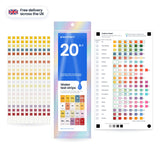
The Ornamental Aquatic Trade Association (OATA) gives no cause for green water itself in the planted aquarium leaflet we read, but it names several things that affect algae. To see what your own tap water and tank are doing, you can dip a 20-in-1 WaterKit strip in each and compare them.
| Factor | What OATA says |
|---|---|
| Planting | Planting heavily at set-up helps prevent algae becoming established and outcompeting your plants early on. |
| Nutrients | Stocking lightly reduces nutrients in the water and so algal problems. CO2 dosing should be monitored to prevent algae overgrowth. |
| Tank size | Water chemistry is typically more stable in larger volumes, which helps control algae. |
| Light | A planted tank needs at least 6 to 8 hours of light a day, up to 10 to 12 at most if levels are ramped up and down, so plants can photosynthesise. We found no OATA wording tying light to green water in the leaflets we read. |
For a pond, see our green pond water guide.
How do I get rid of green water in a fish tank?
We found no OATA fix for green water itself in the leaflets we read. Some steps below are ones OATA links to algae, others are its general advice.
- Partial water changes. OATA says up to 50% a week in a planted tank helps prevent algae build-up, and up to 25% a week in its freshwater aquarium leaflet. Our water change guide covers the figures.
- Less waste. OATA says waste and uneaten food add to ammonia.
- More plants. OATA says live plants take up some fish waste as fertiliser and help remove nitrate.
- Algae eaters. OATA's shrimp and snail leaflet says they help control nuisance algae. It adds that they are very sensitive to copper, so any treatment must suit invertebrates.
- Filter care. OATA says never to rinse a filter under the tap, because that kills the beneficial bacteria. Use water from a routine change instead.
Before you change water, a quick dip of a strip in the tap water and the tank shows where each stands on nitrate. Our aquarium water testing guide covers the fish-keeping tests.
Why is my fish tank water yellow?
We found no cause for yellow tank water in the OATA leaflets we read, so we cannot name one. OATA's advice when you are concerned about your fish is to test the water quality and contact your OATA retailer. If the water looks cloudy rather than coloured, see our cloudy fish tank guide.
Why might your tank not match the usual figures?
A figure for the area does not tell you what comes out of your own tap. OATA says nitrate levels in tap water can vary widely between areas, and it sets its nitrate ceiling as no more than 20 mg per litre above normal tap water levels.
OATA's shrimp and snail leaflet also says replacement water should be treated with a conditioner to remove chlorine or chloramine before it goes in. Our chloramine guide explains what that is, and our tap water in a tank or pond guide covers the rest.
“Your tap water is the starting point for your tank, and the guide says nitrate in tap water can vary widely between areas, so I would not rely on a general figure. Dipping a strip in both the tap water and the tank is a sensible way to see where yours really sits.”
What can a test strip show for a green tank?
It can compare your tap water and your tank on nitrate and pH, using the colour steps on the chart. It cannot show algae, light or the cause of the colour. We do not claim the WaterKit test for aquarium water, and the last column is our own reading of the chart. Dip a strip, wait 30 to 60 seconds and match the pads to the chart, or enter the colours in our free results checker.
| Check | What OATA says | Our strip chart (our reading) |
|---|---|---|
| Nitrate | No more than 20 mg/L above normal tap water for planted tanks, shrimp and snails, and pond fish (pond leaflet) | Steps at 0, 10, 25, 50, 100, 250 and 500 mg/L, so a 20 mg/L gap falls between steps and a difference between tap and tank is only a rough indication |
| pH | Test kits should cover pH. Shrimp and snails 6.5 to 8.0, pond fish 6.5 to 8.5 | Steps at 6.2, 6.8, 7.2, 7.6, 7.8 and 8.4, so regular dips can show a move from one step to the next |
OATA wants ammonia and nitrite at zero in the tank. Our strip has no ammonia pad, and its first nitrite step sits above zero, so a fish-keeping kit is needed for both.
Best pack: 20 strips, enough to dip your tap water and tank each week for several weeks, £5.99 (or £10.99 with a bacteria test for your drinking water), with free 2nd Class delivery on every order. See the kit
Your green fish tank questions
Why is my fish tank water green but no algae?
We found no UK source on green water without algae, and the OATA leaflets we read do not describe green water at all. For a tank that stays green, OATA's advice is to test the water and ask your OATA retailer.
How to get rid of green water in fish tank?
We found no UK official fix. OATA's leaflets point to lighter stocking, heavy planting and regular partial water changes.
How to fix yellow fish tank water?
We found no OATA fix for yellow water. Its advice is to test the water quality and contact your OATA retailer.
Sources
- Ornamental Aquatic Trade Association (OATA), How to set up and maintain a planted aquarium (PDF dated September 2022; lighting hours, heavy planting, light stocking, CO2 and fertiliser dosing, up to 50% weekly changes, nitrate ceiling; read 29 October 2026).
- OATA, How to set up and maintain a freshwater aquarium (PDF dated September 2022; up to 25% weekly changes, filter care, testing, retailer advice; read 29 October 2026).
- OATA, How to care for freshwater shrimp and snails (PDF dated September 2022; nuisance algae, copper, chlorine and chloramine conditioner, pH 6.5 to 8.0; read 29 October 2026).
- OATA, Outdoor coldwater fish, how to care for pond fish (PDF dated September 2022; pH 6.5 to 8.5, nitrate ceiling; read 29 October 2026).
- WaterKit, Water Test Kit (20-in-1 strip, 30 to 60 second read, optional rapid coliform test read after 24 to 48 hours, 20 strips £5.99 or £10.99 with a bacteria test, free 2nd Class delivery on every order, 30-day money-back guarantee) and results portal. The strip chart column is WaterKit's own reading of the colour chart steps.