

Why is the limescale in my toilet brown?
Share
Part of our hard water guide
A ring below the waterline that looks like limescale, only the colour of weak tea. Is it hard water, or something else in the supply?
Short answer: Brown limescale can be hard water scale or metal staining, and colour alone does not say which. The Drinking Water Inspectorate links white or brown stains to hardness (calcium carbonate), brown stains to iron and dark brown or black to manganese. You can check this at your own tap with a 20-in-1 test strip.
By Andrew Tomlinson, WaterKit · Last reviewed 29 October 2026
Why is the limescale in my toilet brown?
Scale can be brown by itself, and iron and manganese stains are brown too, so the colour does not settle it. The Drinking Water Inspectorate (DWI) says people sometimes notice brown stains from iron, dark brown or black stains from natural manganese, and white or brown stains from water hardness (calcium carbonate). It says these can appear when pressure or flow changes in the local network or inside a property.
| Possible cause | What the DWI says |
|---|---|
| Hard water scale | White or brown stains from calcium carbonate, and tide marks on basins, sinks, baths and toilets |
| Iron | Brown stains, with iron often historically used for private or public water pipes |
| Manganese | Dark brown or black stains from deposits of natural manganese |
| Biofilm, which is not limescale | Slimy stains above the waterline in toilet cisterns and bowls, which generally do not indicate a deficiency in the drinking water supply |
The sources we read give no UK official explanation of the colour of toilet limescale as such. The DWI's list allows a brown hardness deposit as well as iron or manganese, so choosing between them is our reading. Our limescale guide covers the scale itself.
Where do iron and manganese in water come from?
From the mains, the ground or old pipes, according to the DWI. Its brown, black or orange water page says most older water mains in this country are cast iron, originally unlined, and corrode to release iron particles. It adds that some ground waters and soft surface waters contain natural iron and manganese.
The Drinking Water Quality Regulator for Scotland (DWQR) says manganese is naturally present in the supply in some parts of Scotland and can cause black or dark brown discolouration if treatment does not remove it.
Why might my toilet differ from the area figure?
The area figure is an average. The DWI's hardness page says its map shows typical hardness, and that for an accurate measurement you should ask your water company because of local variation.
The DWI's brown water page also says sediment can come from the service pipe, the internal plumbing or an internal tank, and that internal causes are likely to persist for many weeks or months. The DWQR adds that if the problem shows only at taps other than the mains-fed kitchen tap, a storage tank in the house may be the cause. Neither page mentions a toilet cistern as a source of discolouration, so applying the tank point to a stained pan is our extension.
“An area figure is only an average, and the pipework or any storage tank inside your own home can change what comes out of your taps. Before assuming a brown ring is limescale, I would check your own tap and compare it with another cold tap in the house.”
What do UK standards say about iron, manganese and hardness?
Hardness has no UK standard, while iron and manganese do. The DWI says the Drinking Water Directive and the UK regulations do not specify standards for hardness, calcium or magnesium, so a hard water reading is not a pass or fail.
| Measure | Figure | Source |
|---|---|---|
| Hardness | No standard. DWI bands in mg/l calcium carbonate are soft up to 100, hard 200 to 300 and very hard above 300. It cites the WHO's 2017 figure that water at 200 mg/l or more will produce scale | DWI |
| Iron | 200 micrograms per litre (0.2 mg/l) at consumers' taps | Regulations, Schedule 1 |
| Manganese | 50 micrograms per litre (0.05 mg/l) at consumers' taps | Regulations, Schedule 1 |
The iron and manganese figures are in Schedule 1 of the Water Supply (Water Quality) Regulations 2016 for England. The same two figures appear in the Welsh 2018 Regulations, the Scottish 2014 Regulations and the Northern Ireland 2017 Regulations. The DWQR says iron and manganese are more of an aesthetic concern than a health one, and that persistent discolouration at a mains-fed tap should be reported to Scottish Water.
If the water itself runs brown, the DWI says to run the tap if it has lasted under 24 hours, and to contact your water supplier if it has lasted longer and is not clearing. It also says that if tap water is suddenly discoloured, you should seek advice from your supplier before drinking it. Our brown or cloudy water guide goes through that.
What one reader found
A Mumsnet poster who had just moved house, and had never lived in a hard water area, described the bowl as "completely brown and seems like thick limescale" under the waterline. They said bleach only lightened it temporarily, and vinegar with baking soda made no difference. The thread shows how common it is to meet a brown ring in a new home and not know what it is. It does not say what the deposit was made of. Shared on Mumsnet
What can a test strip tell me about brown limescale?
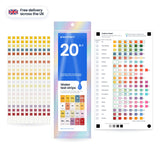
It can indicate how hard your tap water is and whether iron or manganese reads high, but it tests the water you dip it in, not the stain, so a clean reading does not explain a ring already in the bowl. A strip result is not a legal sample, and your water company holds the official figures for your area. Fill a clean glass or cup with tap water, dip one strip, wait 30 to 60 seconds and match the pads to the chart, or enter the colours at our free results checker. Testing the mains-fed cold kitchen tap and a second cold tap gives you two readings to set side by side. The right-hand column below is our own reading of the chart steps against the figures above. Our postcode guide shows how to find your zone's hardness.
| Pad | Chart steps (mg/l) | Our reading |
|---|---|---|
| Hardness | 0, 25, 50, 100, 250, 425 | 250 or 425 indicates above the 200 mg/l scale figure the DWI cites from the WHO. There is no step between 100 and 250, and the pad's unit basis is unconfirmed |
| Iron | 0, 1, 5, 10, 25, 50, 100 | The first colour step is 1 mg/l, above the 0.2 mg/l standard. A clear pad does not rule out iron staining |
| Manganese | 0, 0.05, 0.1, 0.5, 1, 2, 5 | 0.05 sits at the standard. A zero reading means below the 0.05 step |
The area figure is an average, and the DWI says its map does not show local variation, while the service pipe, the plumbing inside your home or a storage tank can also change what reaches your tap. The hardness pad matters for scale, and the iron and manganese pads matter for the brown and dark brown stains the DWI describes. A higher reading at one cold tap than at another would suggest looking at the pipework or tank between them. Best pack: 20 strips, enough to test two taps now and again after any plumbing work, £5.99 (or £10.99 with a bacteria test), with free 2nd Class delivery on every order. See the kit
Your toilet limescale questions
How to get rid of brown limescale in toilet? How to remove hard water stains from toilet?
The DWI says stains from copper, iron, manganese or hardness can generally be cleaned away with appropriate cleaning products, and that biofilm growths should be cleaned regularly following manufacturers' instructions. We found no guidance naming a product for toilet scale.
What causes limescale in toilet?
Hard water. The DWI says it leaves tide marks on basins, sinks, baths and toilets.
How to prevent limescale in toilet? How to stop limescale in toilet?
We found no DWI or DWQR advice on preventing it in toilets specifically. The DWI says that in a hard water area a softener will reduce tide marks on sanitary ware, and that the kitchen tap used for drinking and cooking should stay unsoftened. Our softener guide goes further.
Why is my toilet water brown? Why is the water in my toilet brown?
The DWI says brown, black or orange water is normally sediment disturbed in older pipes, with the service pipe, internal plumbing and an internal tank as other sources. The pages we read do not mention brown water from the cistern alone.
Sources
- Drinking Water Inspectorate, Biofilms, Mould, Slimes and Staining (brown, dark brown or black and white or brown stains; biofilm stains in cisterns and bowls; cleaning; undated page; read 29 October 2026).
- Drinking Water Inspectorate, Brown, black or orange water (cast iron mains, natural iron and manganese, internal causes, the 24 hour advice; undated page; read 29 October 2026).
- Drinking Water Inspectorate, Water hardness / hard water (hardness bands, no UK standard, tide marks on toilets, the WHO 2017 figure of 200 mg/l, softeners and sanitary ware, local variation; undated page; read 29 October 2026).
- Drinking Water Quality Regulator for Scotland, Discoloured or dirty water (manganese in parts of Scotland, storage tanks, contacting Scottish Water; undated page; read 29 October 2026).
- The Water Supply (Water Quality) Regulations 2016, Schedule 1 (England), with the same figures in the Water Supply (Water Quality) Regulations 2018, Schedule 1 (Wales), the Public Water Supplies (Scotland) Regulations 2014, Schedule 1 and the Water Supply (Water Quality) Regulations (Northern Ireland) 2017, Schedule 1 (iron 200 micrograms per litre and manganese 50 micrograms per litre at consumers' taps; read 29 October 2026).
- Mumsnet, Brown limescale in toilet bowl (a public forum post dated 30 August 2023, paraphrased as one person's account and not an official source; read 29 October 2026).
- WaterKit, Water Test Kit (20-in-1 strip, 30 to 60 second read, 20 strips £5.99, or £10.99 with a bacteria test, free 2nd Class delivery on every order; read 29 October 2026) and results portal (hardness, iron and manganese pad steps). The pad column is WaterKit's own reading of the colour chart steps.
Contains public sector information licensed under the Open Government Licence v3.0.