

How do you keep pond water clean and clear?
Share
Everyone wants glass-clear water, but the wildlife bodies say a little murk can be normal. So what should you aim for, and what is your top-up water adding? You can check the tap side at your own tap with a 20-in-1 test strip.
Short answer: Cut what feeds the algae. The RHS says to cover about half the pond surface with plants and, where possible, top up with rainwater, because nutrients in tap water encourage algae. The Freshwater Habitats Trust says a new pond can stay green and cloudy for 6 months or more.
By Andrew Tomlinson, WaterKit · Last reviewed 29 October 2026
Should pond water be crystal clear?
Not always. The RHS says algae are a natural part of a pond, that it is difficult and unnecessary to remove them completely, and that whether to act is a matter of choice. The Freshwater Habitats Trust (FHT) says quick checks such as "is the water green?" can sometimes mislead, and that chemical samples are highly variable. If you would like a number rather than a guess, you can dip a 20-in-1 strip in a glass of pond water and a glass of your tap water and compare the nitrate and pH pads. Water that stays green is covered in our guide to why pond water turns green.
Is a wildlife pond looked after differently from a fish pond?
Yes, because the sources start from opposite places. The RHS wildlife pond page says fish are top predators that reduce biodiversity and raise nutrient levels, which encourages algae.
| Question | Wildlife pond | Fish pond |
|---|---|---|
| Fish | The RHS suggests rehoming fish from an inherited pond with lots of them. | The RHS algae page says to choose goldfish, orfe or shubunkin, keep numbers in check by rehoming extras, and never release them into the wild. |
| Filter | The RHS says a wildlife pond does not need one. If you keep a pump, it should have a wildlife protection system. | The RHS says filters suit ponds with a large fish population, because they remove fish waste and plant debris. |
| Depth | The RHS wildlife page suggests 20 to 60 cm, varying across the pond. | The RHS algae page says a new pond should be at least 60 to 75 cm deep if possible, so it warms more slowly in sun. |
The RHS says the bacteria in a biological filter take six weeks to build up and can die if the filter is off for 24 hours or more.
Do plants and shade keep a pond clear?
They help, but neither fixes a nutrient problem on its own. The RHS says to aim for about half the surface covered by plants, plus submerged oxygenators. Its pond plants page says floating leaves cut the sunlight reaching the water and keep it cooler, which discourages algae. It also says to quarantine new plants for a few weeks, because the invasive Crassula helmsii can arrive on them.
The FHT says shade can reduce algae, but it will not end problems in a nutrient-enriched pond, and native submerged plants will not grow in heavily nutrient-polluted water. On barley straw, the RHS says to use about 50 g per square metre of surface, added in spring and removed when it turns black, about six months later. The FHT says it takes 2 to 4 weeks to work, does nothing for duckweed, and is a quick fix rather than a cure.
How do I keep pond water clear without a filter?
By keeping nutrients out, according to the FHT, which says too many nutrients, especially nitrate and phosphate, are the root cause of pea-soup water, blanket weed and duckweed. It lists tap water, soil or turves in the pond, bare soil beside it that rain washes in, and fish, whose food and faeces add nutrients and whose stirring releases more from the bottom. They also eat the zooplankton that would otherwise clear the algae.
- Rainwater. The RHS says top up with rainwater where possible, because tap water carries nutrients. See water butts and collecting rainwater.
- Soil and fertiliser. The RHS says to keep soil out of the pond, use low-nutrient aquatic compost for plants, avoid fertilising nearby lawns and borders, and net the pond in autumn against falling leaves.
- Sediment. The FHT lists removing bottom sediment, which stores nutrients, as a long-term step. The RHS says to avoid it in a wildlife pond if possible, and otherwise to take half the excess at a time in early autumn.
- By hand. The FHT says raking out blanket weed or scraping off duckweed also removes the nutrients locked in it, though it may need doing many times, and duckweed can double its area in 3 days in summer.
The RHS warns that changing the water to clear algae may solve the immediate problem but makes things worse in the long run.
Why is my pond water brown or cloudy?
The FHT gives several causes of cloudy or green water, and the RHS and FHT pages we read give no method for brown water as such. The FHT says tiny planktonic algae cause pea-soup water, and that bottom-feeding fish and ducks stirring up sediment release stored nutrients. New or recently dredged ponds often stay green and cloudy for a few months, and it says they may take 6 months or more until enough zooplankton arrive.
What one reader found
A poster on the Pond Life forum had set up a new pond and the water was lovely and clear at first. After adding 11 Shubunkins, each about 2 inches, and planting with aquatic soil, they wrote that "The water ever since has been a murky brown, will this clear". They asked whether it would settle or whether they had made a mistake. The post does not say what happened next. The FHT says fish stirring up the bottom is one source of nutrients and cloudiness, and that new ponds can stay cloudy for months, but we cannot say what caused this one. Shared on the Pond Life forum.
Why might my pond not behave like the textbook pond?
A published average does not describe your pond. The sources we read name tap water as a nutrient source for ponds, and a figure for an area does not tell you what comes out of your own tap. They give no figure for nutrients in UK tap water, so the only way to know what a hose top-up adds is to test it.
“I would not assume your top-up water matches the textbook picture. The sources name tap water as a source of nutrients, but a general figure can't tell you what comes out of your own tap, so testing the tap and the pond on the same day is a sensible way to see if they differ.”
- Your top-up. The RHS and the FHT both say tap water adds nutrients. Butt water may differ from the mains, so it is worth checking both. Our guide to tap water in a fish tank or pond covers the tap side.
- What is beside the pond. The FHT says fertiliser, bare soil and run-off can wash nutrients in after rain.
- Sun and depth. The RHS says sunny, shallow, unplanted ponds are especially prone to algae.
Our home testing guide covers the steps.
How can I check my pond and top-up water?
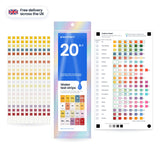
Fill a clean glass or cup, dip one strip, wait 30 to 60 seconds and match the pads to the chart, or scan the QR code on the chart to open the free results checker at our results page. We do not claim the strip or the bacteria test for pond water and have not validated either on it, so a pond reading is only an indication. The right-hand column is our own reading of the chart. Nutrient levels change with the season, and the FHT says samples are highly variable, so repeat tests are more useful than one.
| Check | What the sources we read say | Our strip chart |
|---|---|---|
| pH | The RHS and FHT pages we read give no pH range for ponds. | Steps at 6.2, 6.8, 7.2, 7.6, 7.8 and 8.4. We give no verdict on a reading. |
| Nitrate | The FHT counts nitrate with phosphate as the key nutrients behind algae and duckweed. | Steps at 0, 10, 25, 50, 100, 250 and 500 mg/l, so a 0 indicates below the 10 mg/l step. |
| Nitrite | No figure in the RHS or FHT pages we read. | First step 1 mg/l, so zero means none detected at 1 mg/l. |
| Hardness and carbonate | No figures in the RHS or FHT pages we read. | Hardness 0 to 425, total alkalinity 0 to 240 and carbonate 0 to 300, with the unit basis unconfirmed, so we do not compare them with other scales. |
Several things are outside what the kit can do.
- It has no ammonia pad and no phosphate pad, so it cannot show the full nutrient picture the FHT describes.
- It does not show clarity, or why a pond is cloudy. Algae, sediment and plants matter more to that than one reading.
- The optional bacteria test is a presence screen for coliforms in drinking water. Use it on your tap, not the pond.
A general figure for ponds is an average, and the sources we read give no figure for nutrients in UK tap water, so your own tap or butt may differ from the textbook picture. The nitrate pad matters most here, because the FHT counts nitrate among the key nutrients behind algae and duckweed. A higher nitrate step in your tap or butt water than in rainwater would indicate that your top-up adds nutrients, and a pond reading that moves up a step between tests would indicate nutrient levels are changing. Best pack: 20 strips, enough to test your tap or butt water and the pond several times through the season, £5.99 (or £10.99 with a bacteria test for your drinking water), with free 2nd Class delivery on every order. See the kit
Your pond water questions
How to keep pond water clean and clear?
Keep nutrients down, use plants and part shade, and top up with rainwater, say the RHS and the FHT.
How to clean pond water with fish in it?
The RHS says a filter helps in a pond with many fish, because it removes fish waste and plant debris. It advises against changing the water to clear algae. The sources we read give no water change schedule.
How to clear pond water without killing fish?
The RHS says no chemical treatments or weedkillers are approved for home gardeners against pond algae and blanket weed. The FHT says copper sulfate solutions can harm other plants and aquatic life, and that UV filters kill tiny water creatures along with algae.
How to clear brown pond water?
The RHS and FHT pages we read give no method for brown water specifically.
How to test pond water?
The FHT says chemical samples are highly variable, and that biological assessment, done professionally, is probably best. We found no home testing schedule in the sources we read.
What pH should pond water be?
The RHS and FHT pages we read give no pH range for ponds. Our strip has pH steps from 6.2 to 8.4, and we give no verdict on a reading.
What is KH in pond water?
In pond and aquarium use it normally means carbonate hardness. The RHS and FHT pages we read give no KH figure. Our strip has a carbonate pad, 0 to 300, not matched to dKH units.
How to measure water volume in a pond?
The RHS says to multiply average length, width and depth in metres for cubic metres, then multiply by 1,000 for litres. For gallons, multiply cubic feet by 6.23. Our example is 3 m by 2 m by 0.4 m, which is 2.4 cubic metres, or 2,400 litres.
Why is my pond water foamy?
We found no guidance on foam in the RHS and FHT pages we read.
Why is my natural pond losing water?
The RHS says wildlife pond water lines naturally fluctuate, and seasonal ponds fill in winter and sometimes dry out in summer. It says not to top up too hastily, and to use rainwater, with tap water a last resort.
Sources
- Royal Horticultural Society (RHS), Pond algae and blanket weed (undated page; plant cover, shade, depth, fish, changing the water, chemical treatments, barley straw; read 29 October 2026).
- RHS, Wildlife ponds (undated page; fish, filters, depth, full sun, sediment, water levels, turf wicking, tap water; read 29 October 2026).
- RHS, Choosing pond plants (undated page; floating plants, quarantine; read 29 October 2026).
- RHS, Choosing a pond filter (undated page; filters for fish, biological filters, volume calculation; read 29 October 2026).
- Freshwater Habitats Trust (FHT), FAQs, Problems with algae and duckweed (advice sheet dated September 2013, copy hosted by Avon Wildlife Trust; nutrient sources, new ponds, shade, submerged plants, barley straw, treatments, hand removal; read 29 October 2026).
- FHT, FAQs, How do I assess and manage pollution in ponds? (undated factsheet; quick methods can mislead, chemical samples highly variable; read 29 October 2026).
- Pond Life forum, New to Ponds and Fishkeeping post (posted 6 May 2019; a reader's account of a new pond turning brown; paraphrased; seen 29 October 2026).
- WaterKit, Water Test Kit (20-in-1 strip, 30 to 60 second read, 20 strips from £5.99, free 2nd Class delivery on every order, 30-day money-back guarantee) and results portal. The strip-chart column and the worked volume example are WaterKit's own work.