
Water hardness in Wigan
Wigan has soft water: about 28 mg/l of calcium carbonate (1.96 degrees Clark) in the Wigan South (Z115) supply zone. Source: the United Utilities water quality lookup for a WN1 town-centre postcode, register updated 16 October 2026. Last checked 18 October 2026.
Wigan's tap water is soft. The Wigan South zone reads about 28 mg/l of calcium carbonate on United Utilities' register, well inside the soft band, so kettles and showers stay largely free of scale.
What Wigan water means at home
Kettles and appliances
Little or no limescale. A kettle element may stay clean for a year, and dishwashers can run on the lowest hardness setting in the manual (many manuals say no salt is needed at this level). Most of the North West needs no softener at all.
Skin and hair
Soap and shampoo lather quickly and rinse away without the dull film people notice in hard-water areas. If your skin feels dry here, the water's hardness is unlikely to be the cause.
Pipes and metals
This is the reading that matters in a soft-water town. Soft, low-alkalinity water is more corrosive to copper, lead and iron pipework, so first-thing-in-the-morning water that has stood in old pipes can carry more metal than water from a flushed tap. The Drinking Water Inspectorate makes the same point in its guidance on hardness.
Where Wigan's water comes from
United Utilities lists local upland reservoirs as the main source for the zone, with the River Dee and Lake Vyrnwy able to top it up. The Rivington chain of reservoirs on the West Pennine Moors supplies much of the Wigan area, and moorland water of that kind carries very little dissolved calcium or magnesium. When Dee or Vyrnwy water is in the mix the reading can climb into the moderately soft band, which is why United Utilities quotes a range.
United Utilities says: "The water supply to this area comes from local upland reservoirs and can be supplied by the River Dee and Lake Vyrnwy." "The water supply to this area can vary in hardness from soft to moderately soft."
With hardness this low the readings worth watching in Wigan are pH, copper and lead, because soft water that has stood overnight in old pipework can pick up metal. The kit reads all three on one strip, and comparing a first-draw sample with a flushed one shows whether the metal is coming from your own pipes.
The hardness scale, and where Wigan sits
| Band | Calcium carbonate |
|---|---|
| Soft (Wigan) | 0 to 50 mg/l |
| Moderately soft | 51 to 100 mg/l |
| Slightly hard | 101 to 150 mg/l |
| Moderately hard | 151 to 200 mg/l |
| Hard | 201 to 300 mg/l |
| Very hard | over 300 mg/l |
Bands follow the six-band scale used by United Utilities and most water companies and shown on the Drinking Water Inspectorate's hardness map. The DWI's own web page groups the first two bands together as soft (up to 100 mg/l). One degree Clark is about 14.3 mg/l of calcium carbonate. The Water Supply (Water Quality) Regulations 2016 set no limit for hardness.
Check your own tap in 60 seconds
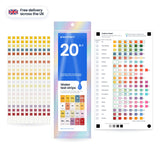
In a soft-water town the hardness pad will almost always read low; the lead, copper and pH pads on the same strip are the ones that tell you something about your own pipes. The WaterKit Drinking Water Test Kit reads hardness, alkalinity, pH, copper, lead and 15 other checks from one strip dipped in the sample tube, and the results portal explains each reading against the UK limit where one exists. From £12.99 with a 30-day money-back guarantee. If you are new to strip testing, how to test your water at home walks through it.
Softener or scale filter?
In a soft area a water softener has almost nothing to work on, and anyone quoting one for a Wigan postcode should be asked which hardness figure the quote is based on. Spend the money on a strip test and, if a reading other than hardness is out of range, on the fix that reading points to.
Questions people in Wigan ask
Is hard or soft water a health issue?
Neither is. There is no UK legal limit for hardness because it does not affect health; the Regulations 2016 list limits for things like lead, copper and nitrate but not for calcium and magnesium. Hardness matters for kettles, washing and pipework, not for drinking.
Why might my tap read differently from the figure on this page?
The figure is the typical value for one supply zone, and United Utilities quotes a range for the zone because the blend of sources changes. Your house may be on a neighbouring zone, and water that has stood in your own pipes can read differently from flushed water. A strip test on your own tap gives you your number.
Why does United Utilities give Wigan a range rather than one figure?
Because the zone can be topped up from the River Dee and Lake Vyrnwy as well as the local reservoirs, and the river water is a little harder. Most of the time the reading sits in the soft band; when the blend changes it can reach the moderately soft band. Either way it stays under 100 mg/l.
What is the quickest way to check my water hardness at home?
A test strip. Dip one in a sample tube of tap water for two seconds, wait a minute and compare the hardness pad with the colour chart; the WaterKit strip reads 19 other things at the same time, including pH, copper and lead. Water companies also publish the zone figure, which is where the number on this page comes from.
Where does the figure on this page come from?
From the United Utilities water quality lookup for Wigan, checked on 18 October 2026. You can run the same lookup for your postcode on their website and compare.
Is Wigan a hard water area?
No. Wigan is a soft water area on the six-band scale used by UK water companies, with a typical reading of about 28 mg/l of calcium carbonate for the town-centre zone. Streets on a different supply zone can read higher or lower.
For the general picture, see hard water, explained.
Sources
- United Utilities water quality lookup, zone Wigan South (Z115), checked 18 October 2026.
- Drinking Water Inspectorate, water hardness and the DWI hardness map (Open Government Licence v3.0).
- United Utilities water hardness factsheet 2025 (band scale and unit conversions).
- Water Supply (Water Quality) Regulations 2016, Schedule 1.
Contains public sector information licensed under the Open Government Licence v3.0. Hardness figures are typical values for one supply zone and change as the blend of sources changes; they are quoted for information and are not a substitute for a reading on your own tap.