
Water hardness in Carlisle
Carlisle has slightly hard water: about 102 mg/l of calcium carbonate (7.14 degrees Clark) in the Carlisle South (Z003) supply zone. Source: the United Utilities water quality lookup for a CA3 city-centre postcode, register updated 16 October 2026. Last checked 18 October 2026.
Carlisle's water is slightly hard, which makes it unusual for Cumbria. United Utilities' register gives the Carlisle South zone a typical hardness of about 102 mg/l of calcium carbonate, with a range of moderately soft to moderately hard quoted for the zone.
What Carlisle water means at home
Limescale
A light but steady build-up: a kettle wants descaling every couple of months, shower screens show spots, and the dishwasher should sit on a middle hardness setting.
Washing and showering
Soap takes a little more effort to lather and can leave a faint film. Hard water is not a health issue, so this is about comfort and appliance life rather than anything else.
What it does to pipes
At this level the water lays down a thin protective layer inside pipework, so copper and lead readings are usually low. One first-draw test in an older house is still worth doing to confirm it.
Where Carlisle's water comes from
United Utilities lists local reservoirs and the River Eden as the sources. The Eden drains farmland and sandstone country rather than the Lake District fells, so it brings more calcium with it than the reservoir water that supplies most of the rest of Cumbria.
United Utilities says: "The water supply to this area comes from local reservoirs and from the River Eden." "The water supply to this area can vary in hardness from moderately soft to moderately hard."
Because the blend swings between a soft reservoir and a harder river, Carlisle readings vary more than most North West towns. A strip test every month or two, logged in the portal, will show you which side of the band your street sits on through the year.
The hardness scale, and where Carlisle sits
| Band | Calcium carbonate |
|---|---|
| Soft | 0 to 50 mg/l |
| Moderately soft | 51 to 100 mg/l |
| Slightly hard (Carlisle) | 101 to 150 mg/l |
| Moderately hard | 151 to 200 mg/l |
| Hard | 201 to 300 mg/l |
| Very hard | over 300 mg/l |
Bands follow the six-band scale used by United Utilities and most water companies and shown on the Drinking Water Inspectorate's hardness map. The DWI's own web page groups the first two bands together as soft (up to 100 mg/l). One degree Clark is about 14.3 mg/l of calcium carbonate. The Water Supply (Water Quality) Regulations 2016 set no limit for hardness.
Check your own tap in 60 seconds
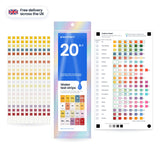
The figure above is a zone average, and in a town where the blend swings between sources a reading on your own tap is the only one that is yours. The WaterKit Drinking Water Test Kit reads hardness, alkalinity, pH, copper, lead and 15 other checks from one strip dipped in the sample tube, and the results portal explains each reading against the UK limit where one exists. From £12.99 with a 30-day money-back guarantee. If you are new to strip testing, how to test your water at home walks through it.
Softener or scale filter?
A scale filter or softener can make sense in Carlisle if limescale is a daily annoyance, but it is a comfort choice, not a health one. If you do fit one, keep an unsoftened tap for drinking and test the water before and after so you can see what changed.
Questions people in Carlisle ask
How current is the hardness figure on this page?
It was taken from the United Utilities water quality lookup on 18 October 2026 and the page will be re-checked periodically. If your water company's lookup shows a different figure for your postcode, trust the lookup: it is updated more often than this page.
Is Carlisle water hard or soft?
In between. At about 102 mg/l of calcium carbonate the United Utilities zone is classed as slightly hard, and the company says the zone can move between bands as the blend of sources changes, so some weeks it reads softer.
Is Carlisle water fluoridated?
No. United Utilities' register says the Carlisle South supply is low in naturally occurring fluoride and is not artificially fluoridated.
Is there a UK limit for water hardness?
No. The Water Supply (Water Quality) Regulations 2016 set no standard for hardness because it is not a health concern. Water companies publish it so you can set appliances and understand scale.
Why does my own reading not match this page?
Three reasons, usually. The published figure is an average for a whole supply zone; United Utilities says the zone's hardness varies as sources are blended; and water that has stood overnight in your pipes reads differently from a flushed tap. None of those is a fault, it is why a reading on your own tap is worth having.
How do I test the hardness of my own water?
Fill the WaterKit sample tube from your tap, dip one strip for two seconds, wait 60 seconds and match the hardness pad to the chart, or enter the colours in the results portal and it explains each reading. The same strip reads alkalinity, pH, copper and lead, which are the readings that matter most in soft-water areas.
For the general picture, see hard water, explained.
Sources
- United Utilities water quality lookup, zone Carlisle South (Z003), checked 18 October 2026.
- Drinking Water Inspectorate, water hardness and the DWI hardness map (Open Government Licence v3.0).
- United Utilities water hardness factsheet 2025 (band scale and unit conversions).
- Water Supply (Water Quality) Regulations 2016, Schedule 1.
Contains public sector information licensed under the Open Government Licence v3.0. Hardness figures are typical values for one supply zone and change as the blend of sources changes; they are quoted for information and are not a substitute for a reading on your own tap.